Laminate vs Lacquer Kitchen Finishes — Lebanon
Laminate is tougher; lacquer is more refined. KITWOOD compares cost, durability, humidity tolerance and finish quality for Lebanese kitchens.
Quick Answer
Laminate is more durable against physical impact and easier to clean. Lacquer delivers a more refined, premium appearance but requires more careful handling. The right choice depends on how the kitchen is used and what aesthetic outcome you are targeting.
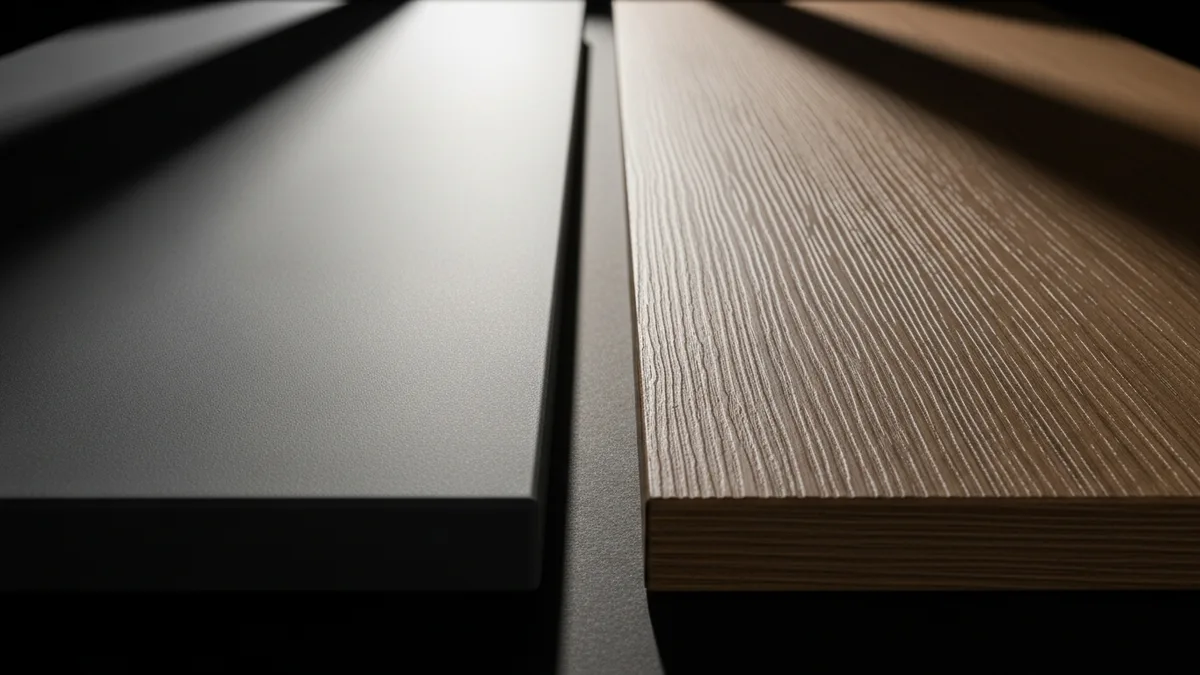
- Laminate: scratch-resistant, moisture-tolerant, limited aesthetic range
- Lacquer (matte): elegant, soft in appearance, shows marks more readily
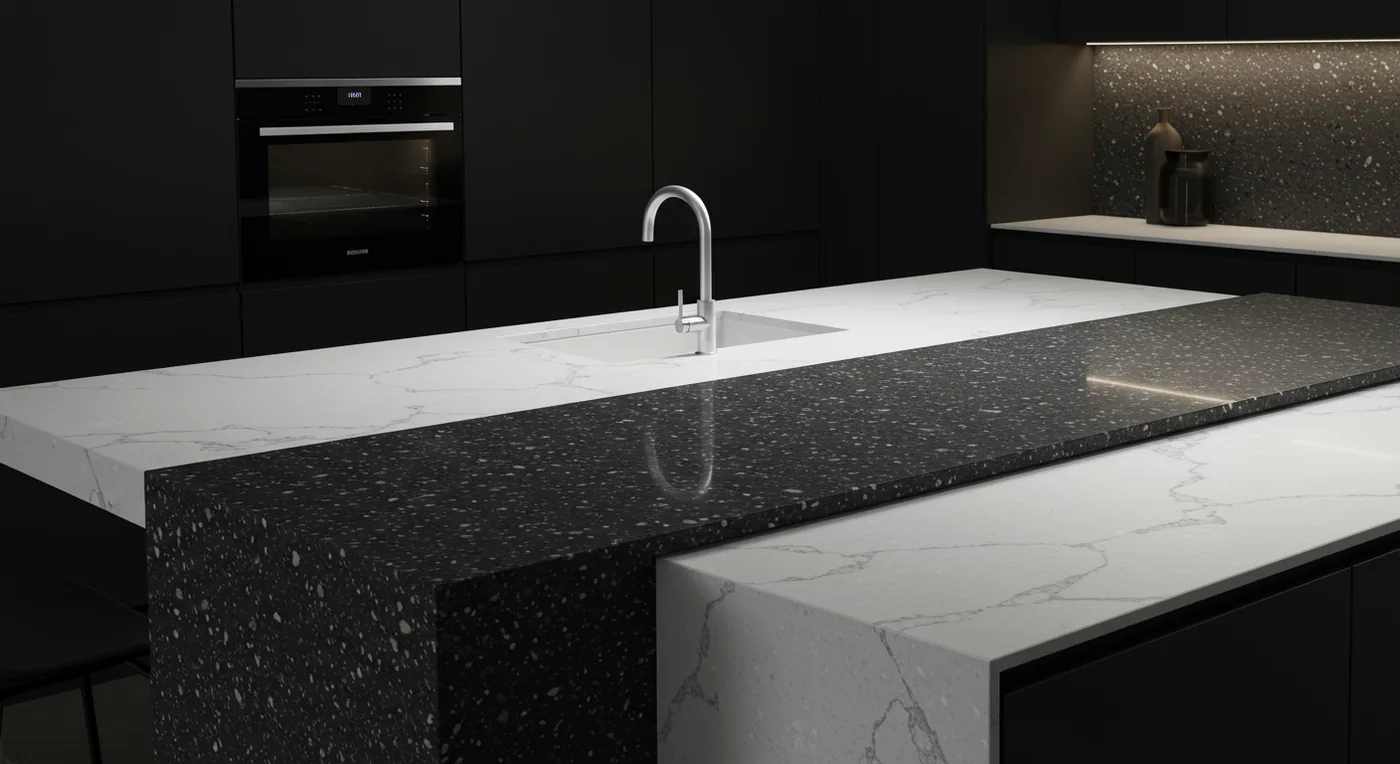
- Lacquer (gloss): highly reflective, premium feel, fingerprint-visible
- Lacquer requires factory application for a consistent finish — carpentry lacquer often looks uneven
- Both finishes are available from KITWOOD in a full range of colours and door profiles
For high-use kitchens with children or heavy daily cooking, a premium-quality laminate in a muted tone or a satin lacquer finish offers the best balance of durability and appearance. For master kitchens where aesthetics are the priority and use is more considered, a matte or gloss lacquer delivers a clearly superior result.
What Laminate Actually Is
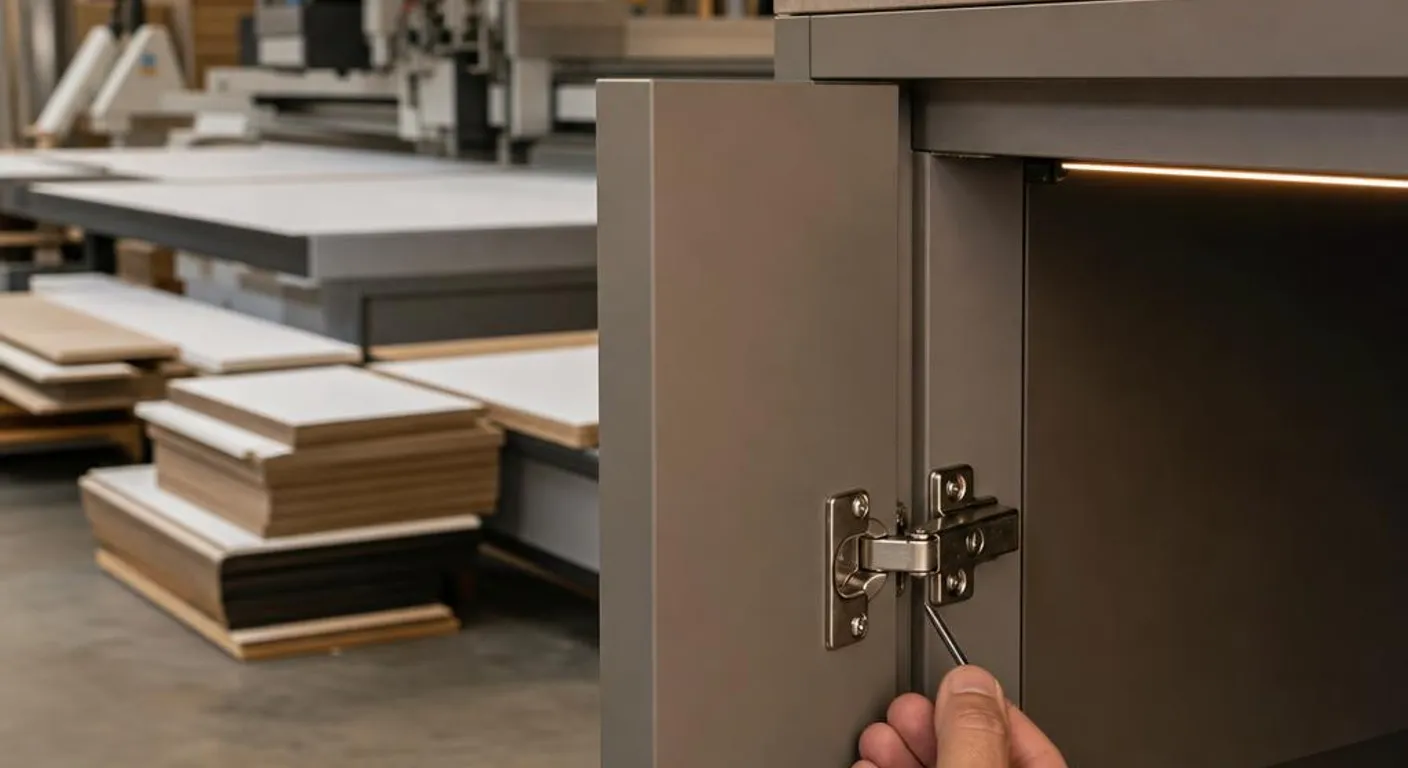
Laminate (also called HPL or high-pressure laminate at higher grades) is a printed or textured decorative layer applied under heat and pressure to an MDF substrate. The result is a door that is resistant to scratches, moisture, and impact — and which is available in a wide variety of patterns including solid colours, wood effects, concrete textures, and more.
The quality of laminate finishes varies considerably. Standard laminate is a thin foil wrap. High-pressure laminate (HPL) is a much more durable product with a thicker, harder surface layer. When people describe laminate kitchens, they may be referring to either — but the performance difference between them is significant.
What Lacquer Actually Is
Lacquer is a painted finish applied to an MDF door in a factory environment. It is sprayed in multiple coats, sanded between applications, and cured to produce a smooth, even surface that is either matte (no sheen), satin (subtle sheen), or gloss (highly reflective).
The critical distinction is factory lacquer versus on-site lacquer. Factory-applied lacquer is done in a controlled environment with professional spray equipment, yielding a surface that is consistent and professional in finish. On-site lacquer applied by a painter or carpenter almost always shows brush marks, uneven sheen, or texture variation — it does not deliver the same result as factory lacquer, regardless of the painter's skill.
Durability: How Each Finish Performs Over Time
Laminate is generally more resistant to physical damage than lacquer. A quality HPL surface will resist scratches from daily use, is more tolerant of moisture exposure at the door surface, and does not show fingerprints or handling marks as readily as a gloss lacquer.
Lacquer, particularly in matte and satin finishes, can show marks from repeated touching at handles and edges over time. Gloss lacquer is the most susceptible to visible fingerprinting but can also be cleaned most easily with a soft damp cloth. Matte lacquer tends to be more forgiving in appearance but can be difficult to clean in high-contrast colours without leaving faint marks.
For families with young children or kitchens that are used intensively, laminate finishes in neutral tones often deliver the best practical performance.
Aesthetic Range: What Each Can Achieve
Lacquer has the clear advantage in terms of aesthetic refinement. A well-executed factory lacquer in matte or satin finish produces a surface quality that is difficult to replicate with any other process — depth of colour, smoothness of surface, and a subtle richness that elevates the overall kitchen appearance significantly.
Laminate offers a wider variety of textures and patterns — including realistic wood, stone, and metallic effects — but at the premium level, a lacquered door in a well-chosen colour tends to read as the more refined choice.
For wood-effect finishes, neither laminate nor lacquer replicates the genuine character of wood veneer, which uses a real timber slice applied over a substrate — a third option worth considering for those seeking natural material warmth.
Which Finish Works Better in Lebanon's Climate?
Lebanon's coastal areas experience significant humidity, which affects how kitchen finishes perform over time. Laminate finishes, particularly HPL, handle humidity at the door surface well — the core material (MDF) is more vulnerable, but if the carcass structure is water-resistant E1 board and the doors are well sealed, humidity impact on laminate doors is minimal.
Lacquer doors in a factory-applied finish are similarly well-sealed at the surface. The substrate (MDF) is the more vulnerable element — which is why the structural specification behind the finish (water-resistant E1 carcass, quality substrate for the door panel) matters as much as the finish choice itself.
For detailed guidance on materials and structural specifications, see our Technical Specifications & Materials page.
Making Your Decision
The right finish choice depends on three factors: how the kitchen will be used, what aesthetic outcome you are targeting, and your maintenance preferences.
If you are designing a kitchen that will see daily heavy use, a quality laminate or satin lacquer in a mid-tone colour delivers the best balance of appearance and resilience. If you are designing a kitchen where aesthetics are the primary driver and it will be used with care, a matte or gloss lacquer finish from a quality manufacturer delivers a result that is difficult to match with any other material.
At KITWOOD, both laminate and lacquer finishes are available across our kitchen collections in Lebanon, in a full range of colours and with several door profile options. Our design team can show you samples in both finishes and advise on which best suits your space.
For broader material context, read our guide to the best kitchen materials in Lebanon and the 2026 kitchen cost guide to understand how finish choice affects your overall budget. Visit our showrooms in Sin el Fil or Zouk Mosbeh to see the difference in person, or get in touch to book a consultation.
Frequently Asked Questions: Kitchen Finishes in Lebanon
**Which kitchen finish is easiest to clean in Lebanon?** Gloss lacquer and smooth HPL laminate are both easy to wipe clean with a damp cloth. Matte lacquer in darker colours can show marks more readily and requires more careful maintenance. In all cases, avoid abrasive cleaners.
**Does lacquer fade over time?** Factory-applied lacquer is UV-stabilised and does not fade significantly under normal indoor light. Extended direct sun exposure on certain colours can cause gradual shift over many years — a consideration for kitchens with large south-facing windows.
**Is laminate cheaper than lacquer?** Yes, generally. HPL laminate finishes are produced at lower cost than factory lacquer, which involves multiple spray and sanding stages in a controlled environment. This cost difference is reflected in the final kitchen price.
**What kitchen finish works best in a Lebanese kitchen with heavy use?** For heavy daily use — large families, frequent cooking — a quality HPL laminate in a mid-tone colour or a satin lacquer offers the best balance of durability and appearance. Gloss lacquer is best reserved for kitchens used with more care.
For detailed guidance on kitchen door finishes in Lebanon — covering acrylic, lacquer, laminate, and veneer side by side — or to see samples in person, visit our showrooms in Sin el Fil or Zouk Mosbeh. You can also explore budget vs luxury kitchens in Lebanon for context on how finish choice fits into the bigger specification picture.
Ready to start your project?
Book a Free Consultation with KITWOOD Lebanon
Visit our showrooms in Sin el Fil (Saloumeh Roundabout) or Zouk Mosbeh (Jounieh Highway), or request a showroom consultation anywhere in Lebanon.