Custom vs Modular Kitchens in Lebanon
Modular imported kitchens vs custom-manufactured kitchens in Lebanon — comparing dimensions, materials, lead times, and long-term flexibility.
Quick Answer
Imported modular systems are pre-engineered cabinets in fixed sizes (typically 15 cm or 30 cm increments) shipped from Europe. Custom manufacturing in Lebanon means cabinets cut to your exact room dimensions in any material combination. Modular wins on out-of-the-box engineering coherence; custom wins on dimensional accuracy, material freedom, and cost.
- Modular imported: fixed module sizes, defined catalogue, 10–16 week lead time
- Custom Lebanese manufactured: any dimension, any material combination, 6–8 week lead time
- Modular waste: fillers, oversized panels, or compromised proportions when room dimensions don't align with module increments
- Custom advantage: zero filler panels, exact alignment with walls/columns/ceilings, no compromise proportions
If your room is square and your design aligns with an existing modular catalogue, imported modular is fine. If your room has any geometric complexity, choose custom manufacturing — the result will be visibly cleaner.
What 'Modular' Actually Means
An imported modular kitchen system is a set of pre-engineered cabinet boxes manufactured in fixed sizes — typically 15 cm, 30 cm, 45 cm, 60 cm, 90 cm, and 120 cm wide. The kitchen is assembled from those modules by selecting which sizes go where, then linking them together on site.
Modular kitchens dominate the global market for a reason: they are efficient to manufacture, predictable to ship, and quick to install when the room cooperates. The European modular tradition — Italian, German, Austrian — has refined this approach for decades.
What modular delivers is system coherence. Every module is engineered to a tested standard. Hinges, drawer runners, internal accessories, and end-panel finishes all match across the catalogue. When the room dimensions align cleanly with the available module sizes, the result is excellent.
The limitation is also straightforward: when the room dimensions do not align cleanly with the module sizes, the kitchen accommodates the room with filler panels, oversized end pieces, or proportions that compromise the original design intent.
What 'Custom Manufacturing' Actually Means
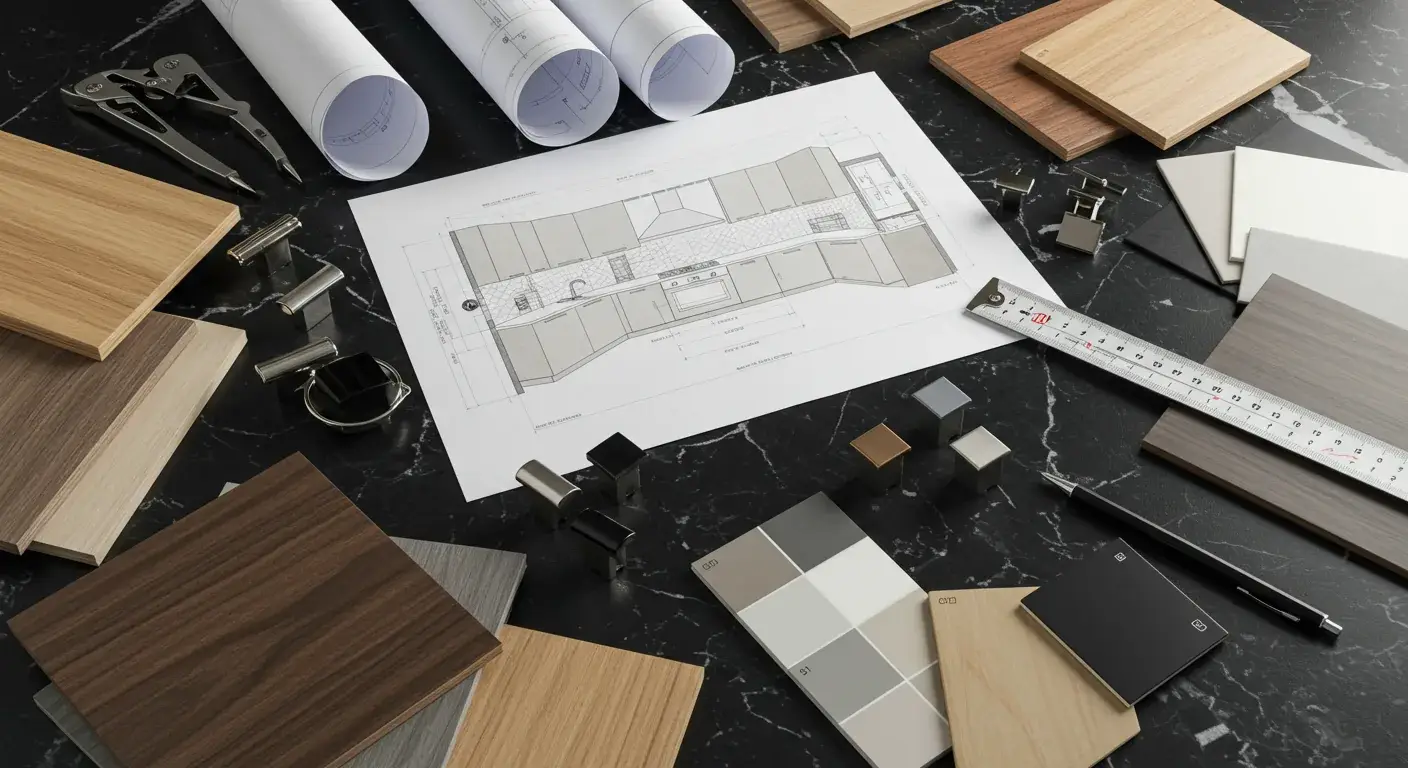
Custom manufacturing, in the KITWOOD context, is the production of cabinets that are not constrained by a module catalogue. Every cabinet is dimensioned specifically for your room.
In practice, this means a 5.83 m wall is built as cabinets that exactly span 5.83 m — not as 60 cm + 60 cm + 60 cm + 60 cm + 60 cm + 60 cm + 60 cm + 60 cm + 60 cm + filler. A 2.42 m island is dimensioned as 2.42 m, not 2.40 m + 2 cm gap.
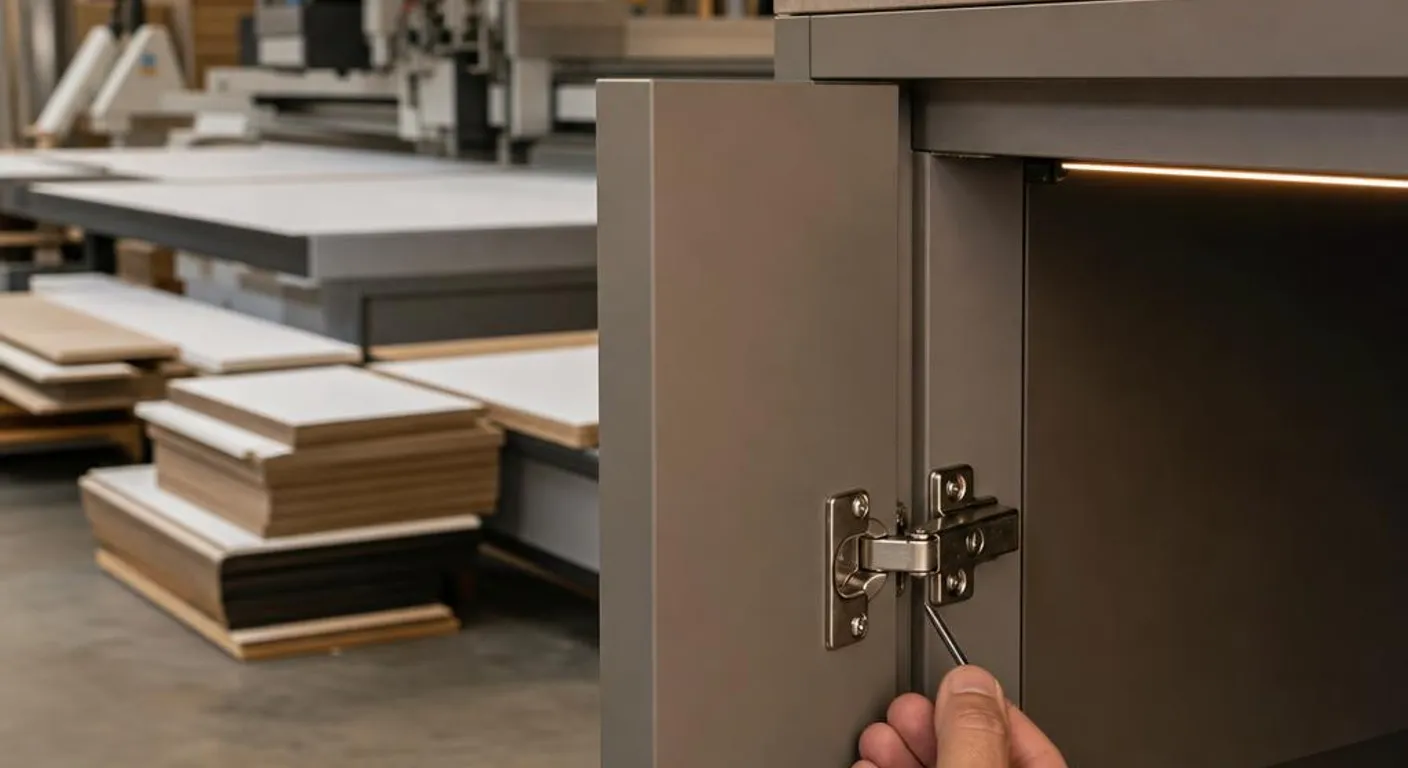
The carcasses are cut on the same CNC machinery that European modular factories use, in our 6,000 m² Zouk Mosbeh facility, with the same Blum hardware and the same material specifications. The only difference is that the cut list is generated specifically for your kitchen rather than for a standard catalogue.
This approach has been the KITWOOD model since 1981 — long before "customisation" became a marketing term in the European modular industry.
Where Modular Wins
There are situations where the imported modular route is the better choice, and we are honest about them:
SQUARE ROOMS WITH GENEROUS DIMENSIONS: New-build apartments and villas designed from scratch with kitchen modularity in mind often have wall lengths that are direct multiples of standard module sizes. In those rooms, modular delivers without compromise.
DESIGN VISION ALIGNS WITH A CATALOGUE: If you have specifically chosen a particular European brand because its design language matches your project, imported modular is not just acceptable — it is the correct route.
STANDARD CONFIGURATION WITH NO ISLAND: A straight 3-metre kitchen against one wall, in a standard apartment, can often be specified entirely from a modular catalogue with no compromises.
FOR THESE PROJECTS, IMPORTED MODULAR IS CONSISTENT, ENGINEERED, AND DELIVERS A REFINED RESULT.
Where Custom Manufacturing Wins
There are situations where custom manufacturing is clearly the better choice:
IRREGULAR ROOM GEOMETRY: Lebanese apartments — particularly older Beirut buildings, mountain homes, and converted spaces — frequently have wall angles that are not 90°, columns intruding into the run, alcoves of non-standard depth, or sloped ceilings that drop the available cabinet height progressively.
Non-rectangular kitchens (L-shape, U-shape, peninsula, island) magnify these issues. Where two runs meet at a corner, the geometry rarely cooperates with module increments. Custom manufacturing simply cuts the corner cabinet to the exact dimension required.
UNUSUAL CEILING HEIGHTS: Many Lebanese homes have ceilings between 2.85 m and 3.40 m. Standard European modular tall cabinets are 2.10 m, 2.28 m, or 2.40 m — leaving either a wasted gap above or a non-coherent bulkhead. Custom manufacturing sizes the tall cabinets to fill the actual ceiling height.
SPECIFIC MATERIAL COMBINATIONS: If you want a Fenix NTM front in a colour the imported brand does not offer, paired with a wood veneer they do not stock, paired with a worktop in a material their catalogue restricts — custom manufacturing assembles any combination from any supplier.
NON-STANDARD INTERIOR ACCESSORIES: Custom-manufactured drawers and pull-outs can be sized for specific items the homeowner already has — a particular bin set, a specific tray collection, an existing range cooker — rather than forcing the homeowner to buy what fits the modular sizes.
The Filler Panel Test
A practical way to evaluate any modular installation: count the filler panels.
A filler panel is a strip of finished material — typically 5 cm to 15 cm wide — used to cover the gap between the last cabinet module and the wall, or between two cabinets that do not align. Modular kitchens use filler panels because the modules cannot exactly match the wall dimensions.
Filler panels are not necessarily ugly. They are necessary in the modular approach. But they are visible, and they are the most common reason a modular kitchen looks slightly less resolved than a custom kitchen at first glance.
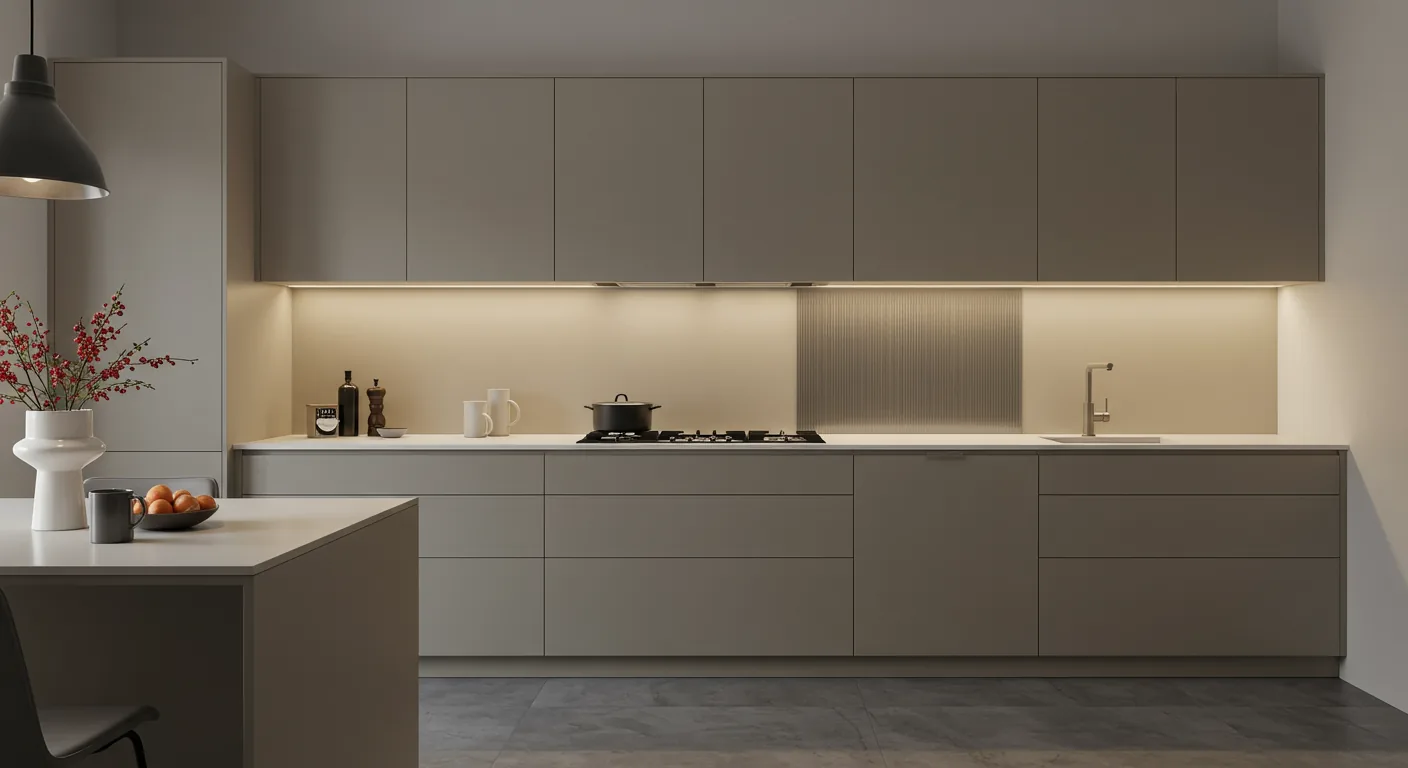
A custom-manufactured kitchen has zero filler panels. The cabinets begin at the wall and end at the wall. Where two runs meet at a corner, the corner cabinet is built to the exact dimension required.
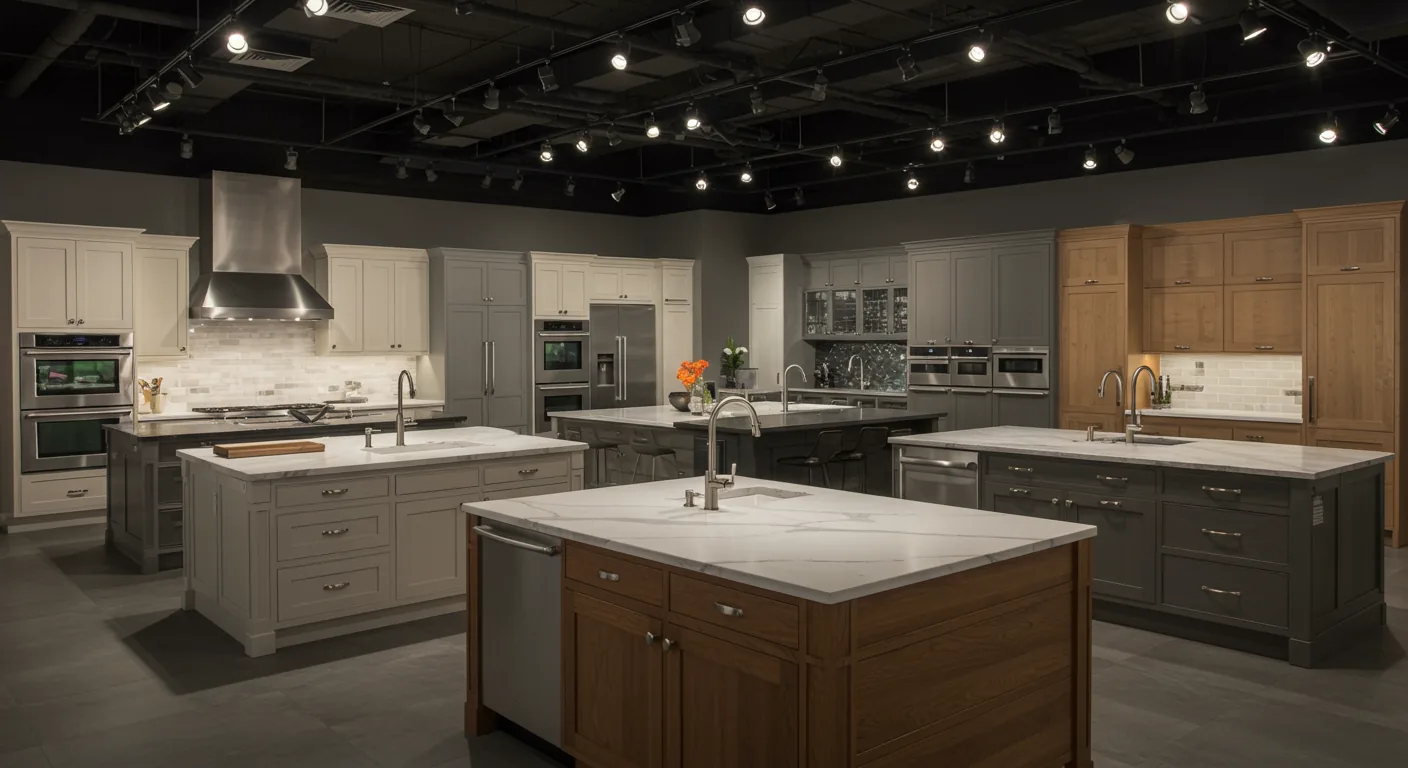
If you have visited kitchen showrooms and noticed that some kitchens look 'cleaner' than others without being able to articulate why — the filler-panel difference is usually the explanation.
Cost and Lead Time Comparison
Cost ranges for an equivalent open-plan kitchen in Lebanon, comparable specification:
IMPORTED MODULAR PREMIUM (named European brand): • Cabinet supply and installation: €30,000–€80,000 • Filler panels and end pieces: included • Lead time: 10–16 weeks from order
KITWOOD CUSTOM MANUFACTURED (equivalent material specification): • Cabinet supply and installation: €22,000–€55,000 • Filler panels: not applicable (zero) • Lead time: 6–8 weeks from design approval
The cost gap reflects shipping, import duty, brand margin, and European production cost. The lead time gap reflects the fact that custom manufacturing in Lebanon does not require ocean freight or customs clearance.
For a deeper comparison of bespoke vs imported routes specifically for the Italian premium tier, see our custom vs Italian kitchens guide.
Frequently Asked Questions: Custom Manufacturing vs Imported Modular Kitchens
**Is a modular kitchen lower quality than a custom kitchen?** Not necessarily. A premium modular kitchen from a reputable European brand is technically high quality. The limitation is dimensional, not technical — modular cabinets cannot resolve non-standard room geometry as cleanly as custom-built cabinets.
**Can custom manufacturing match the engineering precision of imported modular?** Yes, when the custom manufacturer uses the same machinery, the same hardware, and the same materials. KITWOOD's CNC-driven production line is engineered to the same tolerances as European modular factories.
**What is the practical lead-time difference?** Imported modular: 10–16 weeks. Custom manufactured in Lebanon: 6–8 weeks. The difference is typically the ocean freight and customs clearance that imported routes require.
**Why is custom manufacturing cheaper than imported modular at equivalent specification?** Because there is no shipping, no import duty, no brand premium, and no import-chain margin. The same materials and the same hardware cost less when assembled locally.
**Can I tell the difference between a modular and custom kitchen at first glance?** Often, yes — through filler panels, end-panel proportions, and how cabinets meet the ceiling and walls. A custom kitchen typically has zero filler panels and exact alignment everywhere.
Visit the kitchens hub to see custom installations in detail, or contact our design team to discuss your room specifically.
Ready to start your project?
Book a Free Consultation with KITWOOD Lebanon
Visit our showrooms in Sin el Fil (Saloumeh Roundabout) or Zouk Mosbeh (Jounieh Highway), or request a showroom consultation anywhere in Lebanon.