Local vs German Kitchens in Lebanon
Imported German kitchens vs locally manufactured premium kitchens in Lebanon — comparing factory control, dimensions, after-sales, and value.
Quick Answer
Imported German kitchens deliver brand prestige and engineered modular precision. Locally manufactured premium kitchens (like KITWOOD) deliver fully custom dimensions, faster lead times, lower total cost, and direct after-sales — with structural quality that matches or exceeds imported systems when specified correctly.
- Imported German systems: 12–18 week lead time, fixed module dimensions, full import-chain after-sales
- Locally manufactured premium (KITWOOD): 6–8 week lead time, fully bespoke dimensions, direct factory after-sales
- Cost gap: imported German systems typically cost 30–60% more than equivalent locally manufactured kitchens
- Both can use the same European hardware (Blum) and the same premium material library
Choose an imported German kitchen if a specific German brand identity is non-negotiable for the project. Choose locally manufactured premium if dimensional flexibility, lead time, and direct after-sales matter more than brand provenance.
The Two Premium Routes Lebanese Buyers Actually Compare
In Lebanon's premium kitchen market, two routes compete for the same client: an imported German kitchen system from a named European brand, or a locally manufactured premium bespoke kitchen.
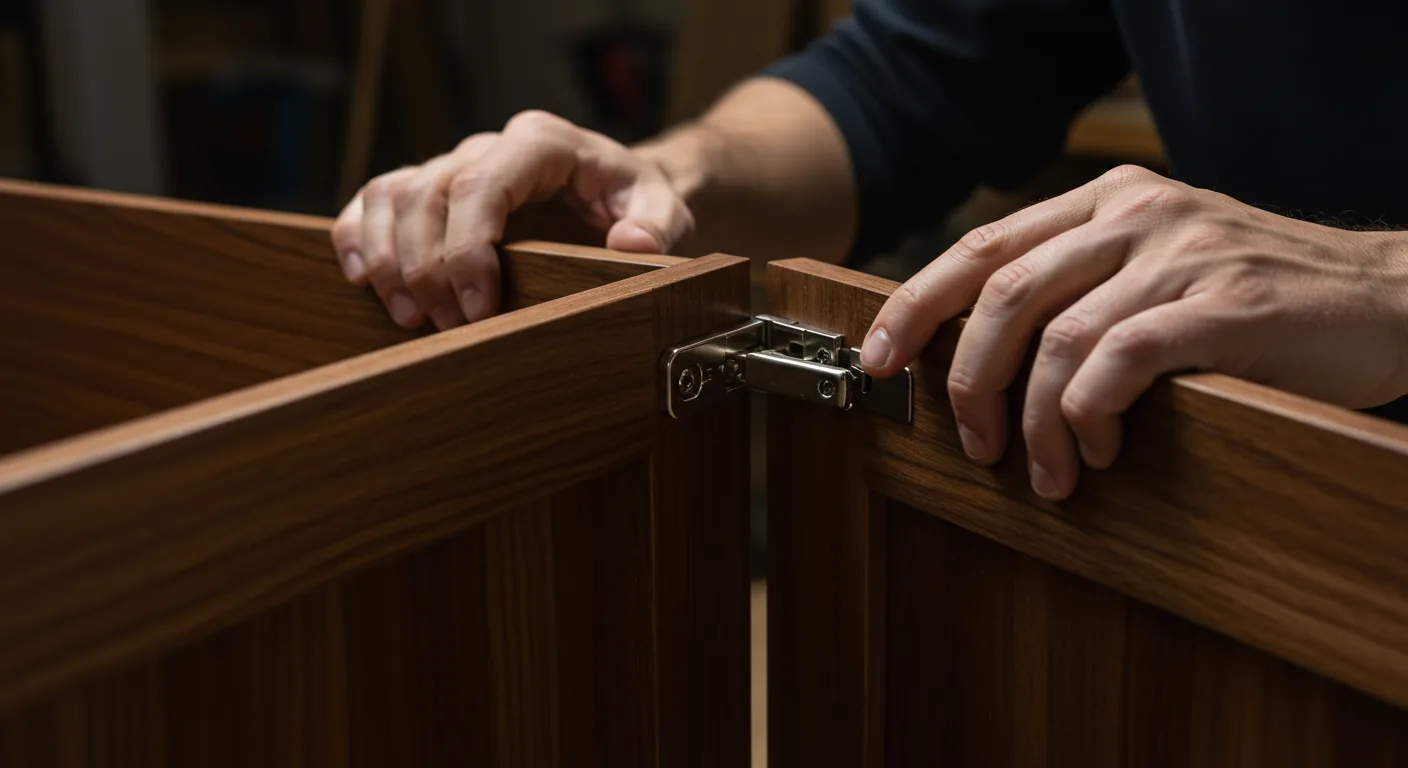
Both are legitimate premium products. Both can use the same Blum hardware, the same quartz worktops, and the same lacquer or veneer fronts. The difference is not whether the kitchen is premium — it is where the cabinets are made, how they are dimensioned, how long delivery takes, and which party handles an adjustment or service request under the documented support arrangements.
This guide is written from the perspective of a Lebanese manufacturer that has built kitchens since 1981 and sees both routes installed in Lebanese homes. The goal is to help you decide based on your priorities — not on marketing.
What Imported German Kitchens Deliver
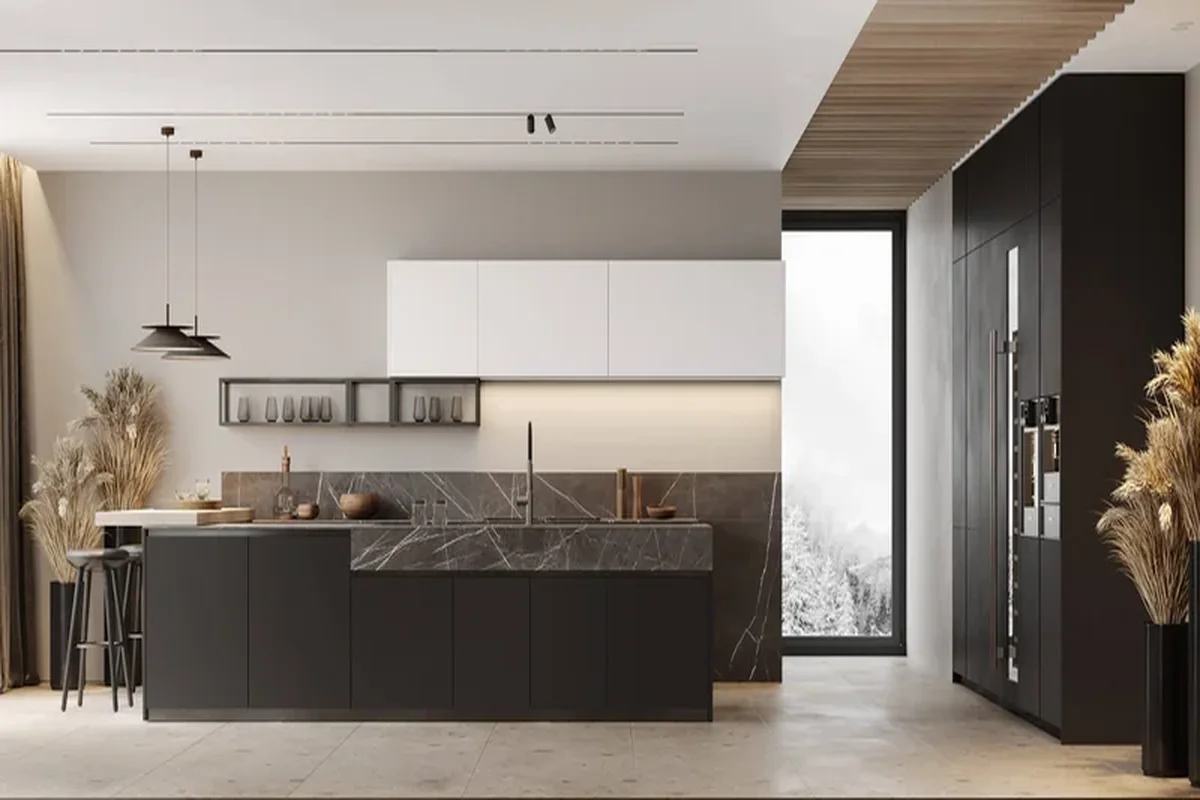
German kitchen brands have spent decades building a specific reputation: precise engineering, consistent module tolerances, and an industrial-quality finish. That reputation is not invented. The German kitchen industry produces a genuinely refined product, with assembly systems engineered for predictable installation and long service life.
What an imported German kitchen typically offers:
• A coherent design system — door profiles, handle integration, plinth detailing and accessory ranges all designed to work together • Tightly controlled module tolerances — carcasses align cleanly when the room is square • A defined material catalogue with consistent finish quality across every batch • The brand identity itself — for some clients, the name on the cabinet matters and that is a legitimate part of the value
The trade-offs are equally real:
• Lead times of 12–18 weeks from order to delivery, including ocean freight and customs clearance in Beirut • Fixed module increments (typically 15 cm or 30 cm) that may not resolve cleanly against irregular walls • Pricing that includes brand premium, European labour cost, shipping, and import duties — often 30–60% above equivalent locally manufactured premium • After-sales handled through an import chain — replacement parts must be ordered from Germany if the local distributor does not stock them
What Locally Manufactured Premium Delivers
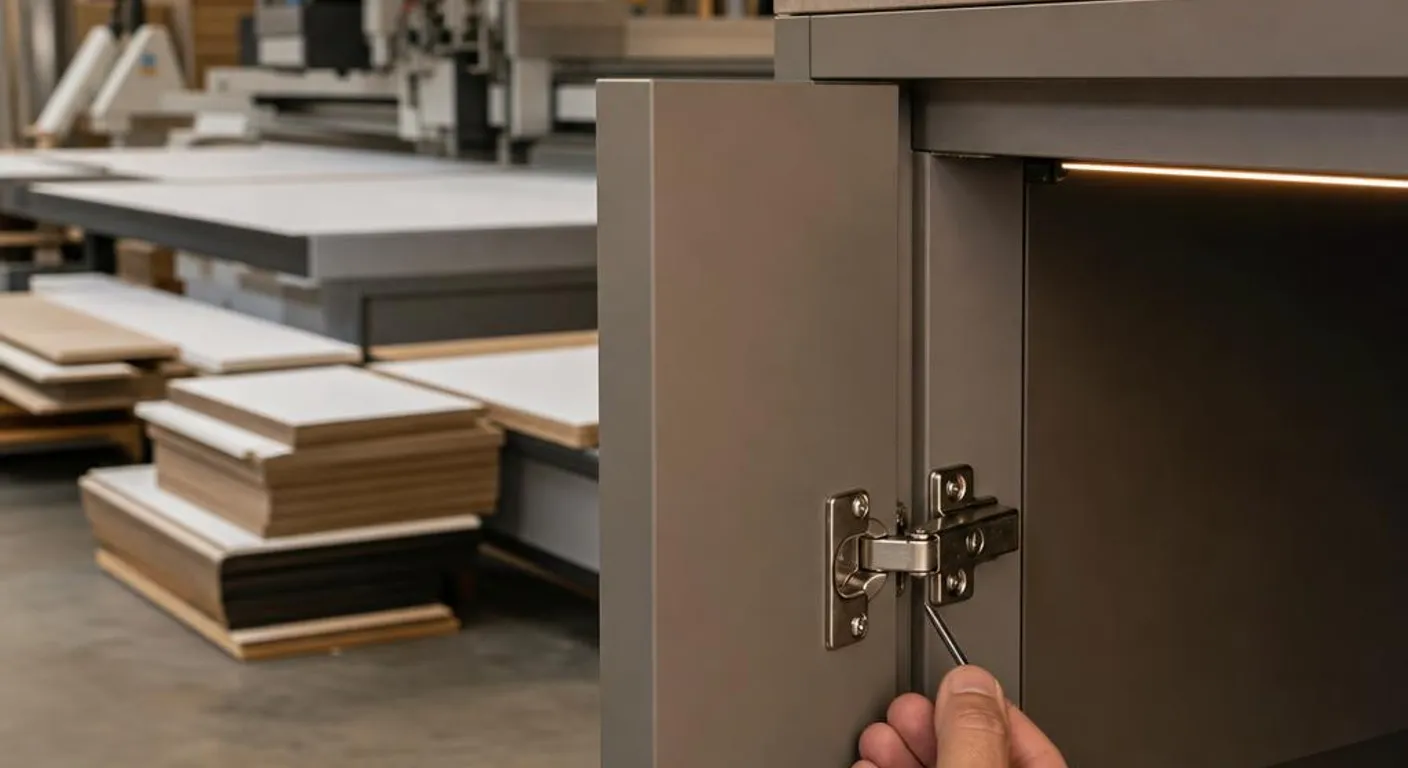
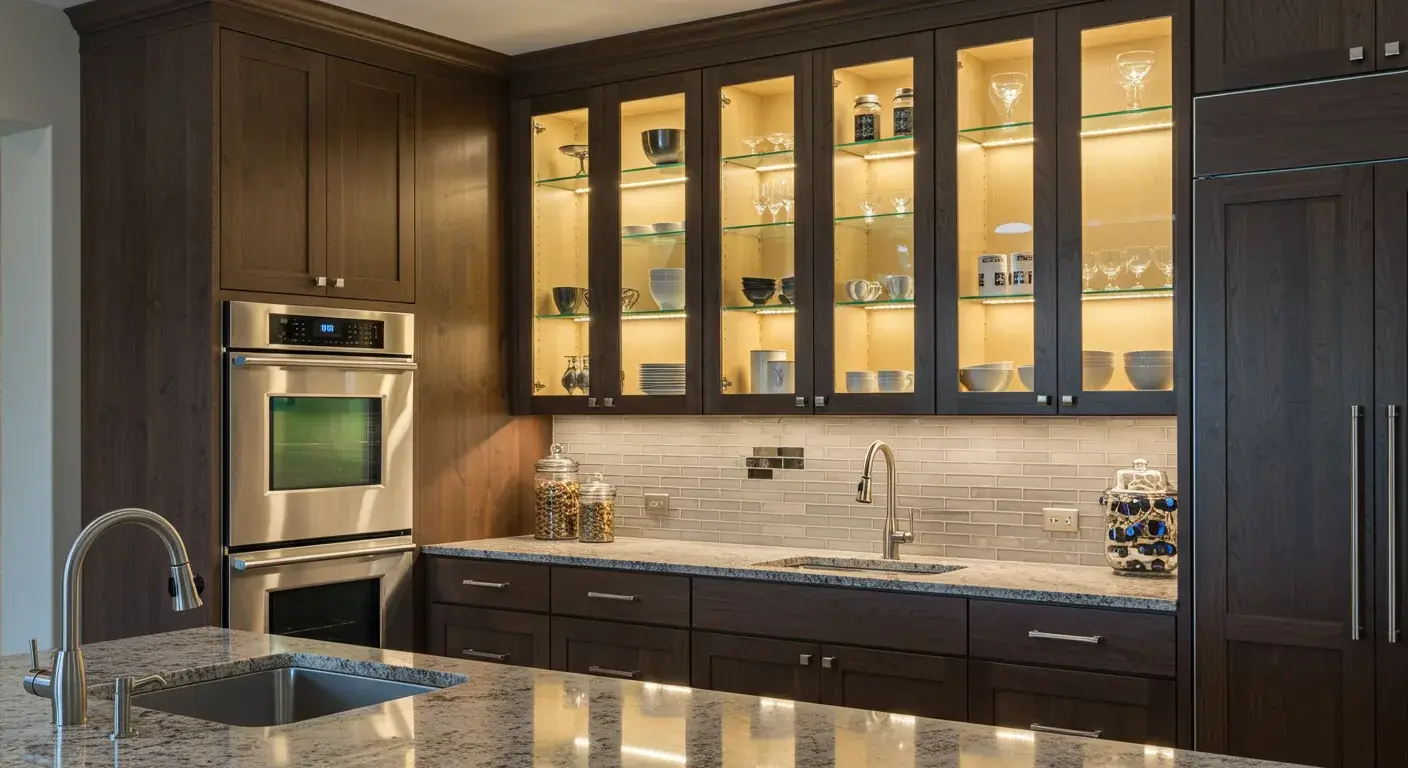
A locally manufactured premium kitchen, in the KITWOOD context, is a kitchen designed and built specifically for your room in our 6,000 m² Zouk Mosbeh facility, on the same CNC machinery and with the same European hardware that high-end European manufacturers use.
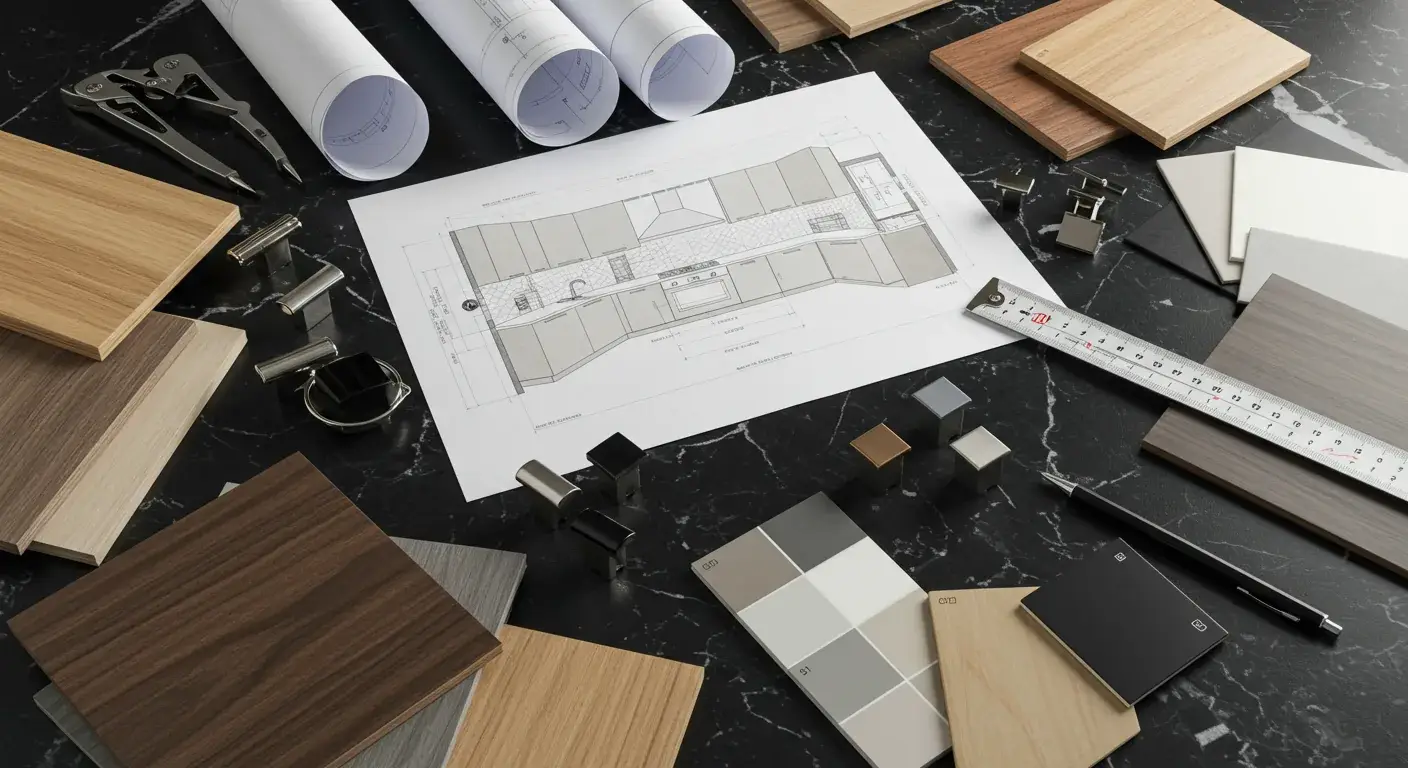
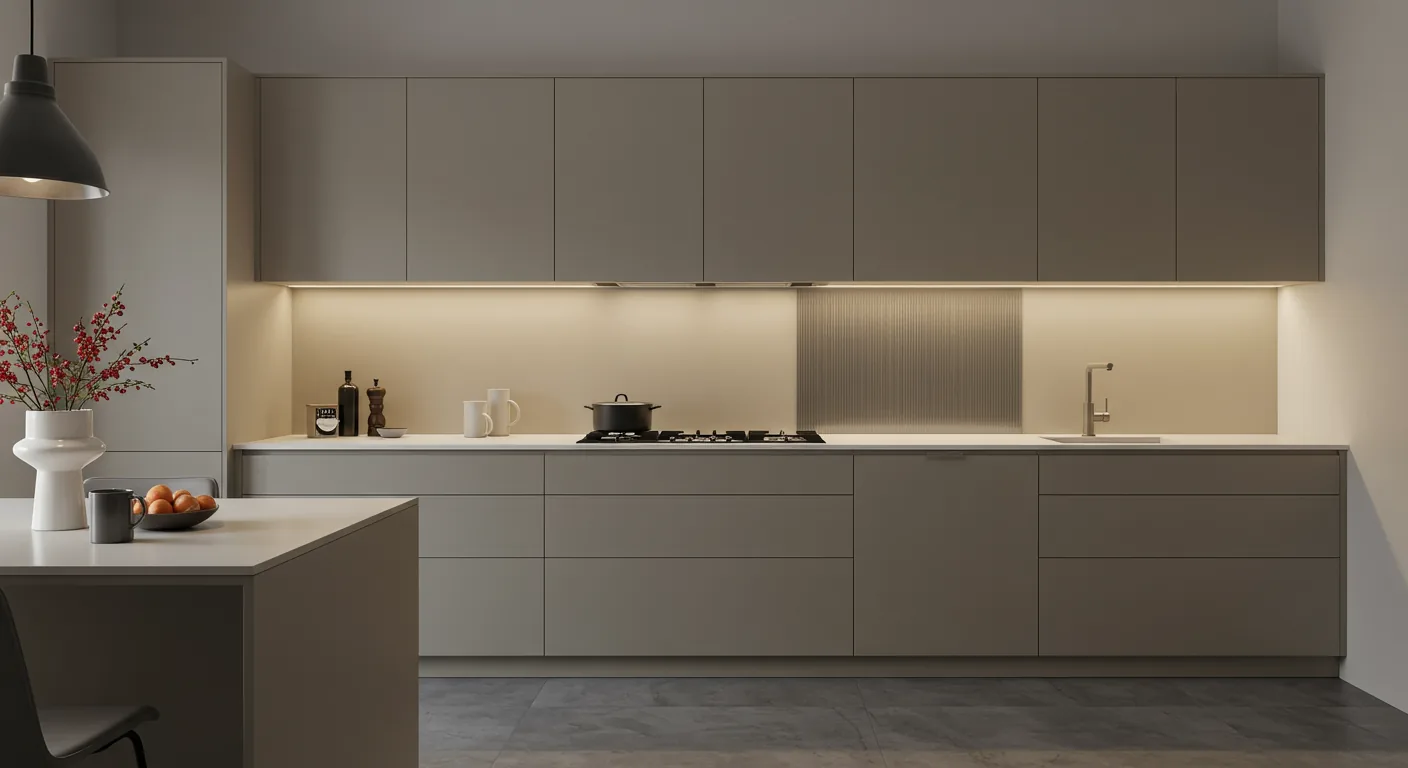
The cabinets are not modular. Every carcass is cut to your exact room dimensions. The fronts are produced to your specified material — lacquer, HPL, veneer, Fenix NTM, acrylic, or solid wood — in any colour combination. The island, if present, is designed as a unique furniture piece sized to your floor plan and lifestyle.
What this delivers in practice:
• Lead times of 6–8 weeks from design approval — roughly half the imported timeline • Fully bespoke dimensions — critical in Lebanese apartments where columns, alcoves, sloped ceilings, and irregular wall angles are common • Material freedom that no single European catalogue can match — combinations are not pre-approved by a German design department • Direct factory after-sales — when service is needed, the same factory that built the cabinet can confirm compatibility and handle a parts request subject to current documentation and availability • Total project cost that is typically 30–60% lower than the equivalent imported German system, because there is no transatlantic shipping, no import chain margin, and no provenance premium
Where the Imported German Route Is Genuinely Better
There are projects where an imported German kitchen is the right answer, and we say so honestly:
WHEN THE BRAND IS SPECIFIED: If your architect, interior designer, or project specification requires a specific German brand by name, that requirement should be respected. The reasons are usually project-coherence reasons that go beyond the kitchen itself.
WHEN INTERNATIONAL RESALE IS LIKELY: For investment-grade homes that may be sold or rented to international buyers, a German brand carries wider name recognition than any Lebanese manufacturer.
WHEN A SPECIFIC SYSTEM ALIGNS PERFECTLY: If a particular German collection's profiles, proportions, and accessory range exactly match your design vision and your room is square enough to accept fixed modules without compromise, the imported route delivers a result that is genuinely difficult to replicate.
These are real situations, and they account for a meaningful share of Lebanon's premium kitchen market. We do not dispute that.
Where Locally Manufactured Is Genuinely Better
Equally honestly — there are projects where the locally manufactured premium route is clearly better:
UNUSUAL ROOM GEOMETRY: Lebanese homes — older Beirut apartments, mountain villas, converted spaces — frequently have column intrusions, alcoves, or wall angles that fixed German modules cannot resolve cleanly. A bespoke kitchen designed to the millimetre eliminates the visual compromises that plague modular installations in non-square rooms.
TIGHTER RENOVATION SCHEDULE: When the contractor needs the kitchen on site in two months rather than four, the imported German route is simply not available. Locally manufactured premium is.
MATERIAL COMBINATIONS THE BRAND DOES NOT OFFER: If you want a specific lacquer colour paired with a specific wood veneer paired with a specific stone island — and that combination is not in any single German catalogue — bespoke local manufacturing is the only route that delivers it.
DIRECT AFTER-SALES PRIORITY: For homeowners who plan to live in the property long-term and value the ability to call the manufacturer directly when service is needed, a locally manufactured kitchen with the factory phone number on the receipt has practical value that an import chain cannot match.
VALUE-FOR-SPECIFICATION SENSITIVITY: For clients who want the best technical specification their budget allows — premium particleboard carcasses with documented water-resistant performance and a separate E1 low-emissions classification, full Blum hardware, quartz worktops, proper lighting integration — the 30–60% saving against equivalent imported German pricing is the difference between a 35 m² kitchen and a 45 m² kitchen at the same budget.
Cost Comparison — What to Expect in Lebanon
Direct cost ranges for an equivalent open-plan premium kitchen in Lebanon (cabinets and installation, before worktop and appliances):
IMPORTED GERMAN PREMIUM (named brand, equivalent specification): • Standard configuration: typically €45,000–€95,000 • Full villa configuration with island: €70,000–€150,000+ • Quartz worktop (separate): €4,000–€14,000 additional • Lead time: 12–18 weeks from order to delivery in Lebanon
KITWOOD LOCALLY MANUFACTURED PREMIUM (TWENTY or TWENTYTWO collection, equivalent specification): • Standard configuration: typically €25,000–€55,000 • Full villa configuration with island: €45,000–€95,000 • Quartz worktop (separate): €3,000–€12,000 additional • Lead time: 6–8 weeks from design approval
The gap is real and consistent. It does not reflect a quality difference — it reflects shipping, import duty, brand premium, and European labour cost embedded in the imported price. Whether that premium is worth paying depends entirely on whether brand provenance is a priority for your specific project.
For a full breakdown of kitchen pricing in Lebanon at every specification level, see our 2026 kitchen cost guide.
How to Make the Decision Honestly
The decision usually comes down to three questions:
1. Does a specific German brand identity carry real value for your project — for resale, for specification compliance, or for personal preference? If yes, the imported route is the right answer.
2. Does your room have geometry, your project a schedule, or your specification a material combination that fixed German modules cannot accommodate cleanly? If yes, the locally manufactured premium route is the right answer.
3. If neither question has a clear answer, the deciding factor is usually total cost. The 30–60% saving on locally manufactured premium typically funds either a higher-specification kitchen at the same budget, or the same kitchen at a lower budget with the difference redirected to appliances or worktops.
There is no universal best answer. There is the right answer for your specific project, and the honest comparison above is the basis for finding it.
Frequently Asked Questions: Local vs Imported German Kitchens in Lebanon
**Are imported German kitchens better quality than locally made Lebanese kitchens?** Not automatically. Quality depends on specification, not origin. A KITWOOD kitchen built on particleboard carcasses with documented water-resistant performance and a separate E1 low-emissions classification, full Blum hardware, and a quartz worktop is technically equivalent to an imported German kitchen at the same specification — at significantly lower cost.
**How long does it take to get an imported German kitchen in Lebanon?** Typically 12–18 weeks from order to delivery, including ocean freight from Europe and customs clearance in Beirut. KITWOOD locally manufactured premium typically delivers in 6–8 weeks from design approval.
**Why are imported German kitchens so much more expensive?** The price includes the brand premium, European manufacturing labour cost, ocean freight, customs duty, and import-chain margin. A locally manufactured premium kitchen with equivalent specification eliminates all of those line items.
**Can a Lebanese manufacturer build a kitchen as well as a German factory?** Yes — when the manufacturer uses the same materials and the same hardware on the same class of CNC machinery. KITWOOD has manufactured kitchens in Lebanon since 1981 in our 6,000 m² Zouk Mosbeh facility.
**What about after-sales service?** This is one of the strongest practical arguments for locally manufactured. KITWOOD's after-sales is handled directly by the same factory that built the kitchen, subject to its written support terms and current parts availability. Imported brands depend on the local distributor having parts in stock, or on ordering them from Germany.
Visit our kitchens hub to see the full range, or book a consultation to discuss your project specifically.
Ready to start your project?
Book a Free Consultation with KITWOOD Lebanon
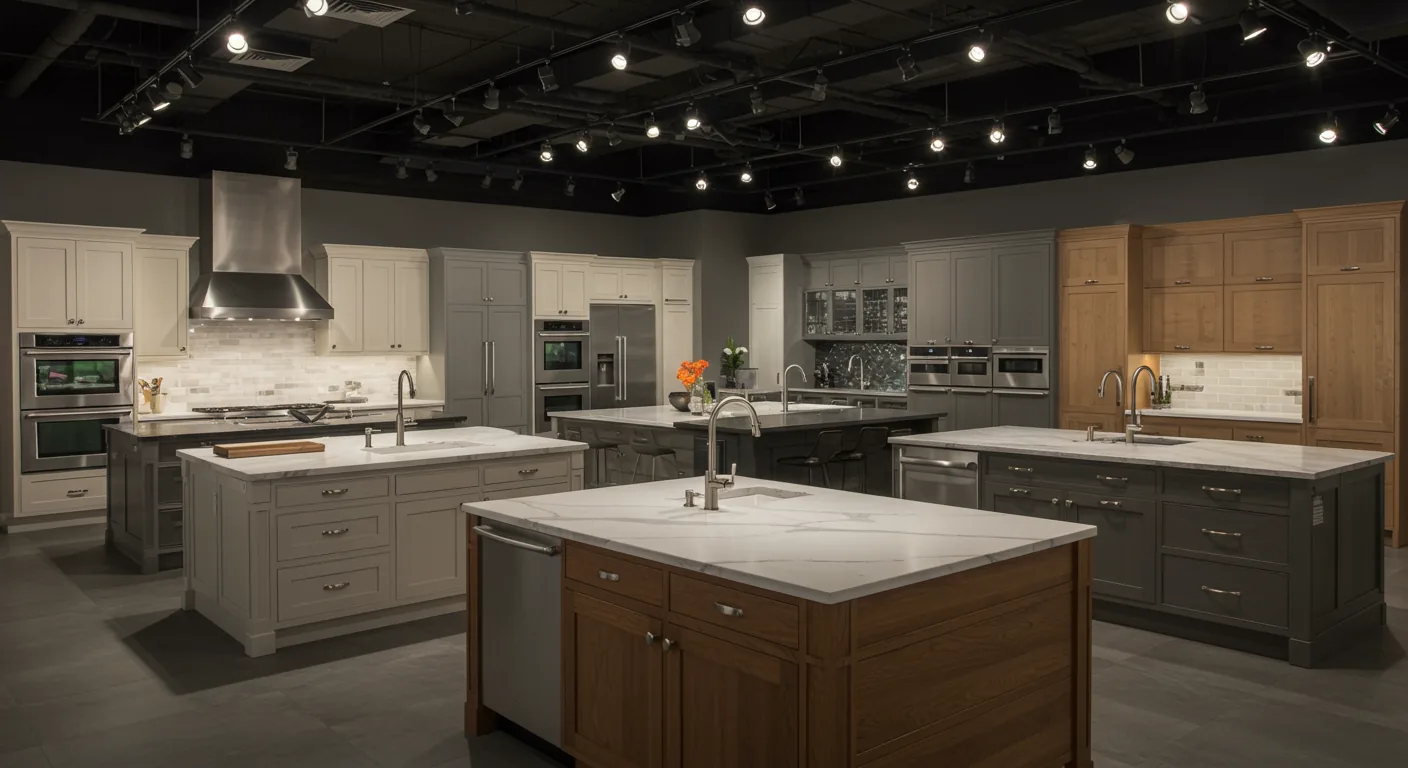
Visit our showrooms in Sin el Fil (Saloumeh Roundabout) or Zouk Mosbeh (Jounieh Highway), or request a showroom consultation anywhere in Lebanon.