Kitchen Door Finishes Lebanon: A Quick Guide
Acrylic, lacquer, HPL laminate or wood veneer? A KITWOOD guide to how each kitchen door finish looks, performs in Lebanon's climate, and which to choose.
Quick Answer
For most Lebanese homes, matte lacquer offers a strong balance of premium appearance and maintainability when the coating, installation, exposure, use, and care are appropriate. Acrylic delivers the highest gloss impact but shows fingerprints. Laminate is practical. Veneer is the only truly natural option.
- Lacquer: premium matte or gloss finish, paintable to any RAL colour, with performance dependent on the coating specification and conditions
- Acrylic: ultra-high gloss, striking appearance, fingerprint-prone, heat-sensitive
- HPL/Melamine laminate: practical, wide colour range, lower cost, with surface performance dependent on product specification and use
- Wood veneer: only authentic natural wood grain, unique character, requires care in humid conditions
For a premium Lebanese home kitchen, matte lacquer (KITWOOD TWENTY or TWENTYTWO) is the most frequently chosen finish — combining a luxury look with performance in Lebanon's humidity and heat. Veneer is ideal when natural warmth is the design priority.
Why Your Door Finish Is the Most Important Material Decision
When you commission a new kitchen, you will make dozens of material decisions — carcass material, worktop stone, hardware brand, appliance specification. But none of them will define the visual identity of your kitchen as decisively as the finish on your door fronts.
Door fronts account for the largest visible surface area in any kitchen. They set the tone: contemporary or traditional, warm or cool, high-gloss or matte, natural or refined. Get the door finish right, and it anchors every other decision. Get it wrong, and no amount of premium hardware or beautiful stone will compensate.
In Lebanon's market, four finish types dominate the premium segment: lacquer, acrylic, HPL laminate, and wood veneer. Each has a distinct character, a distinct performance profile, and a distinct place in the cost spectrum. This guide explains each honestly — including how they behave in Lebanon's specific climate, which combines high coastal humidity in summer, damp winters, and extreme heat in the summer months.
Lacquer: The Premium Standard
Lacquer is applied as a liquid coating — either sprayed by hand or applied in a controlled factory environment — and cured to form a hard, consistent film over an MDF substrate. It is the finish most associated with premium kitchen design globally, and it is KITWOOD's most specified finish across our TWENTY and TWENTYTWO collections.
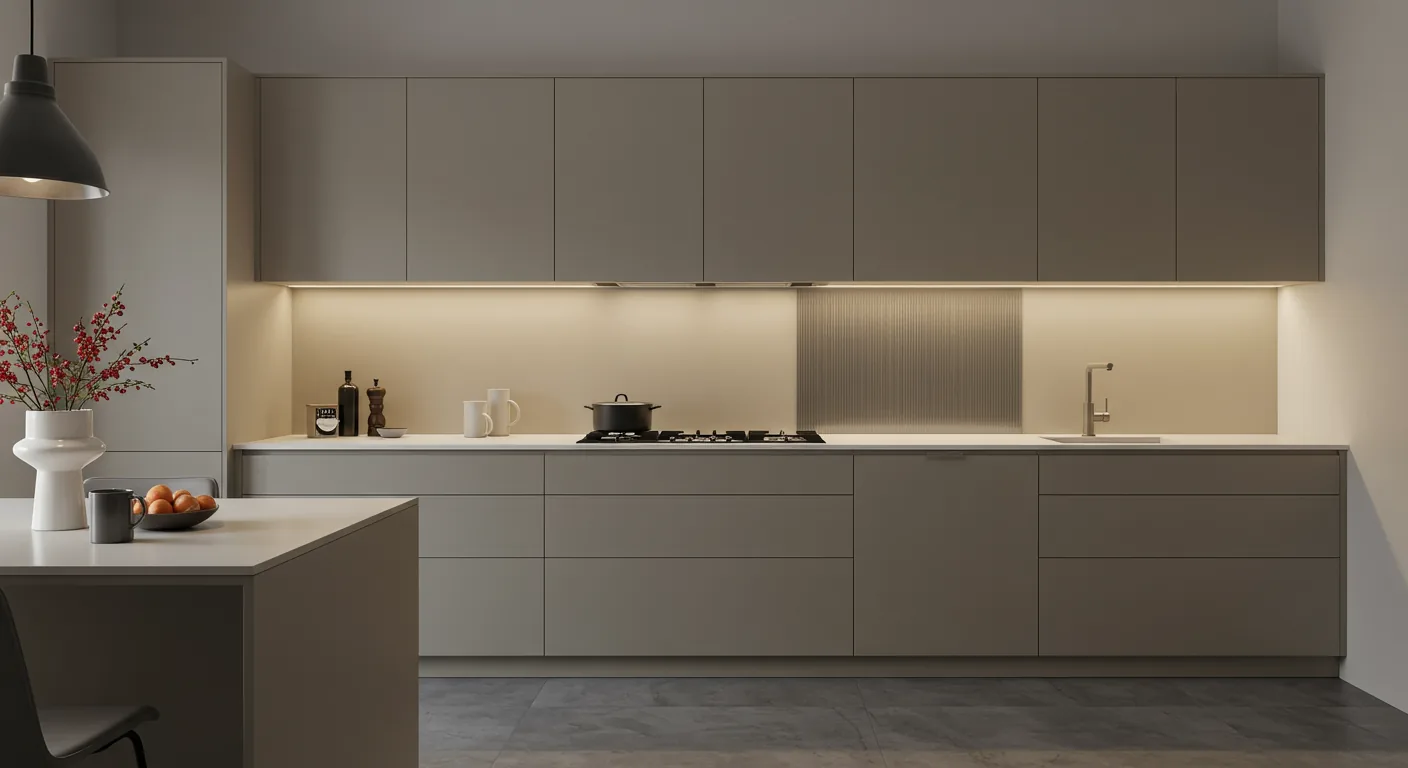
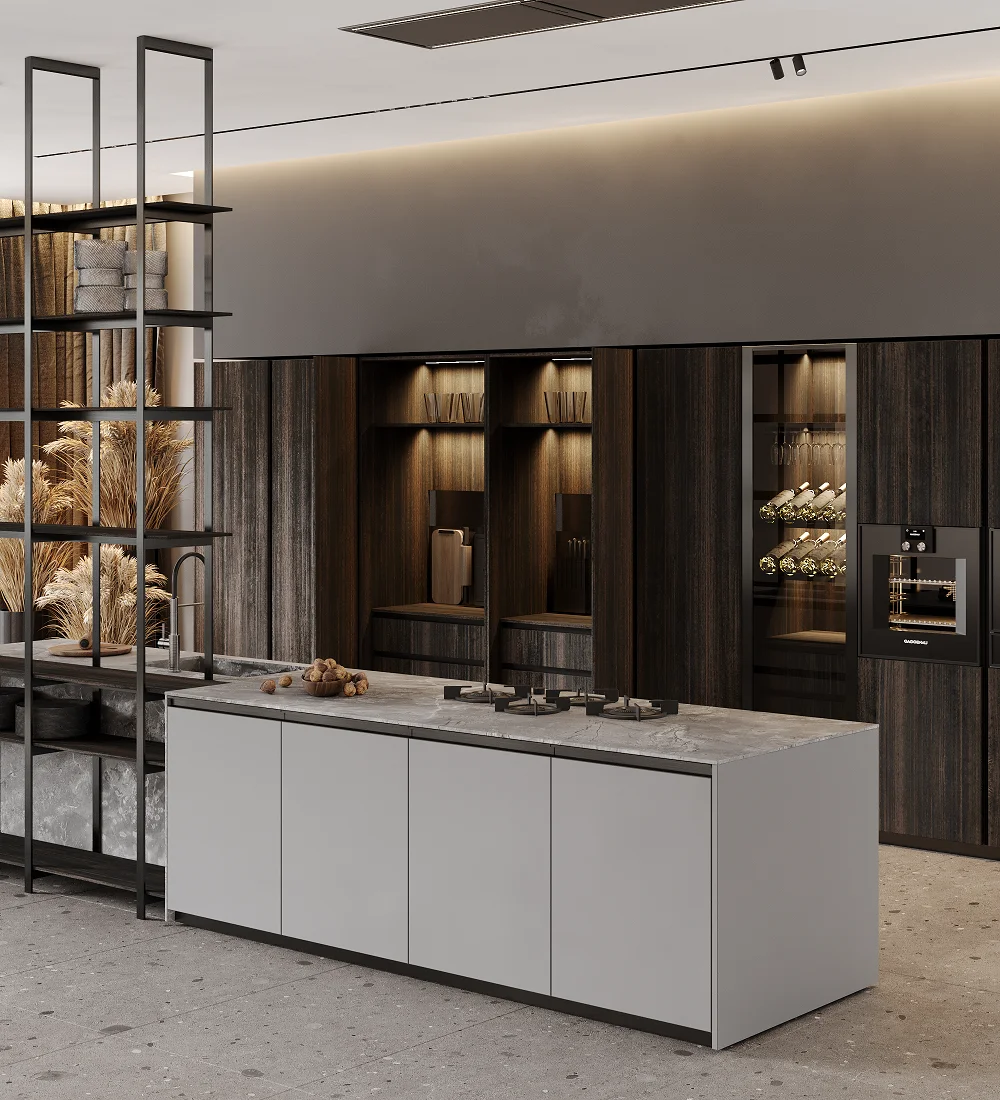
LACQUER IN MATTE FINISH Matte lacquer is Lebanon's most requested kitchen finish by a significant margin. The flat, non-reflective surface reads as distinctly premium — it absorbs light rather than reflecting it, creating a sense of depth and solidity. Matte lacquer also hides minor surface scratches better than gloss finishes, as the texture diffuses surface imperfections.
One key advantage: lacquer can be produced in virtually any RAL colour. This means your kitchen door colour is not constrained by a catalogue — you specify the exact tone, from a warm grey to a dusty rose to a deep midnight blue, and KITWOOD produces it to that specification.
LACQUER IN GLOSS FINISH Gloss lacquer is the traditional choice for formal kitchens — kitchens in more classical interior schemes, or where the client explicitly wants a high-reflectance finish without the acrylic material's associated characteristics. Gloss lacquer is more fingerprint-visible than matte but considerably less so than acrylic.
PERFORMANCE IN LEBANON'S CLIMATE Lacquer performs well in Lebanon's climate when properly produced and installed. At KITWOOD, we use a two-component (2K) polyurethane lacquer system — the same specification used by leading European kitchen manufacturers — which provides significantly better resistance to humidity, heat, and UV exposure than single-component lacquers. In Lebanon's coastal areas, where humidity regularly exceeds 70–80% in summer, the quality of the lacquer formulation matters enormously.
COST POSITION Lacquer is a mid-to-premium cost finish. Within the KITWOOD range, TWENTY and TWENTYTWO collection doors in lacquer are priced above laminate options but competitively with acrylic.
Acrylic: The High-Gloss Statement
Acrylic kitchen doors are made by applying a sheet of cast or extruded acrylic — the same material family as Perspex — to an MDF substrate, bonded under pressure. The result is a glass-like, ultra-high-gloss surface with a depth and reflectance that no lacquer can fully replicate.
THE VISUAL IMPACT No kitchen finish delivers more immediate visual impact than acrylic gloss. In a well-lit kitchen, acrylic doors create a mirror-like reflection that can feel almost architectural. For clients who want an uncompromising, ultra-modern aesthetic — particularly for kitchens that are designed to be visually striking as a room centrepiece — acrylic delivers an effect that is difficult to achieve by any other means.
THE PRACTICAL LIMITATIONS Acrylic is a polarising finish in practice. Its limitations are well-known:
FINGERPRINTS: Acrylic shows fingerprints, grease marks, and surface smudges immediately. A kitchen in daily use requires frequent wiping to maintain its appearance. For Lebanese households with children or high daily kitchen usage, this can be a frustrating maintenance reality.
SCRATCHING: Acrylic is more susceptible to visible scratching than lacquer. Rings, keys, or abrasive cleaning materials can mark a high-gloss surface; follow the product care instructions and assess the actual surface before deciding on repair or replacement.
HEAT SENSITIVITY: Cast acrylic has a relatively low heat distortion temperature. In Lebanon's summer heat, kitchens that receive direct sun exposure can experience surface warping near areas of sustained heat exposure. Careful installation and avoidance of direct sun on acrylic door faces is recommended.
WHEN ACRYLIC IS THE RIGHT CHOICE Acrylic is the right choice when the visual impact of ultra-high gloss is the primary priority, the kitchen is not in high daily use (a secondary kitchen, a display kitchen, or a kitchen in a property that is not permanently occupied), and the interior scheme specifically calls for a reflective surface quality.
HPL Laminate and Melamine: The Practical Workhorse
HPL (High Pressure Laminate) and melamine are both surface materials applied to MDF or particleboard substrates, but they differ in construction. Melamine is a resin-impregnated paper bonded to board under moderate heat and pressure — it is the standard finish for kitchen carcasses and entry-level door fronts. HPL is a more substantial product: multiple layers of resin-impregnated kraft paper pressed at very high pressure, producing a denser, harder surface whose performance depends on the product and conditions.
For premium kitchen fronts, HPL is the relevant specification — not standard melamine. KITWOOD's EIGHTEEN collection uses selected HPL and premium melamine door fronts.
THE CASE FOR LAMINATE Laminate finishes are underrated in Lebanon's kitchen market, where there is a perception that laminate equals budget. This is not accurate at the HPL level. Premium HPL door fronts from European suppliers (Pfleiderer, Formica, Egger) are specified in the same projects as Italian kitchen systems — they offer:
• The widest colour and texture range of any finish type — including convincing wood-effect, stone-effect, concrete-effect, and solid colour options in both matte and textured surfaces • Strong resistance to scratching, heat, and moisture when the product, installation, exposure, use, and care are appropriate — HPL can perform better in humid conditions than lacquer or acrylic • Lower cost than lacquer, making HPL a good choice when budget needs to be directed toward worktops or appliances • Very consistent, uniform finish — unlike veneer, there is no natural variation to manage
PERFORMANCE IN LEBANON'S CLIMATE HPL laminate is often a climate-resilient option for Lebanon when correctly specified and installed. Its care should follow the product guidance and actual exposure; confirm the edge treatment, use, and cleaning requirements. For kitchens in coastal areas of Lebanon, HPL is frequently a pragmatic specification.
Wood Veneer: The Natural Choice
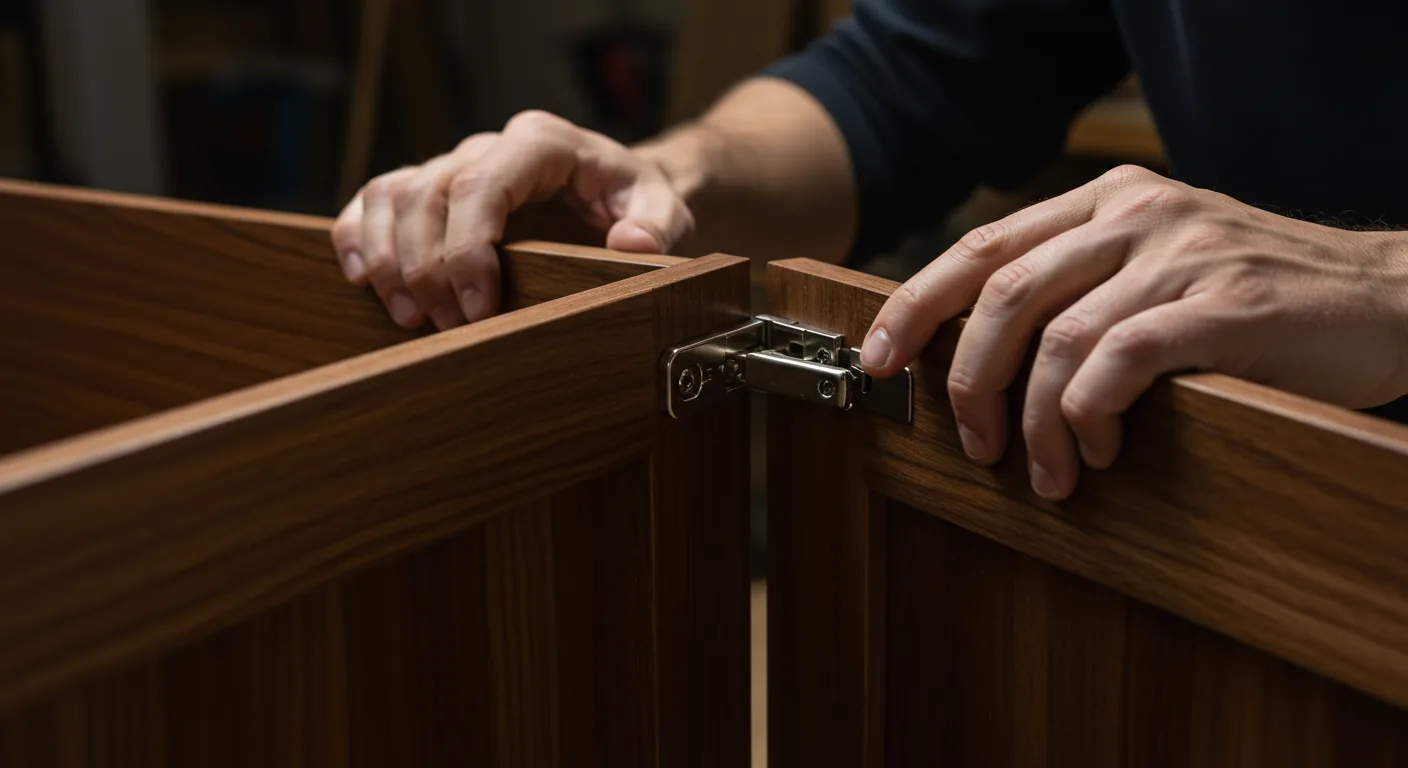
Wood veneer doors use a thin slice of real wood — typically 0.6mm to 2mm thick — bonded to an MDF substrate. The result is a door that looks and feels like solid wood, at a fraction of the cost and with dimensional stability that depends on the substrate, construction, exposure, and installation.
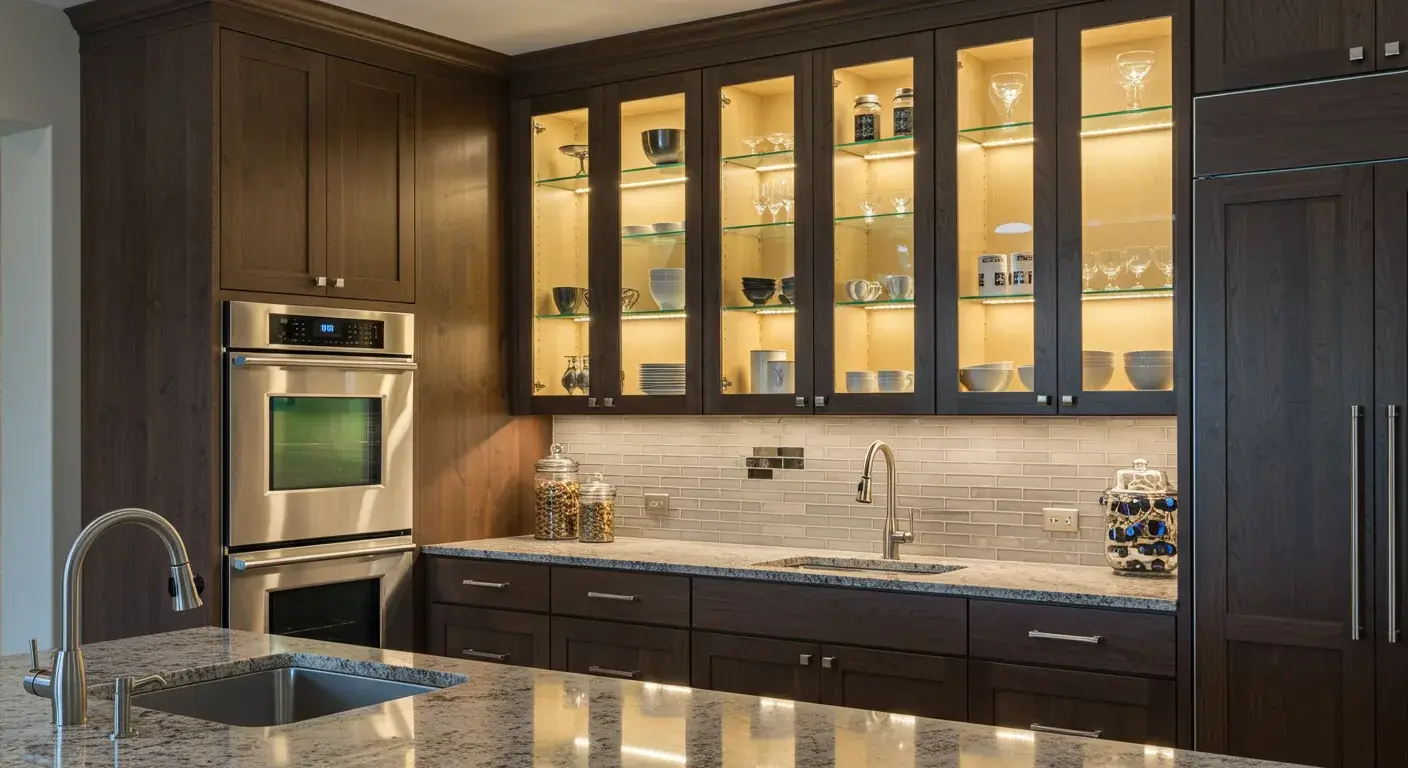
Veneer is the only kitchen finish in this comparison that delivers an authentically natural material — real wood grain, natural variation, and the tactile warmth that no manufactured surface can truly replicate.
WOOD SPECIES OPTIONS At KITWOOD, our veneer specifications include: oak (natural and smoked), walnut, ash, maple, and selected exotic species for bespoke commissions. Each species has a distinct grain character:
• Oak: Open grain, warm golden-brown to amber tone. The most commonly specified veneer in Lebanon's current market. • Smoked oak: Darker, more dramatic grain. Popular in contemporary designs with a Nordic aesthetic. • Walnut: Rich, dark, with a fine wavy grain. The most formal and traditionally 'luxury' veneer option. • Ash: Fine, straight grain, lighter colour. A more understated, modern alternative to oak.
VENEER AND LEBANON'S HUMIDITY Veneer requires careful management in Lebanon's humidity conditions. In coastal areas with high summer humidity, inadequately protected veneer doors can show surface movement, micro-cracking along the grain, or edge lifting depending on the construction, exposure, installation, and care.
At KITWOOD, our veneer doors are produced with cross-banded core construction and sealed with a UV-cured lacquer topcoat — a specification intended to improve humidity resistance. However, clients in high-humidity coastal properties should discuss veneer performance in detail before specifying it as the primary finish.
WHEN VENEER IS THE RIGHT CHOICE Veneer is the right choice when natural warmth is the design priority — when the client explicitly wants a kitchen that feels connected to nature, that has genuine material authenticity, and where the slight natural variation between door fronts is seen as a feature rather than a drawback.
Side-by-Side Comparison for Lebanon
Here is an honest comparison of the four finish types across the criteria that matter most for Lebanese kitchens:
FINGERPRINT RESISTANCE • Lacquer matte: Excellent — barely shows fingerprints • Lacquer gloss: Good — some fingerprint visibility • Acrylic: Poor — shows fingerprints immediately • HPL matte: Excellent • Veneer: Good — depends on topcoat finish
SCRATCH RESISTANCE • Lacquer: Good — resists everyday scratches under appropriate use and care • Acrylic: Moderate — visible marks are more likely under abrasive contact • HPL: Excellent — hard surface, with performance dependent on product and use • Veneer: Moderate — surface scratches visible on lacquered veneer
HUMIDITY RESISTANCE (important for coastal Lebanon) • Lacquer 2K: Good — excellent if properly specified • Acrylic: Moderate — substrate can be affected in very high humidity • HPL: Excellent — strong option in humid conditions when correctly specified • Veneer: Moderate — requires proper sealing; more sensitive to exposure
COLOUR RANGE • Lacquer: Unlimited (any RAL) • Acrylic: Wide (catalogue dependent) • HPL: Very wide (hundreds of textures and colours) • Veneer: Natural wood tones only (species-limited)
ESTIMATED COST POSITION (door fronts only, relative scale) • HPL/Melamine: 1× (base) • Acrylic: 1.3–1.6× • Lacquer matte: 1.5–2.0× • Veneer: 1.8–2.5×
What KITWOOD Recommends for Lebanese Homes
After producing kitchens in Lebanon since 1981 and installing across Beirut, the coast, the mountains, and North Lebanon, our experience with finish performance is extensive.
FOR COASTAL APARTMENTS (Jounieh, Kaslik, Jbeil, Tyre, Sidon): Matte lacquer (2K polyurethane) is our primary recommendation — it performs well in humid conditions when correctly specified, installed, and cared for, and delivers the premium look most coastal clients seek. For higher-humidity environments, premium HPL is another strong option when its product specification suits the exposure.
FOR BEIRUT CITY APARTMENTS: Matte lacquer is the dominant choice. The controlled interior environment of a Beirut apartment — with air conditioning managing humidity — can suit lacquer when the coating and installation are appropriate. Veneer is a popular choice in Beirut for clients who want warmth in a neutral or beige-toned scheme.
FOR MOUNTAIN RESIDENCES (Beit Mery, Broummana, Aley, Faraya): Veneer is popular here because the natural warmth of wood aligns well with mountain interior schemes. Lacquer matte is also a strong choice. Acrylic should be assessed against the room's exposure and use.
FOR INVESTMENT PROPERTIES AND RENTALS: HPL laminate is our recommendation where lower maintenance and straightforward cleaning are priorities, subject to the product specification, exposure, and occupants' use. Lacquer matte is another option when its care requirements suit the property.
For more information about our material specifications, visit our kitchen materials guide or book a free consultation at our Beirut showroom to see all four finish types in real kitchen installations.
How to Make the Decision
The choice between acrylic, lacquer, laminate, and veneer ultimately comes down to three questions:
1. WHAT AESTHETIC DO YOU WANT? If you want a warm, natural kitchen — veneer. If you want a contemporary, refined, matte look — lacquer. If you want maximum gloss impact — acrylic. If you want practicality with a modern finish — HPL.
2. HOW IS THE KITCHEN USED? A kitchen in daily heavy use — family cooking, multiple users, children — will perform better in matte lacquer or HPL than in acrylic or polished veneer. A kitchen that is used less intensively, or in a secondary property, can tolerate the higher-maintenance options.
3. WHAT IS YOUR LOCATION? Coastal, high-humidity locations in Lebanon favour lacquer (2K) and HPL over acrylic and unsealed veneer. Mountain locations are the most permissive for veneer. All four finishes perform well in the controlled interior environment of a Beirut apartment with air conditioning.
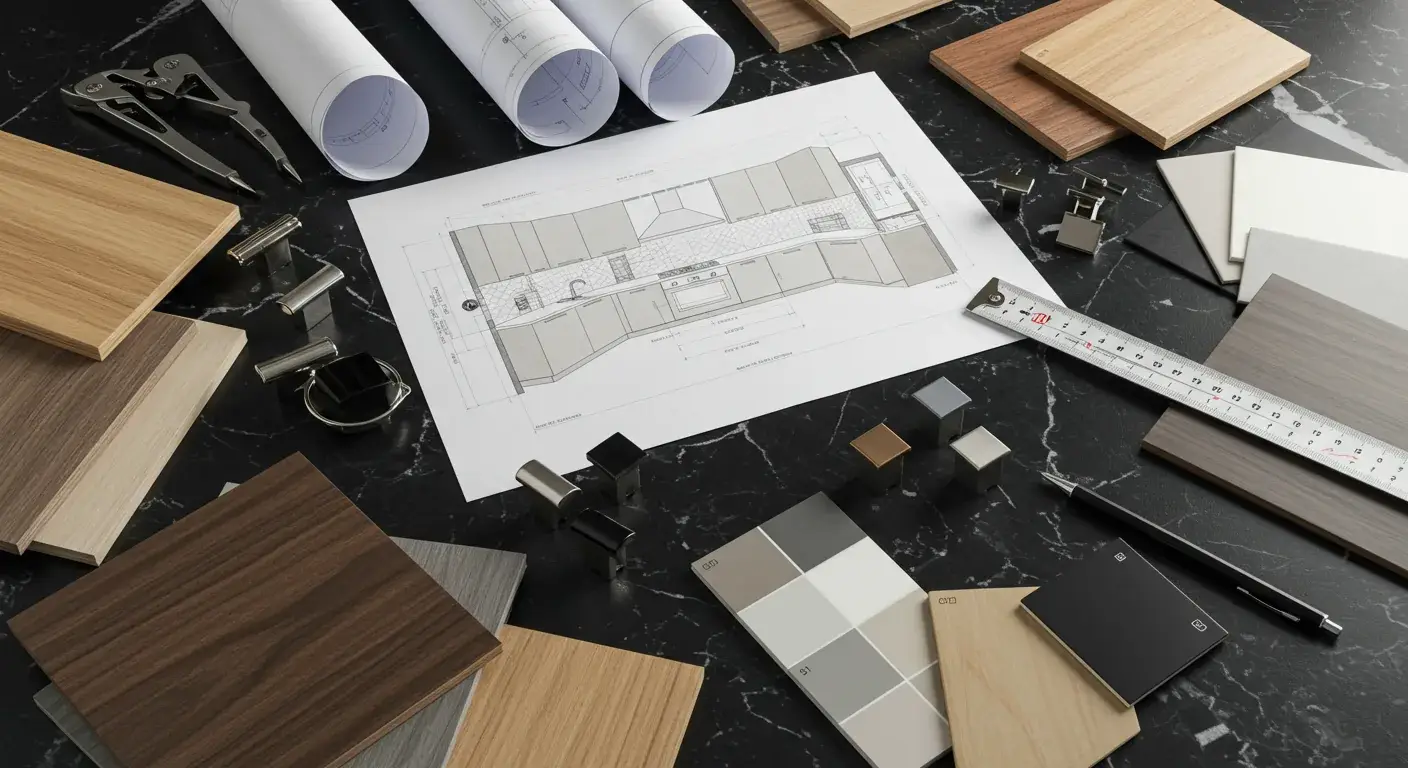
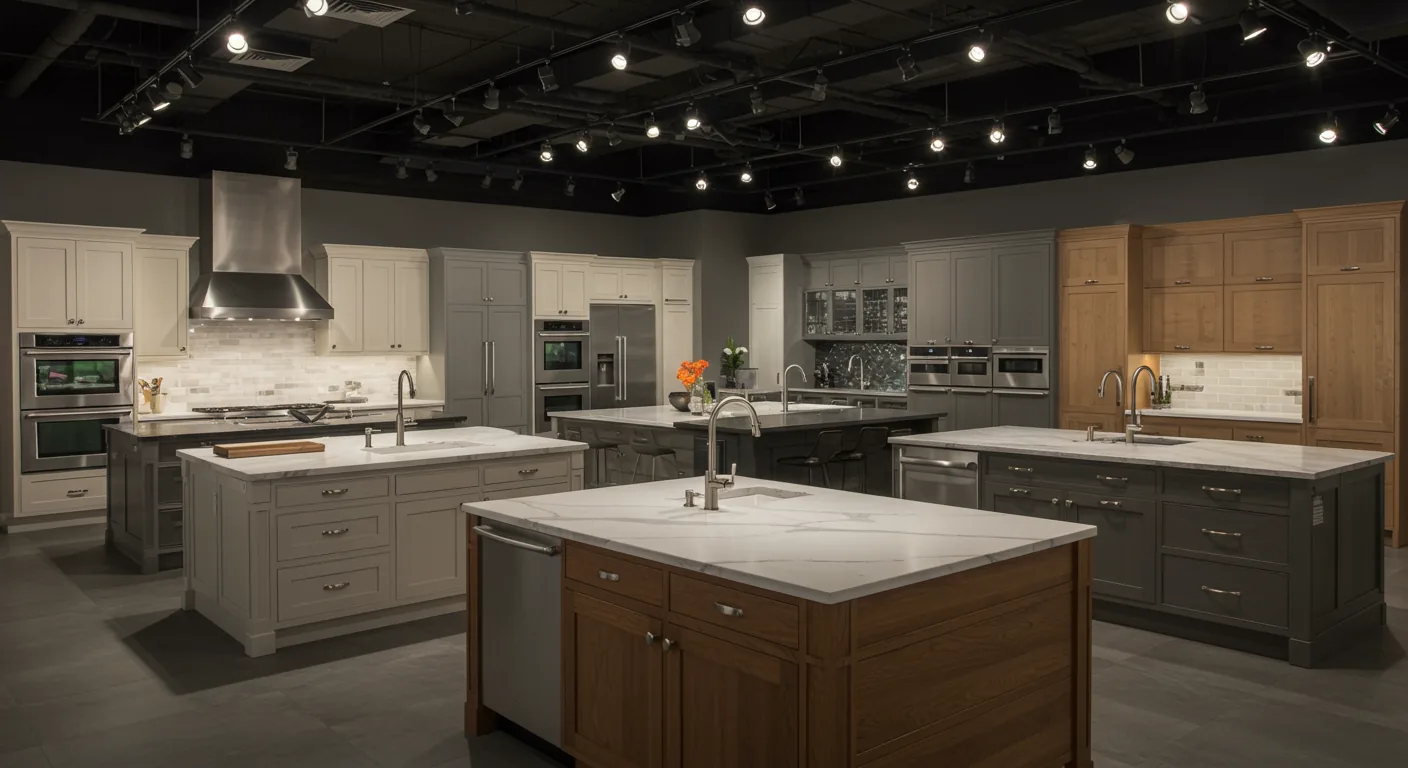
The best way to make this decision is to see the finishes in person — which is why we encourage all clients to visit the KITWOOD showroom in Sin el Fil, Beirut. Every finish type is represented in live, full-scale kitchen installations. You can see the difference between a matte lacquer and an HPL matte, feel the texture of a veneer door, and compare gloss lacquer with acrylic side-by-side.
Our design team will guide you through the choice without pushing you toward any specific finish — the right finish is the one that suits your specific project, location, and lifestyle.
Frequently Asked Questions: Kitchen Door Finishes in Lebanon
**What is the most popular kitchen door finish in Lebanon?** Lacquer — particularly matte and satin — is frequently specified in premium kitchens in Lebanon. It delivers a clean, contemporary look and is available in a very wide colour range.
**Is laminate better than lacquer for durability?** Laminate is generally more resistant to physical impact and easier to maintain in high-use kitchens. Lacquer offers a different aesthetic and requires care. The right choice depends on the product, installation, exposure, and use.
**What does acrylic kitchen finish mean?** Acrylic is a high-gloss finish applied over MDF, delivering an extremely reflective, mirror-like surface. It is visually striking but shows fingerprints readily and requires careful handling.
**Can kitchen doors be refinished?** Factory-applied lacquer or acrylic finishes may not be easily refinished on-site to factory standard. If a finish is damaged or no longer suits the project, assess the doors and carcass with the manufacturer before choosing repair, refinishing, or replacement.
For more detail on modern kitchen design ideas for Lebanon, explore our full guide or visit our showrooms in Sin el Fil or Zouk Mosbeh.
Ready to start your project?
Book a Free Consultation with KITWOOD Lebanon
Visit our showrooms in Sin el Fil (Saloumeh Roundabout) or Zouk Mosbeh (Jounieh Highway), or request a showroom consultation anywhere in Lebanon.