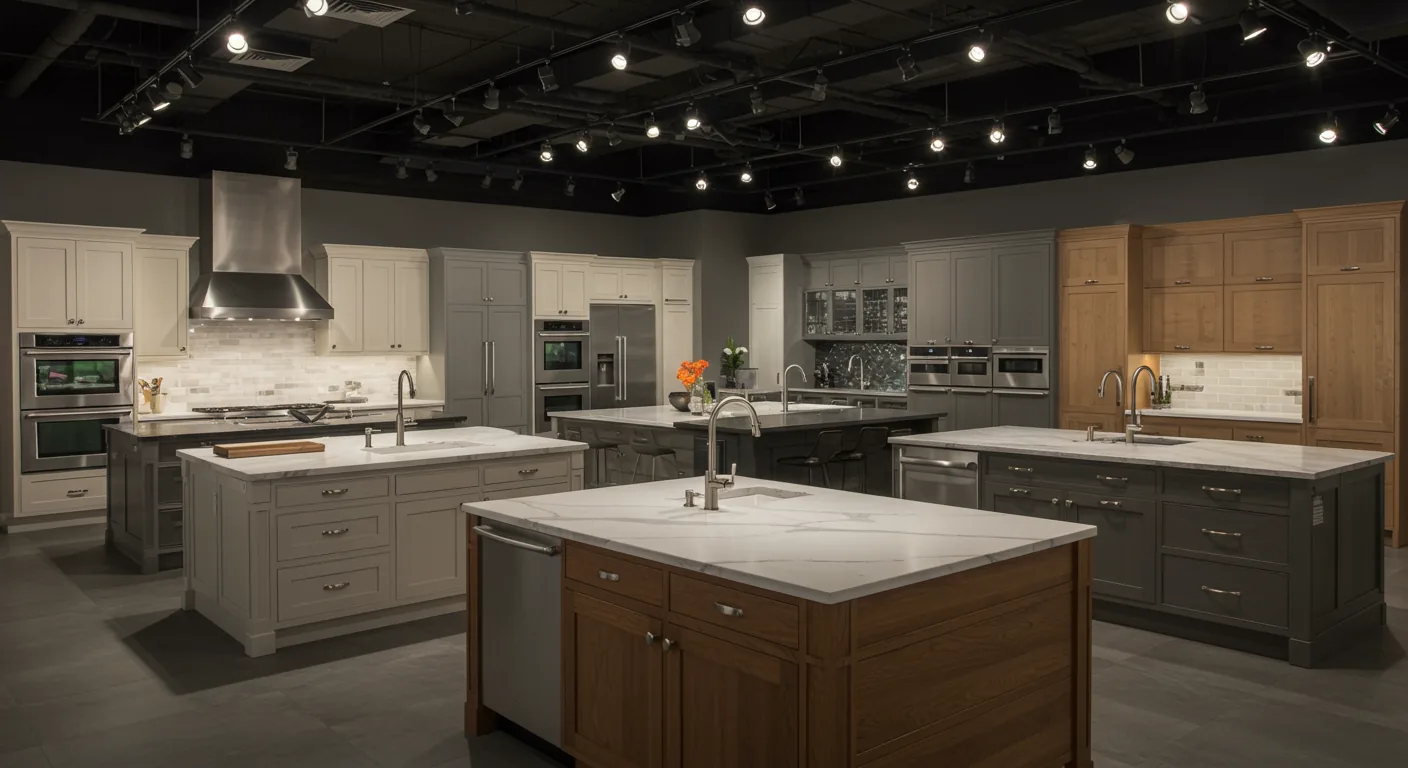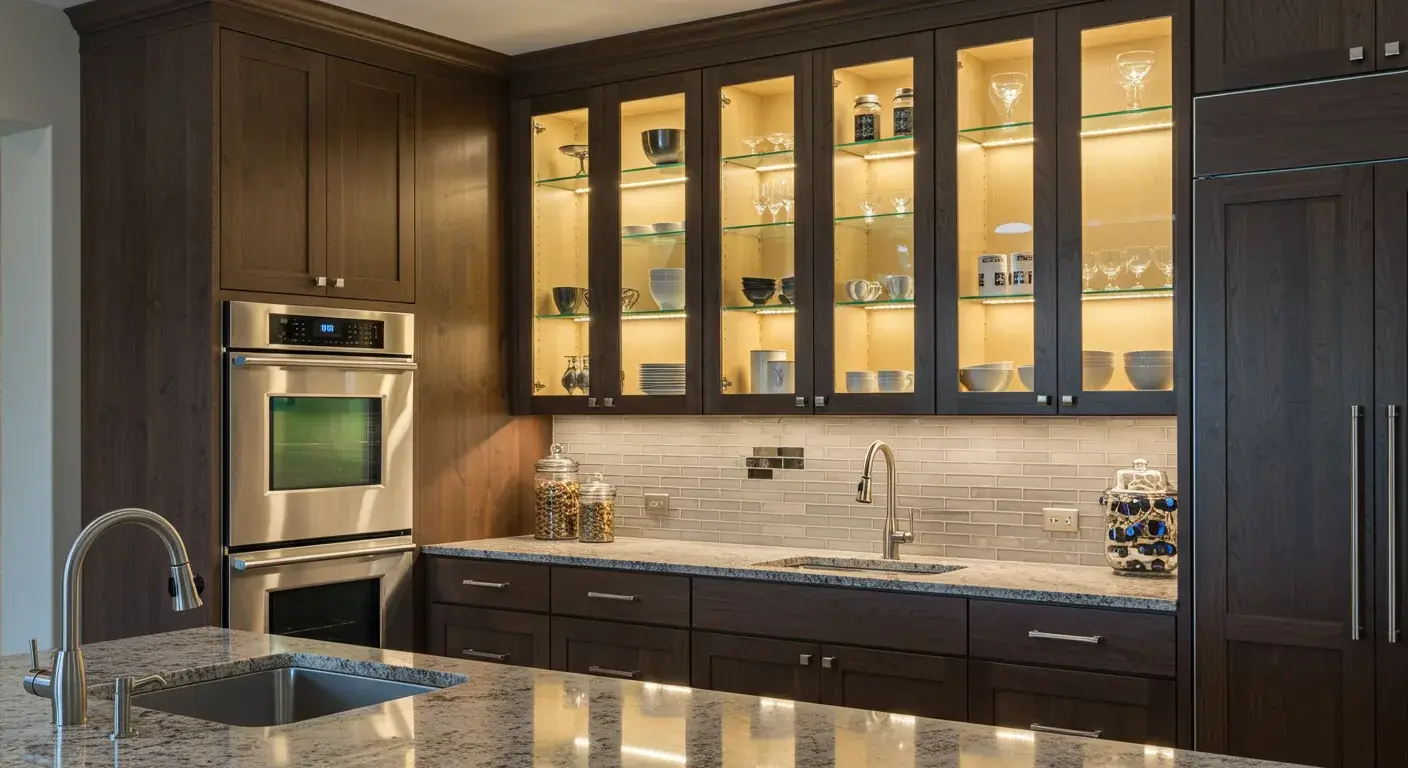
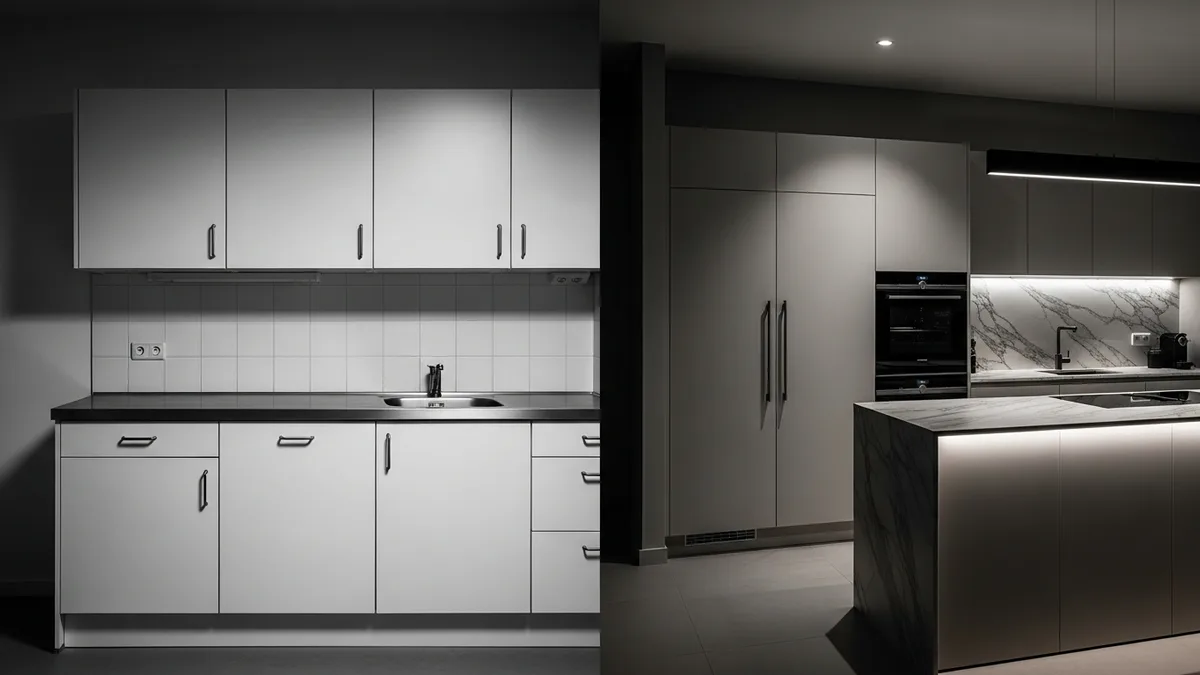
Budget vs Luxury Kitchens in Lebanon
The gap between a budget and luxury kitchen in Lebanon isn't just the price tag — it's materials, manufacturing precision, hardware, and long-term performance.
Quick Answer
As you move from budget to luxury kitchen pricing in Lebanon, you are progressively upgrading: the structural carcass material, the door finish quality, the hardware systems, and the level of manufacturing precision. Each step up adds durability, appearance, and long-term value.
- Budget: MDF carcass, laminate or basic lacquer doors, economy hinges and runners
- Mid-range: High-density, water-resistant E1 chipboard carcass, lacquer or veneer doors, branded hardware (Blum or similar)
- Premium: Full high-density water-resistant E1 chipboard construction, premium lacquer or wood veneer, Blum hardware, CNC precision throughout
- Luxury: All of the above, plus bespoke door profiles, premium countertops, and fully customised interior fittings
- The biggest durability gains come from upgrading the carcass (cheap raw particleboard → water-resistant E1 board) and the hardware (economy → Blum)
If budget is constrained, prioritise structure and hardware over finish. A water-resistant E1 board kitchen with a mid-range finish will outlast a cheap raw particleboard kitchen with a premium-looking finish by many years.
What 'Budget' and 'Luxury' Actually Mean in the Lebanese Kitchen Market
In Lebanon's kitchen market, the terms budget and luxury are used loosely. A kitchen that a carpenter quotes as mid-range may use the same structural materials as what a mass-market retailer calls premium. Understanding what the labels actually mean — in material terms — is more useful than relying on price categories alone.
At every price point, four things determine the real quality of a kitchen: the carcass material, the door finish, the hardware system, and the manufacturing precision. Each of these can be specified independently, which is why kitchen quotations of similar price can represent very different levels of actual quality.
The Carcass: The Hidden Foundation of Every Kitchen
The carcass is the structural shell of each cabinet — the box behind the door. In budget kitchens, this is almost always cheap raw particleboard or unsealed MDF. Both are susceptible to moisture. They hold screws adequately when new, but lose grip over years of use and exposure to Lebanon's humid climate.
In mid-range and premium kitchens, the carcass shifts to ecological, high-density, water-resistant E1 chipboard (particle board) — engineered panels that are dimensionally stable, hold fixings far better, and perform significantly better in humid conditions. This single material upgrade is the most impactful quality difference between a budget and a premium kitchen. It is invisible from the outside, which is why budget kitchens can appear identical to premium ones at first glance.
For a detailed breakdown of these materials, see our kitchen materials guide.
Door Finishes: From Laminate to Lacquer to Veneer
The door is the visible face of the kitchen and the element most people compare first. Budget kitchens typically use laminate or melamine-wrapped MDF doors — functional and reasonably durable, but limited in the depth of colour and surface quality they can achieve.
Mid-range kitchens move to factory-applied lacquer — a sprayed and sanded paint finish that delivers a smooth, refined surface in matte, satin, or gloss. This is where appearance improves significantly. Premium kitchens may use wood veneer doors — real timber sliced thin and applied over a substrate — for genuine material character.
For a detailed comparison of the two most popular finishes, see our guide to laminate vs lacquer kitchen finishes.
Hardware: Where Budget Kitchens Most Often Disappoint
Hardware — hinges, drawer runners, lift-up mechanisms — is the element that most directly determines how a kitchen feels in daily use, and where budget kitchens most consistently underperform.
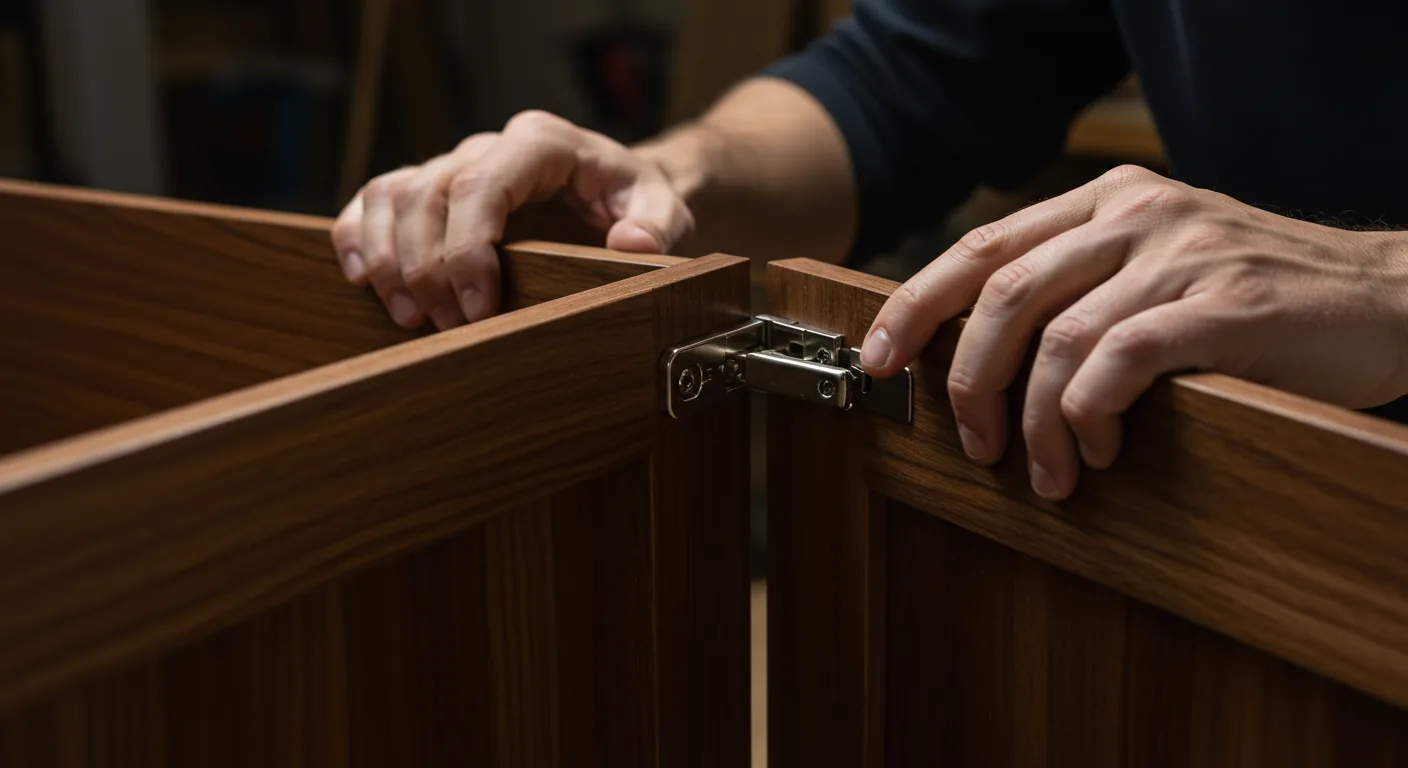
Economy hinges and runners work adequately when new but lose their adjustment and develop noise, looseness, and stiff movement within three to five years of regular use. Premium hardware systems from Blum (Austrian) are engineered to withstand 50,000 to 100,000 opening cycles with consistent action. The difference is noticeable from the first use and remains evident for the life of the kitchen.
At KITWOOD, all kitchen collections are fitted with quality European hardware systems as standard — regardless of which collection or finish level is specified.
Manufacturing Precision: The Difference You Feel, Not Just See
A budget kitchen assembled in a carpentry workshop and a factory-manufactured kitchen may use identical-looking doors, but the manufacturing process creates a very different result. Workshop kitchens are cut and drilled by hand, which introduces variation in cabinet sizes, hinge positioning, and drawer alignment.
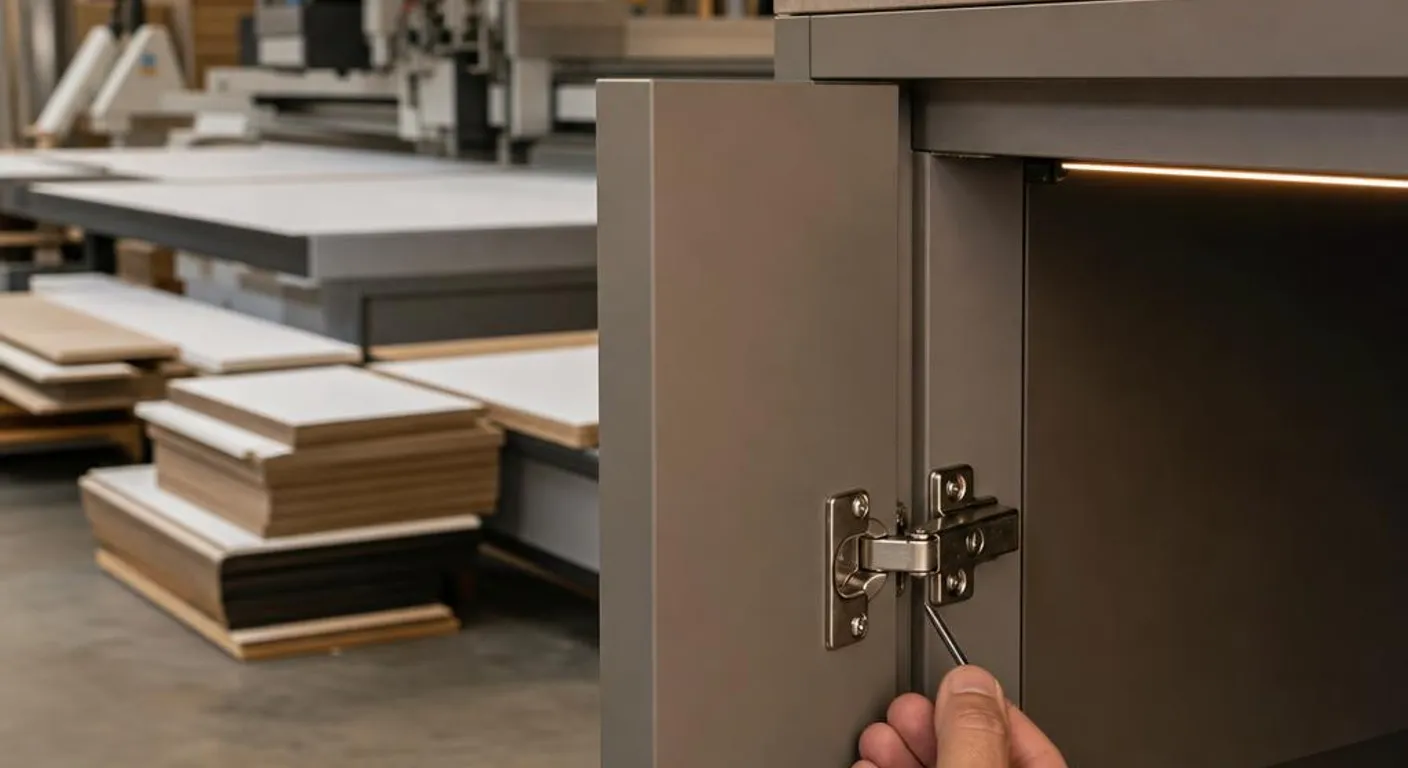
Factory-manufactured kitchens are produced on CNC (computer numerical control) machinery, which cuts and drills to sub-millimetre precision. Every carcass is exactly the right size. Every hinge hole is in exactly the right position. The result is a kitchen that installs cleanly, aligns consistently, and retains its alignment over time.
KITWOOD has operated a dedicated manufacturing facility in Lebanon since 1981, producing all kitchen collections with full CNC precision throughout.
Where to Invest When Budget Is Constrained
If you are working with a limited budget, the most rational approach is to prioritise the elements that have the greatest impact on long-term performance, even if it means accepting a simpler finish.
Priority 1: Water-resistant E1 board carcass over cheap raw particleboard — this single upgrade will add many years to the kitchen's functional life. Priority 2: Quality hardware — Blum over economy hinges. The daily feel and long-term reliability difference is significant. Priority 3: A mid-range factory lacquer finish over premium-looking budget laminate.
A well-specified kitchen in a simpler finish will always outperform a poorly specified kitchen in a premium-looking finish. The kitchen that looks impressive on day one but fails structurally within five years is never the right investment.
To understand how these choices affect total project cost, read our 2026 kitchen cost guide for Lebanon and the best kitchen materials guide. To discuss your specific project, visit our showrooms in Sin el Fil or Zouk Mosbeh, or explore our full range of kitchens in Lebanon.
Frequently Asked Questions: Kitchen Quality in Lebanon
**What is the main difference between a budget and a luxury kitchen?** The key differences are the structural material (cheap raw particleboard vs water-resistant E1 board), the hardware system (economy vs Blum), the door finish quality, and the manufacturing precision (workshop vs CNC factory). Premium kitchens use higher-spec materials at every level, which translates to better durability and a more refined result.
**How long should a kitchen last in Lebanon?** A well-specified factory kitchen with water-resistant E1 board carcasses and quality hardware can last 20 years or more with normal care. A carpentry kitchen with cheap raw particleboard carcasses and economy hardware typically shows significant wear within 5–10 years in Lebanon's climate.
**Is MDF bad for kitchens?** Unsealed, non-water-resistant MDF struggles in Lebanon's coastal climate. Water-resistant, E1-grade MDF performs well for doors and painted fronts, while high-density, water-resistant E1 chipboard is significantly more moisture-resistant and holds fixings better over time — making it the right structural choice for carcasses in Lebanese kitchens.
**What hardware brand is best for kitchens?** Blum (Austrian) is the industry benchmark. Engineered for tens of thousands of opening cycles, Blum hinges, drawer runners, and lift-up systems deliver a consistently smooth feel over the life of the kitchen.
Explore our full kitchen collections in Lebanon or read more on how to choose a kitchen company in Lebanon before making your decision. You can also get in touch with our team directly to book a showroom consultation.
Ready to start your project?
Book a Free Consultation with KITWOOD Lebanon
Visit our showrooms in Sin el Fil (Saloumeh Roundabout) or Zouk Mosbeh (Jounieh Highway), or request a showroom consultation anywhere in Lebanon.