Kitchen Cost Lebanon 2026 | Full Price Guide
Our 2026 guide breaks down what kitchens really cost in Lebanon — from compact apartments to villa projects — and what actually drives the price.
2026 Price Summary
Kitchen prices in Lebanon range from around $3,000 for basic kitchens to $60,000+ for fully custom villa projects. The biggest cost drivers are size, materials, countertop, hardware, and manufacturing quality.
- Basic kitchens: $3,000 – $8,000
- Mid-range kitchens: $8,000 – $20,000
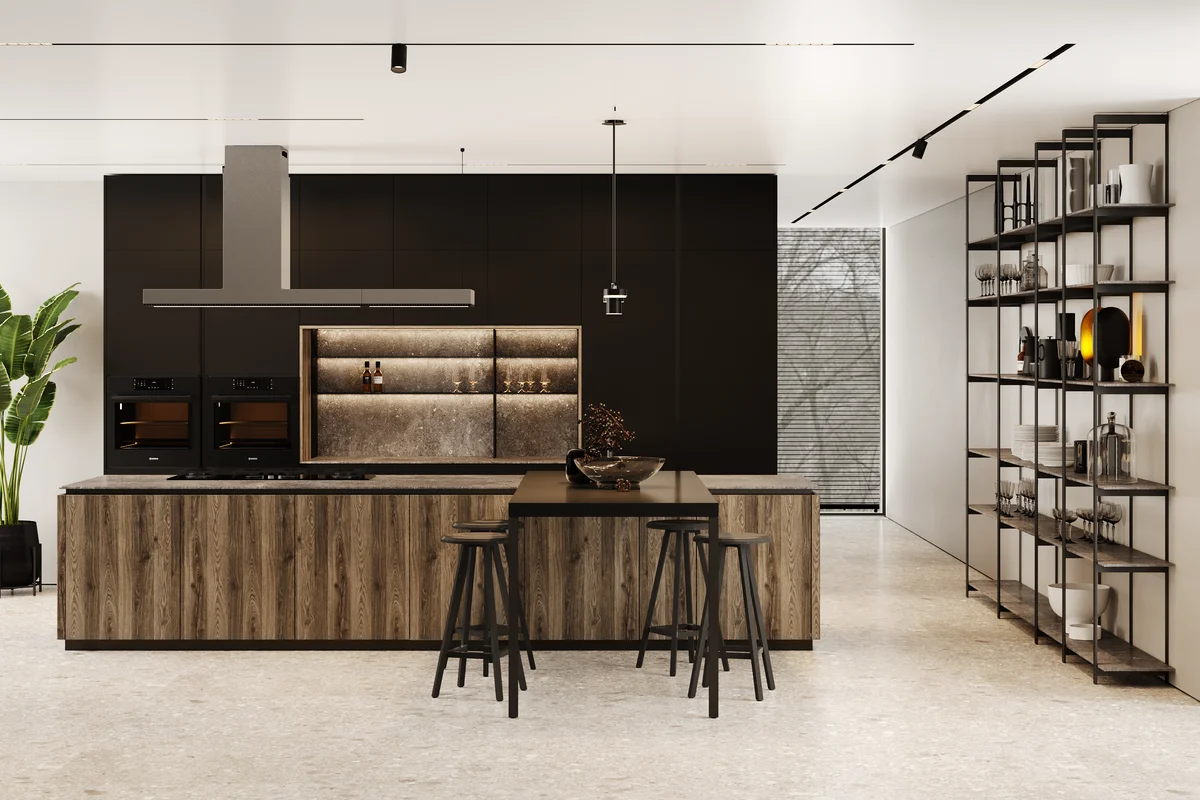
- High-end / custom kitchens: $20,000 – $60,000+
- Hidden costs (plumbing, electrical, installation) can add 10–25% on top
For long-term value, invest in the cabinet structure, reliable hardware, and a durable countertop rather than decorative complexity. A quality kitchen built by an experienced manufacturer like KITWOOD is a long-term home asset.
What Kitchens Actually Cost in Lebanon in 2026
The honest answer is that kitchen prices in Lebanon span an enormous range — and the gap is not arbitrary. It reflects fundamentally different materials, manufacturing methods, and long-term outcomes.
As a rough orientation: • Carpentry-built kitchens with MDF carcasses and basic hardware: $3,000 to $8,000 • Factory-manufactured kitchens with water-resistant E1 board and MDF, European hardware, and lacquer fronts: $8,000 to $20,000 • Fully custom kitchen systems with premium specifications, quartz countertops, and full accessory packages: $20,000 to $60,000+
In practice, the kitchens that disappoint clients most are rarely the cheapest or the most expensive — they are the mid-budget ones where the wrong compromises were made. A $14,000 kitchen with weak carcass material and economy hardware can feel worse after four years than a $10,000 kitchen that was specified correctly from the start.
The Real Cost Drivers — Beyond the Price Tag
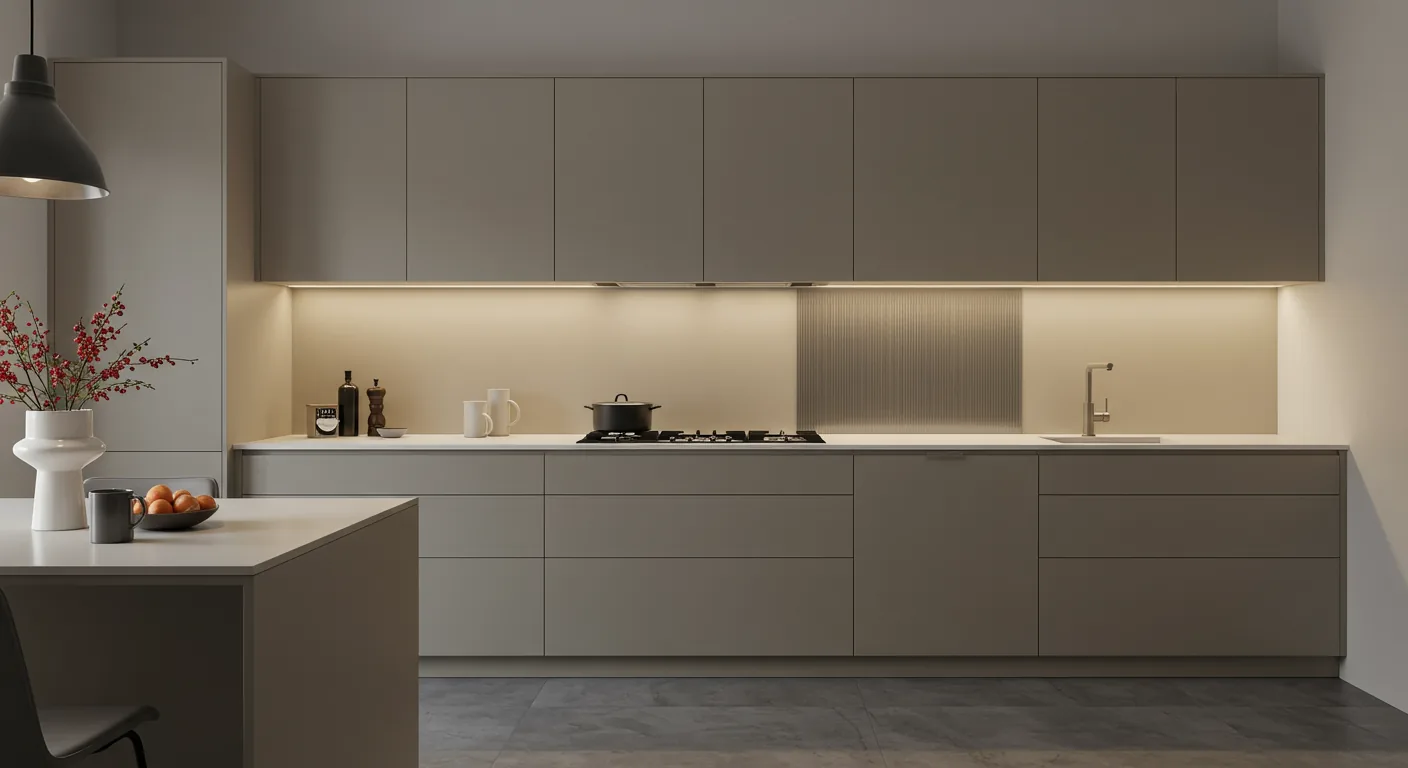
KITCHEN SIZE AND LAYOUT A straight 3-metre kitchen in a Beirut apartment will cost considerably less than a U-shaped 6-metre kitchen with an island in a villa in Beit Mery — not just because of the additional metres, but because layout complexity affects how every component is designed, cut, and assembled. One common mistake homeowners make is comparing per-metre prices between a simple straight kitchen and a complex L-shaped or island kitchen, as though they are equivalent products.
CABINET MATERIALS This is where the most consequential decisions happen, and where budget kitchens most often fail Lebanon's climate. The coastal humidity — regularly 75–85% in summer in Jounieh, Kaslik, and Beirut — acts on cheap raw particleboard and improperly sealed MDF edges over time. In many Lebanese homes, the first visible deterioration appears at lower cabinet edges and sink areas within three to five years if the carcass specification was weak.
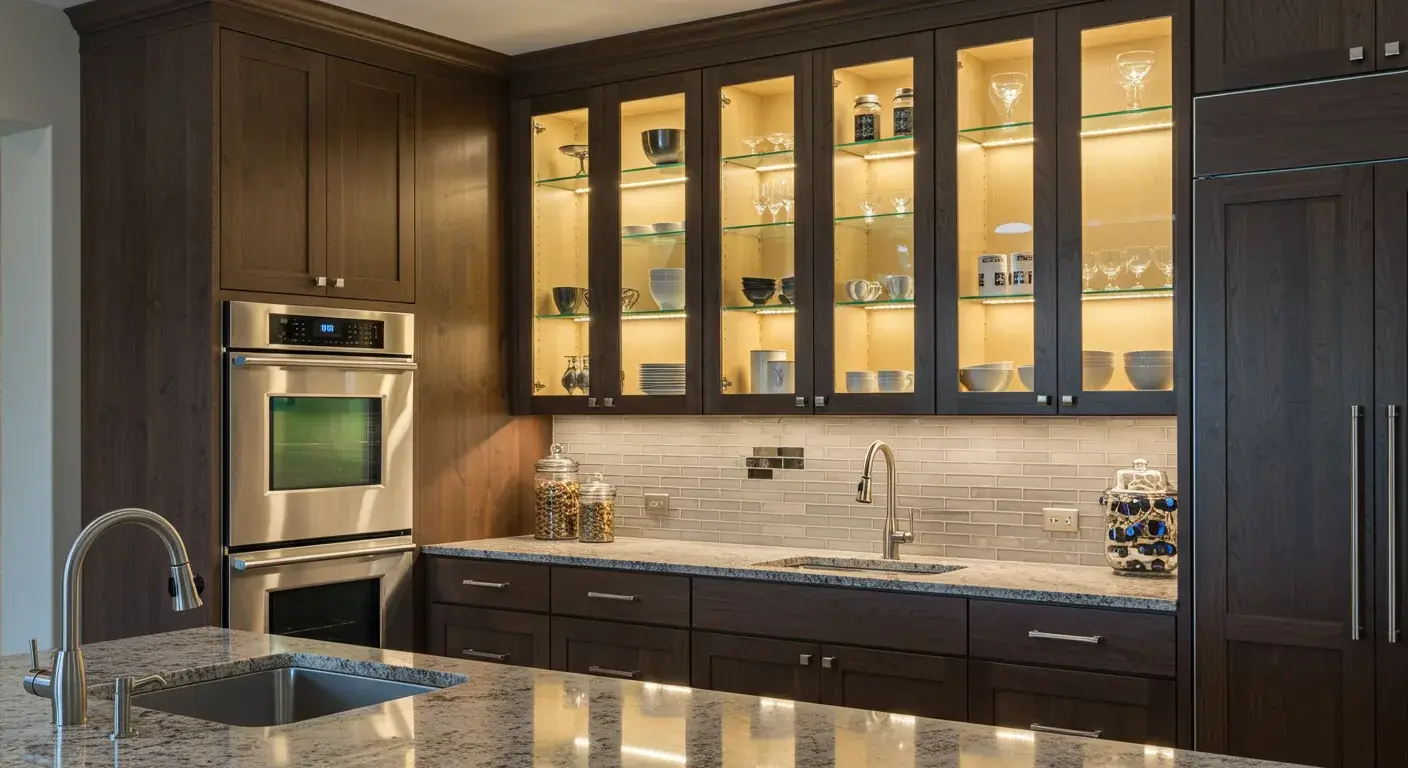
COUNTERTOP CHOICE Countertops are typically priced separately and can represent $1,500 to $6,000 or more depending on material and area. Quartz is the most consistently recommended option for Lebanon because it requires no sealing, resists staining, and holds its finish over many years. Granite remains popular for its natural character but does require periodic sealing.
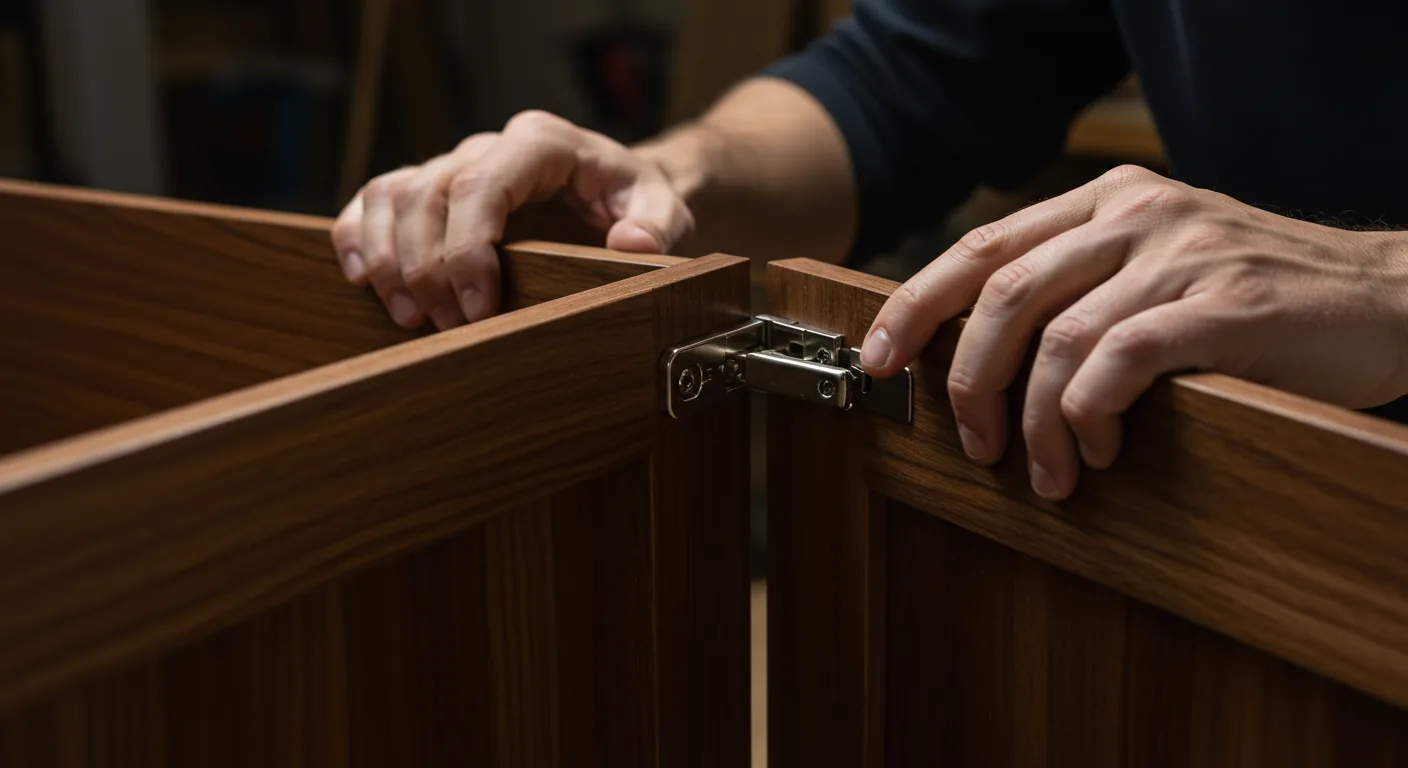
HARDWARE AND ACCESSORIES Quality hardware — soft-close hinges, Blum drawer runners, pull-out systems, corner solutions — adds to the initial investment but pays back quickly in daily use and long-term reliability. From a long-term value perspective, hardware is not where you want to save.
MANUFACTURING QUALITY A factory-manufactured kitchen and a carpentry-built kitchen can look almost identical on day one. The difference becomes apparent after two or three years: alignment consistency, edge durability, finish adhesion, hinge stability. KITWOOD has manufactured kitchens in Lebanon since 1981, and the consistency of factory-produced components on CNC machinery is a genuine quality differentiator.
Imported vs Locally Manufactured: An Honest Comparison
This question comes up often, and the answer is more nuanced than the marketing suggests. An imported Italian kitchen system carries strong brand equity and precise engineering — but it comes with fixed module dimensions, longer lead times (often 12–16 weeks), and a higher price that includes shipping and import duties.
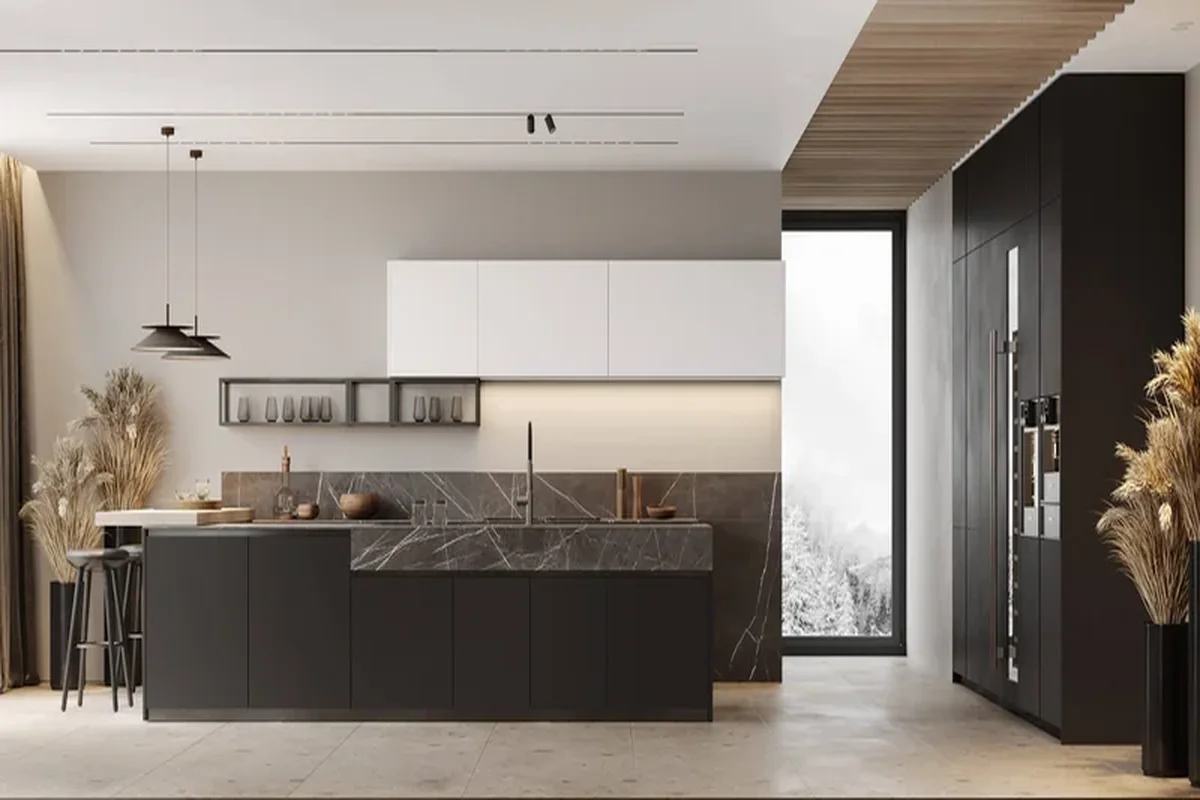
A high-quality Lebanese manufacturer can often match or exceed the structural quality of imported systems, with the major practical advantages of fully custom dimensions (critical in Lebanese apartments where walls are never perfectly standard), faster project timelines, and direct after-sales support without an import chain in between.
This matters especially in Lebanon because apartment layouts frequently have column intrusions, irregular wall angles, and ceiling variations that standard imported module sizes cannot accommodate cleanly. A locally manufactured custom kitchen can be designed to the millimetre.
For clients who want Italian provenance specifically, KITWOOD is the exclusive Lebanese distributor for Doimo Cucine — giving access to Italian-engineered quality with local coordination and support.
The Hidden Costs Most Homeowners Miss
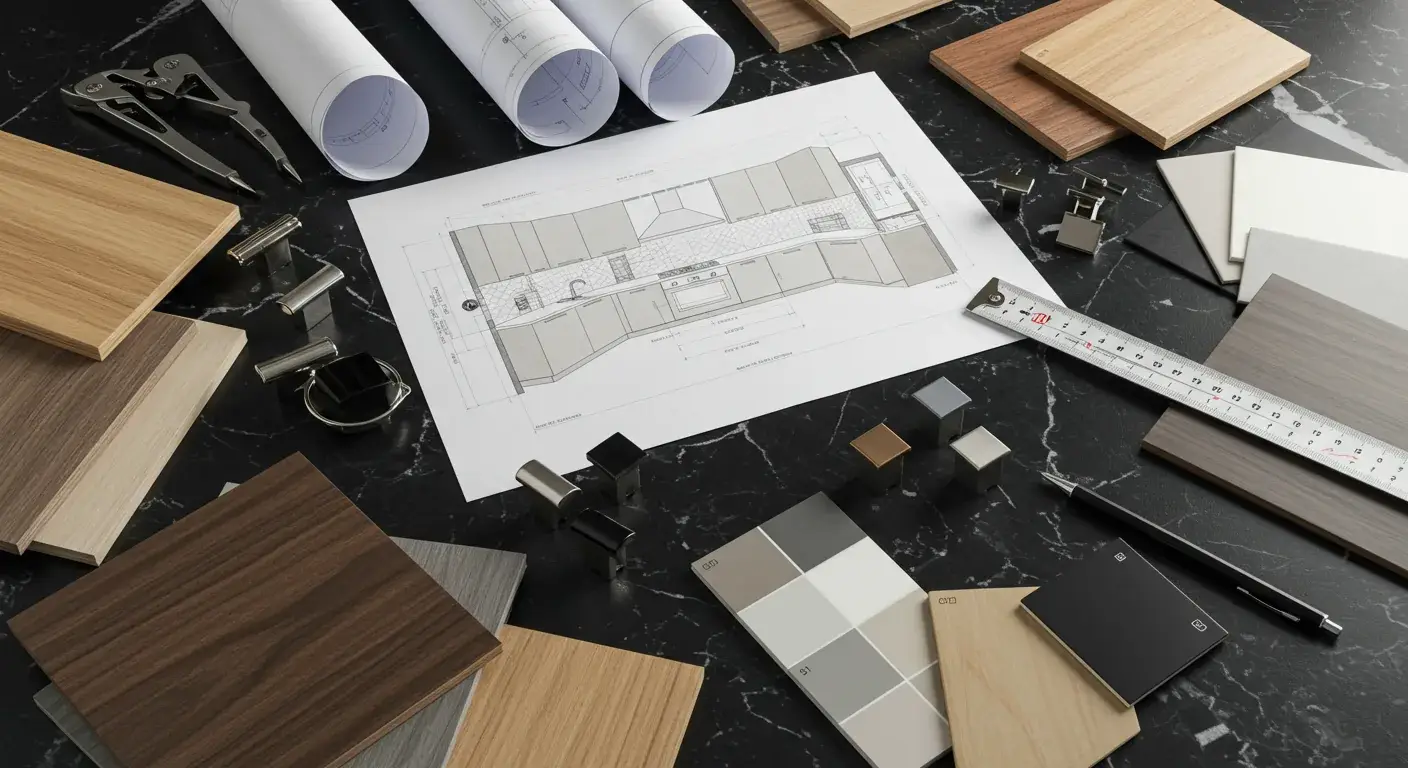
The cabinet and countertop price is only part of the real investment. In practice, we often see clients arrive with a kitchen budget in mind, then discover that the project scope is wider than expected once they start planning properly.
Additional costs to account for include: demolition and removal of the existing kitchen ($500–$1,500 depending on complexity), electrical modifications for appliance positioning, plumbing adjustments for a new sink location, wall or ceiling repairs after trades are done, tiling or flooring touch-ups at perimeters, and appliance purchases if these are not already owned.
In most renovation projects in Lebanon, these additional items add between 15 and 25 percent to the kitchen budget. Planning for this from the start avoids the painful discovery midway through that the budget needs to stretch further than anticipated.
How to Spend Smarter on a Kitchen
The best kitchen is not necessarily the most expensive — it is the one where budget was allocated to the right elements. In our experience, the decisions with the highest long-term return are these, in order:
1. Specify a water-resistant E1 board or high-quality water-resistant MDF carcass rather than cheap raw particleboard — this alone extends the functional life of the kitchen by years in Lebanon's climate. 2. Choose quality European hardware (Blum is the benchmark) for hinges and drawer runners — the daily feel and long-term reliability difference is immediately noticeable. 3. Invest in a durable countertop — quartz or large-format porcelain over laminate. 4. Keep door finish simpler if budget is constrained — a well-specified matte HPL kitchen outperforms a poorly specified lacquer kitchen every time.
For a detailed breakdown of how materials affect both quality and cost, read our kitchen materials guide.
Why KITWOOD
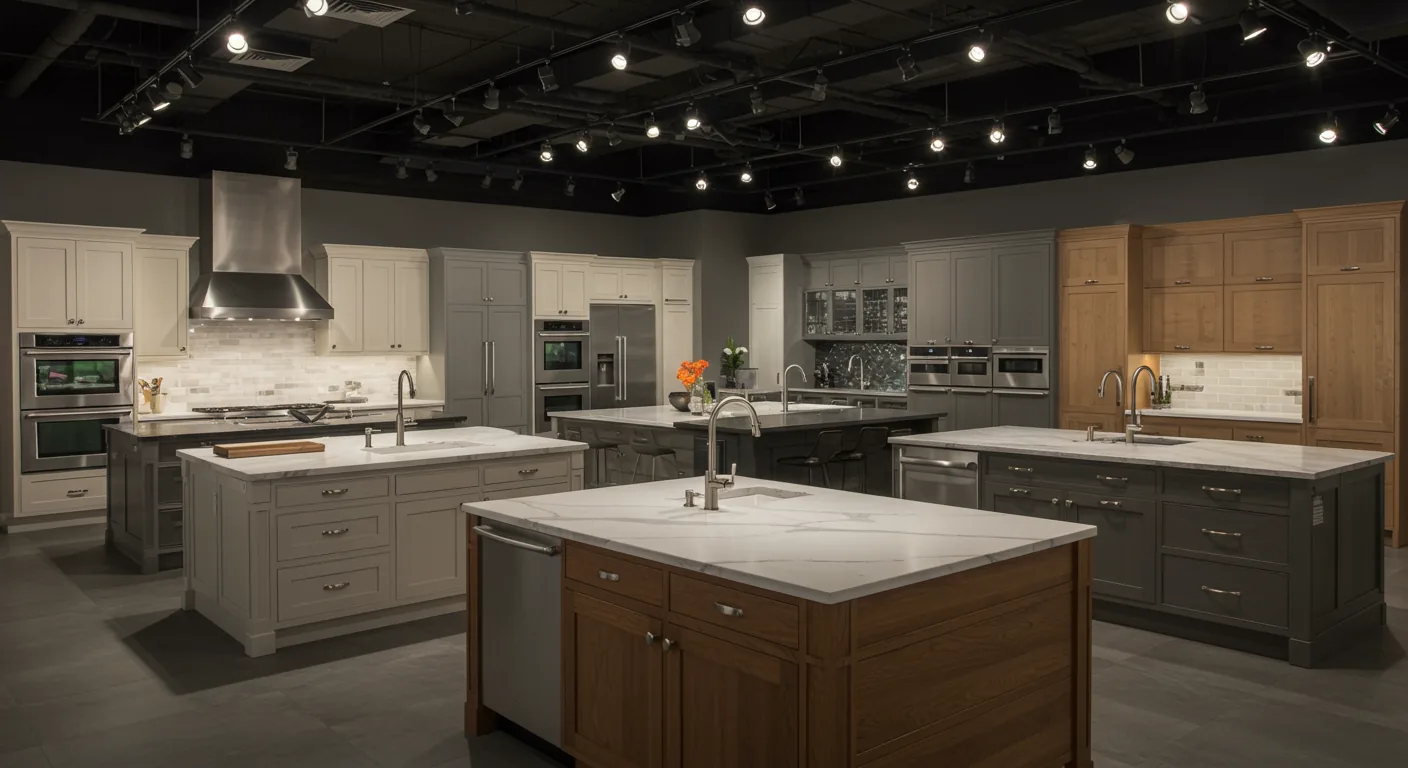
Clients who have been through the kitchen selection process in Lebanon often say the same thing after visiting KITWOOD: the showroom experience clarifies the specification decisions that were confusing on paper. Seeing a water-resistant E1 board carcass versus cheap raw particleboard side by side, or comparing a 2K matte lacquer door with an HPL door at scale, makes the material decisions concrete rather than abstract.
KITWOOD has manufactured kitchens in Lebanon since 1981. The combination of in-house production, full customization capability, and a team that understands both Lebanese living conditions and premium design is what consistently brings clients back — and what brings their friends and family through the door after them.
Explore the Kitchens Lebanon hub to understand the full range, or get in touch with our team to begin with a consultation.
Frequently Asked Questions: Kitchen Cost in Lebanon
**How much does a small apartment kitchen cost in Lebanon?** A well-specified 3-metre kitchen in a Beirut apartment — water-resistant E1 board carcass, lacquer fronts, European hardware, quartz countertop — typically falls in the $9,000 to $14,000 range. A carpentry alternative using MDF and basic hardware can come in at $4,000 to $6,000, but the long-term outcome is very different.
**Why do kitchen prices vary so much between suppliers?** Because the word 'kitchen' covers products that are fundamentally different in material quality, manufacturing precision, and durability. Always ask specifically about carcass material, hardware brand, and whether the price includes delivery, installation, and after-sales service.
**Are local Lebanese kitchens as good as imported ones?** At the premium level, yes — and often better for Lebanese homes specifically, because custom dimensions can be specified to the millimetre. Imported systems are typically module-based and require filler strips in non-standard spaces.
**What is the most important specification decision?** The carcass material. It is invisible once the kitchen is installed but determines how well the kitchen holds its structure over five, ten, and fifteen years — particularly in Lebanon's coastal humidity.
Ready to start your project?
Book a Free Consultation with KITWOOD Lebanon
Visit our showrooms in Sin el Fil (Saloumeh Roundabout) or Zouk Mosbeh (Jounieh Highway), or request a showroom consultation anywhere in Lebanon.