Best Kitchen Materials Lebanon: What Lasts
In Lebanon's climate, the right cabinet boards, finishes, and countertop materials decide whether your kitchen ages beautifully or quickly deteriorates.
Quick Material Guide
For Lebanese kitchens, high-density ecological water-resistant E1 chipboard (particle board) carcasses with 2K lacquer or HPL fronts perform best in the local climate. Quartz is the most recommended countertop for long-term durability and easy maintenance.
- Carcass: high-density, ecological, water-resistant E1 chipboard (particle board) — dimensionally stable when properly edge-sealed
- Finish: 2K lacquer (matte) for premium look; HPL for maximum climate resilience
- Countertop: quartz for durability and appearance; granite for natural stone character
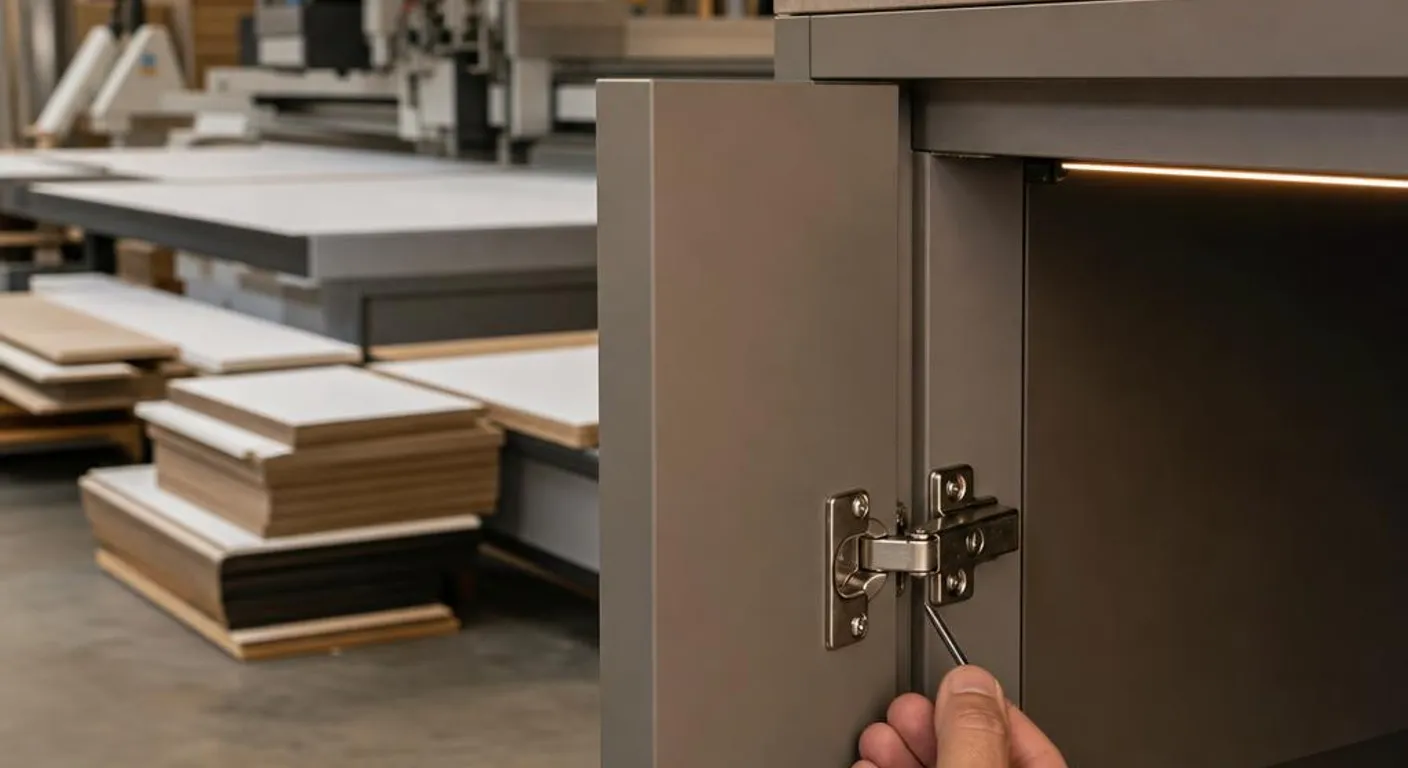
- Hardware: European systems (Blum, Grass, Hettich) for long-term reliability
Avoid cheap raw particleboard carcasses and single-component lacquers in humid coastal areas. The combination of water-resistant E1 board carcass + 2K matte lacquer fronts + quartz worktop offers the best long-term kitchen investment in Lebanon.
Why Material Choice Matters More in Lebanon Than Most Markets
Lebanon's climate is genuinely demanding for kitchen materials. Coastal humidity in Beirut, Jounieh, and Kaslik regularly exceeds 80% in summer. Temperatures in August can reach 36–38°C indoors without air conditioning. Power cuts during summer months mean refrigerators cycling on and off, generating repeated heat and humidity fluctuations inside kitchen cabinetry.
This matters because materials that perform adequately in a northern European climate — where humidity is lower and more stable — can deteriorate meaningfully faster in a Lebanese coastal home. The swelling that starts at an improperly sealed edge, the hinge that loosens after thousands of open-close cycles, the laminate that begins to lift at a corner: these are not design failures. They are specification failures. The right material choice prevents them entirely.
Cabinet Carcass Materials: What the Structure Is Made From
MDF High-quality, water-resistant MDF (E1-grade) is one of the most common carcass materials in Lebanese kitchens, and when used correctly — with proper edge sealing and a moisture-resistant board grade — it performs very well. Its smooth, dense surface makes it particularly suitable for CNC-machined components and painted fronts. The important qualifier is board quality: the range between the cheapest and the best MDF on the market is significant, and many budget kitchens use the lowest grade. KITWOOD reserves MDF for doors and painted fronts — not carcasses.
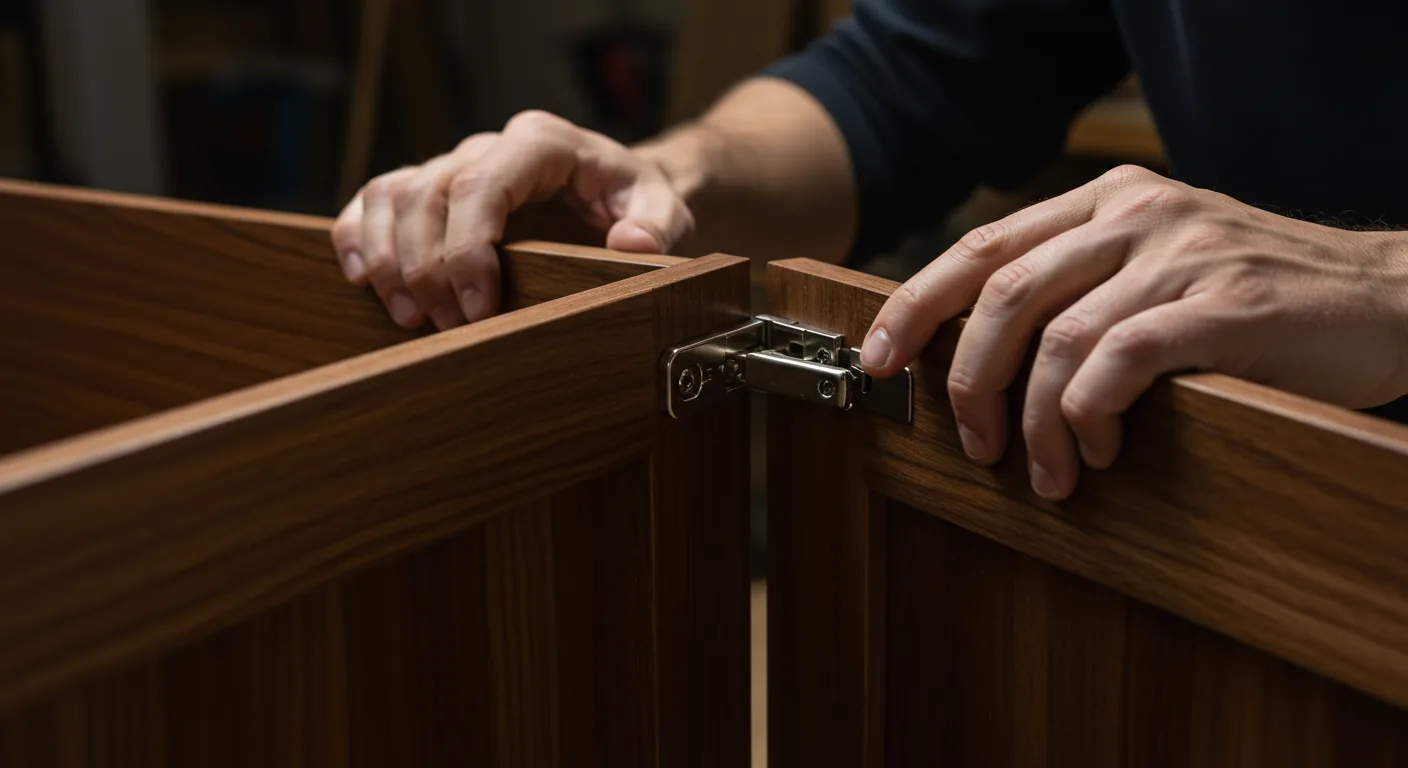
WATER-RESISTANT E1 HIGH-DENSITY CHIPBOARD (PARTICLE BOARD) High-density, ecological, water-resistant E1 chipboard — the boards KITWOOD specifies from European brands such as EGGER, CLEAF, INNOVUS, and KRONOSWISS — is our clear recommendation for carcasses in any Lebanese kitchen that will experience moisture exposure, which in practice is almost all of them. It is dimensionally stable, holds fixings well over time, and performs strongly in humid conditions because the board is engineered and sealed to resist swelling. In many Lebanese homes we see, water-resistant E1 carcasses remain structurally sound for 15 years and more.
CHEAP RAW PARTICLEBOARD Untreated, raw particleboard can appear identical to a finished water-resistant board from the outside but is structurally weaker, far less moisture-resistant, and loses screw-holding capacity faster. It is not suitable as a carcass material for kitchens in Lebanon's coastal areas. For any kitchen expected to last more than five years with regular use, it should be avoided.
Cabinet Finishes: The Face of the Kitchen
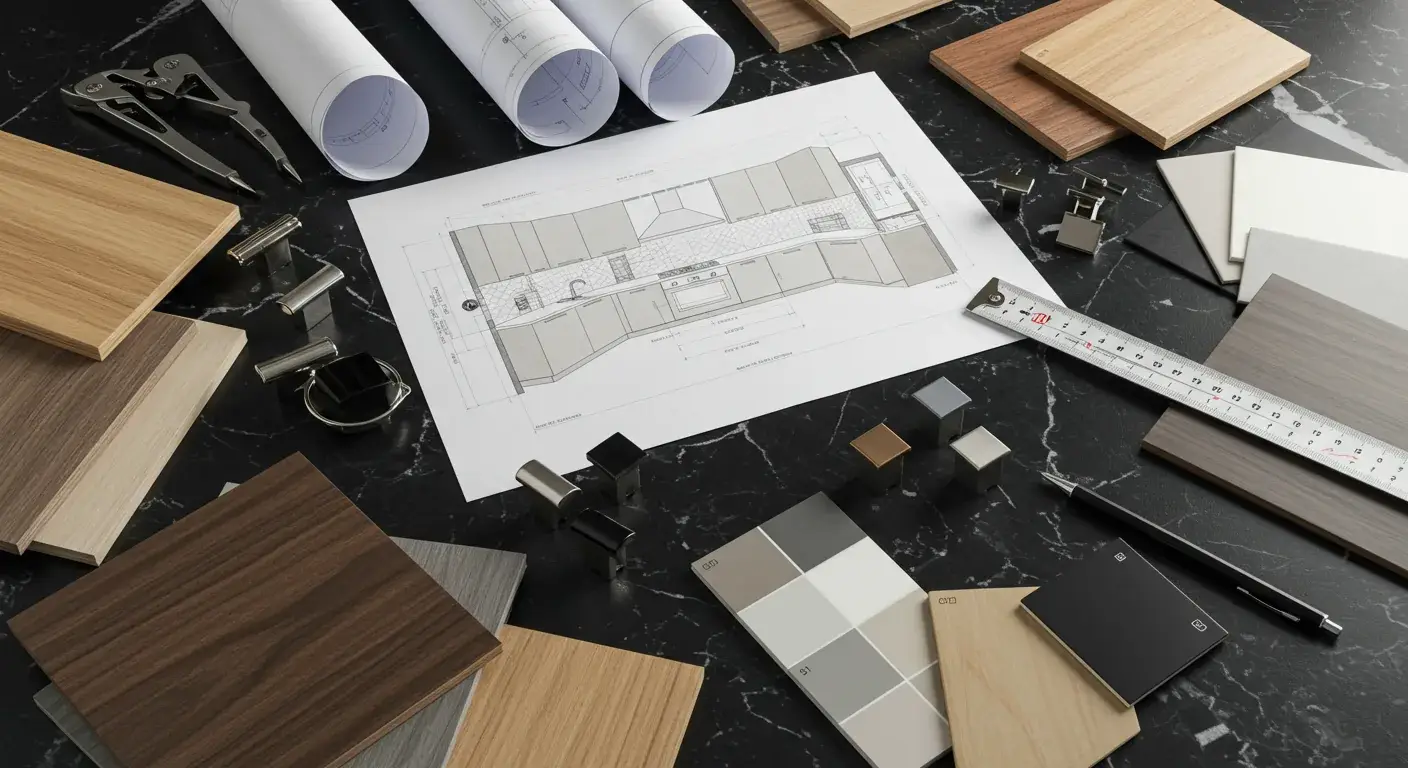
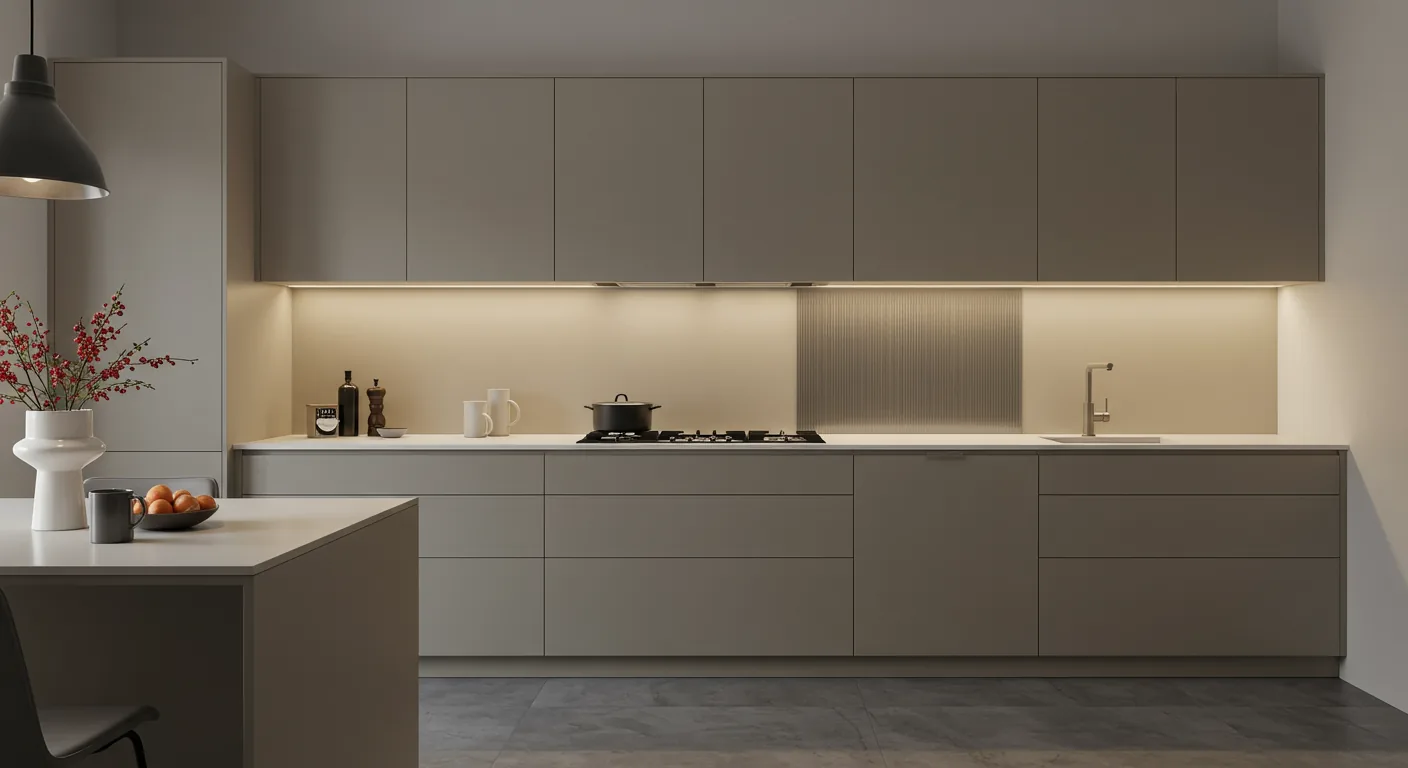
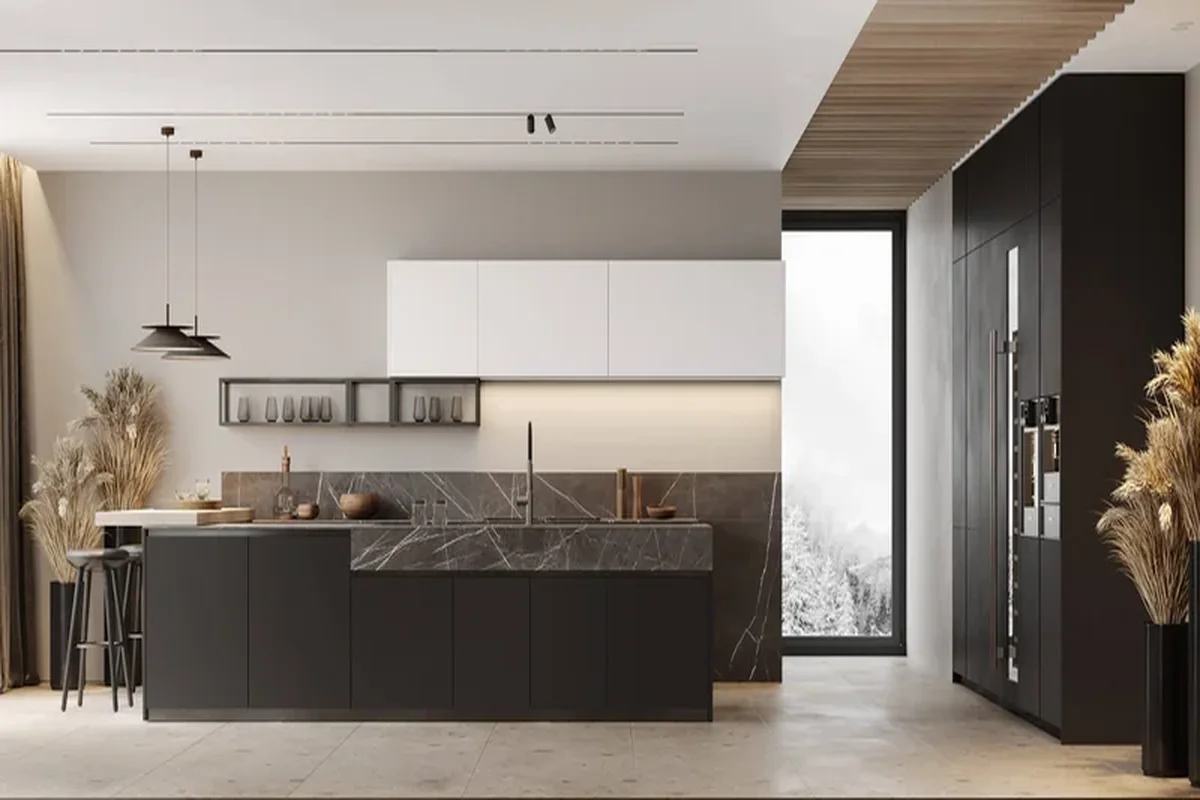
LACQUER (2K POLYURETHANE) Two-component polyurethane lacquer — typically called 2K or dual-component — is the premium standard for kitchen fronts in Lebanon. Factory-applied 2K lacquer is cured under controlled conditions and provides superior adhesion, flexibility, and resistance to humidity, heat, and UV compared to single-component lacquers. Matte 2K lacquer has become Lebanon's dominant premium finish: the flat, non-reflective surface reads as distinctly architectural and hides minor surface marks better than gloss. It is available in virtually any RAL colour.
One common mistake homeowners make is accepting a 'lacquer kitchen' specification without confirming whether it is 2K or single-component. Single-component lacquer is significantly cheaper to apply but far less durable — it can begin to chip and yellow within a few years in Lebanon's climate.
HPL LAMINATE High Pressure Laminate is, in terms of climate resilience, the most robust finish for Lebanese kitchens. It resists humidity, impact, UV exposure, and temperature cycling better than lacquer or acrylic. The quality level varies between suppliers — premium European HPL (Egger, Pfleiderer, Formica) is a sophisticated, architecturally capable finish available in convincing wood-effect, stone-effect, and solid-colour surfaces. It is not a budget compromise when specified correctly.
ACRYLIC Acrylic delivers a glass-like, ultra-high-gloss surface that photographs extraordinarily well. In practice, it shows fingerprints within minutes of installation and is sensitive to scratching and heat. Best suited for display-oriented spaces — a secondary kitchen in a villa, for example — rather than a primary kitchen used daily.
WOOD VENEER The only finish that delivers genuine natural wood character. Popular in mountain residences and classic-modern schemes. In coastal areas, veneer fronts should always have a UV-cured lacquer topcoat and be specified carefully with the manufacturer — without proper sealing, veneer can warp or split in Lebanon's summer humidity.
Countertop Materials: Where Daily Use Is Most Intense
QUARTZ For most Lebanese kitchens, quartz is the best countertop choice. It is consistent in pattern across slabs, requires no sealing, resists staining from coffee, oil, lemon, and wine, and its surface holds up well over years of daily use. From a long-term value perspective, quartz is simply the most maintenance-free premium countertop available — and in a country where consistent sealing services are not always easy to arrange, that matters.
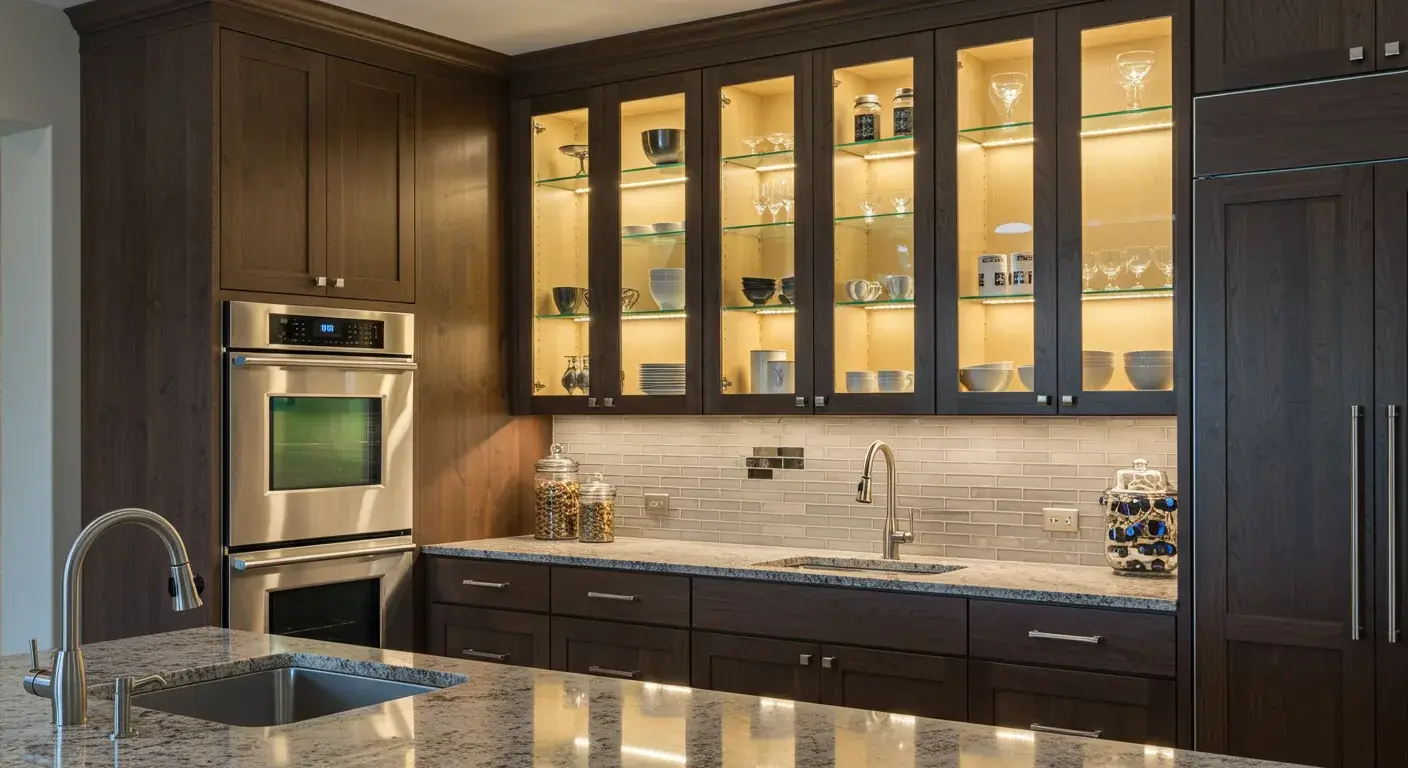
GRANITE Granite remains a strong choice for clients who value natural stone character and the variation of pattern that each slab provides. It is durable and performs well — but it does require sealing every one to two years to maintain its stain resistance. In many Lebanese villas, granite is still the preferred choice precisely because the variation feels more alive than engineered quartz.
PORCELAIN AND CERAMIC SLABS Large-format porcelain slabs — often in 160×320cm or similar formats — are increasingly specified in high-end Lebanese kitchens. They offer very low porosity, strong heat resistance, and a seamless, contemporary look that suits open-plan kitchen designs particularly well. The engineering behind these surfaces has improved dramatically in the last five years.
COMPACT LAMINATE A practical entry-level option for lower-budget projects. Not a material that reads as premium, but performs adequately in lighter-use environments and costs significantly less than stone or quartz.
The Specification Mistakes That Cost Homeowners Most
In practice, the material decisions that cause the most disappointment are rarely dramatic — they are quiet compromises that only reveal themselves over time.
The most common ones we encounter: cheap raw particleboard carcasses in coastal areas that begin to swell at sink cabinet bases within four to five years; single-component lacquer fronts that start to chip at high-traffic points; acrylic doors that look stunning in the showroom but frustrate daily in a Lebanese family kitchen; countertop edges that were not sealed at the join between material and cabinet, which become the entry point for moisture.
The structural specification — carcass material, edge sealing, hardware grade — determines how a kitchen ages. The finish specification determines how it looks. Both matter, but the structural decisions are the ones that cannot be corrected later without replacing components.
How KITWOOD Specifies Materials for Lebanese Conditions
At KITWOOD, material specification is treated as a technical decision shaped by the client's location, usage patterns, and long-term goals — not simply a visual preference exercise. A kitchen specified for a coastal apartment in Kaslik will have different carcass and finish recommendations than one in a mountain residence in Broummana, even if the aesthetic vision is similar.
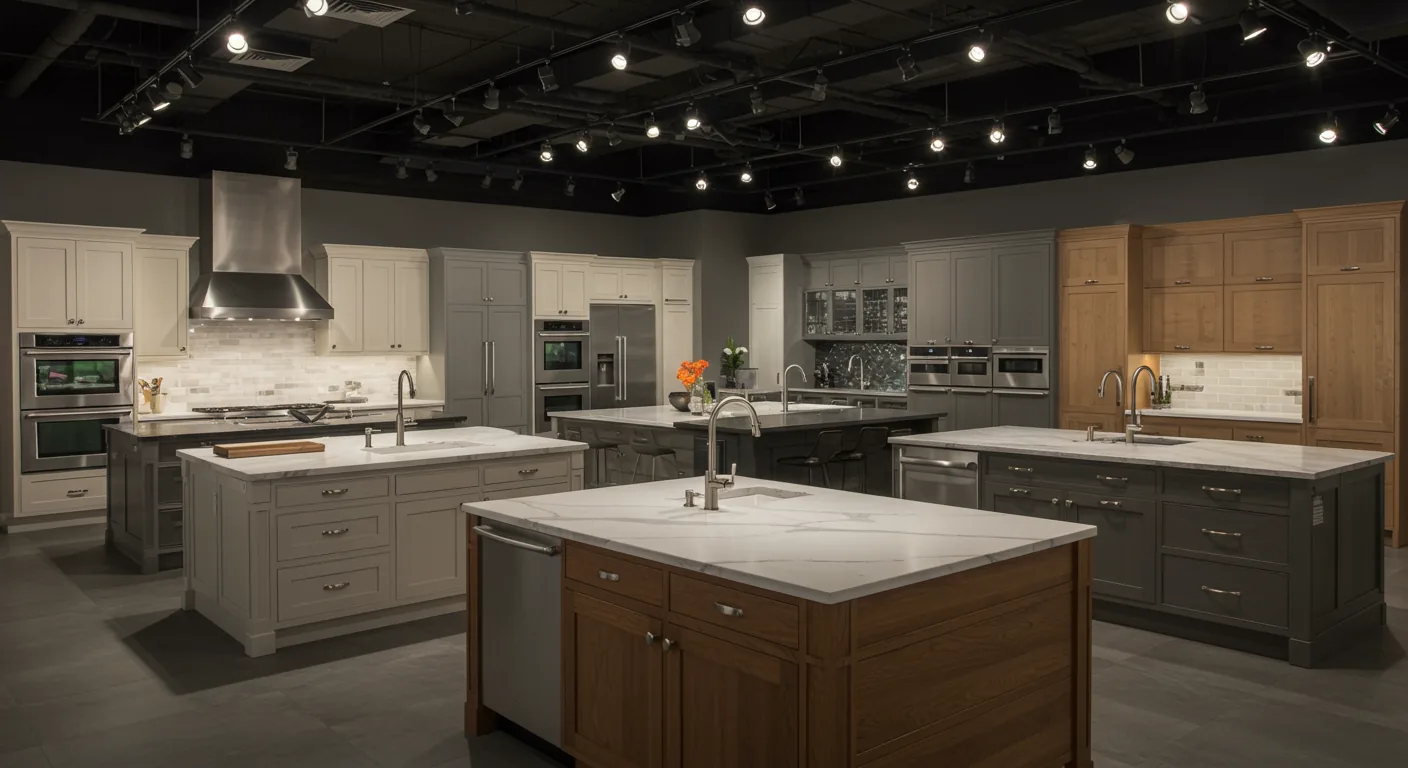
To understand how these material decisions affect total project cost, read our 2026 kitchen cost guide for Lebanon. To see all four finish types at full scale in real installations, visit our showrooms in Sin el Fil or Zouk Mosbeh — seeing the difference between HPL and 2K lacquer in person makes the choice considerably clearer.
Frequently Asked Questions: Kitchen Materials in Lebanon
**What is the best carcass material for kitchens in Lebanon?** High-density, ecological, water-resistant E1-grade chipboard (particle board) is the strongest structural choice, particularly for kitchens in coastal areas. Cheap raw particleboard should be avoided in any kitchen expected to last more than five years with regular use in Lebanon's climate.
**Is 2K lacquer worth the extra cost over standard lacquer?** Yes, clearly. Single-component lacquer costs less to apply but deteriorates noticeably faster. In Lebanon's heat and humidity, the gap between 1K and 2K performance is pronounced within the first few years.
**What countertop is easiest to maintain in a Lebanese home?** Quartz requires no sealing and is highly resistant to the stains common in Lebanese cooking — oil, lemon, tomato, coffee. For a kitchen used daily by a family, it is the most practically maintenance-free premium option available.
For further reading: see how these material decisions apply in practice in our kitchen renovation guide and modern kitchen design ideas for Lebanon. To discuss your project, get in touch with our team.
Ready to start your project?
Book a Free Consultation with KITWOOD Lebanon
Visit our showrooms in Sin el Fil (Saloumeh Roundabout) or Zouk Mosbeh (Jounieh Highway), or request a showroom consultation anywhere in Lebanon.