Kitchen & Wardrobe Design Trends 2026–2027: What the Evidence Shows, and What Comes Next
The documented kitchen and wardrobe trends of 2026 — warm woods, concealed appliances, dressing-room wardrobes — and what forecasters expect for 2027.
Quick Answer
The 2026 trend reports agree on a clear direction: kitchens are getting warmer and calmer — natural woods, earthy greens and browns, stone with visible movement, concealed appliances, working pantries, curved islands, and layered lighting — while wardrobes are evolving from storage boxes into lit, personalized dressing rooms. For 2027, forecasters point toward the same values deepening: adaptability, longevity, nature-derived colour, and technology that disappears into the joinery.
- Warm wood tones and earthy colour (olive, clay, ochre, deep browns) lead the palettes in the major 2026 reports reviewed here
- Concealment is the defining 2026 layout move: appliance garages, panel-ready appliances, and back-kitchen pantries keep worktops clear
- Curves are back — rounded islands, arched openings, and softened cabinet profiles replace hard minimalist edges
- Wardrobes are becoming dressing rooms: integrated LED lighting, glass display sections, islands, and boutique-style organisation
- 2027 forecasts (colour and interiors) emphasise nature-derived palettes, adaptable rooms, and quieter, embedded technology — plausible direction, not fact
Choose the trends with structural staying power — warm natural materials, concealed storage, better lighting — and treat colour fashion as replaceable fronts on a durable carcass. A custom manufacturer can build the permanent layer to last twenty years and let the fashionable layer change affordably.
What the 2026 Evidence Actually Shows
Trend articles are cheap; trend evidence is not. This guide separates the two. Everything described for 2026 below comes from documented industry research published for this design year: the NKBA/KBIS 2026 Kitchen Trends Report, Houzz's 2026 emerging trends research, the National Association of Realtors' 2026 kitchen outlook, the AIA's Home Design Trends Survey, and closet-industry reporting from Woodworking Network. Everything described for 2027 is forecast — educated, sourced, and clearly labelled as speculation.
Read together, the 2026 reports tell one coherent story. The decade of the cool, white, minimal kitchen — flat slab doors, handleless everything, grey-on-grey — has ended. What replaced it is not a single style but a temperature change: warmer materials, warmer colour, warmer light, and rooms designed for the people in them rather than for photographs of them.
Four themes carry the year: warmth in colour and material; concealment of appliances and clutter; softness in geometry; and the wardrobe's promotion from storage box to dressing room. Each is examined below, followed by an honest look at what 2027 forecasters expect — and a practical filter for deciding which of these trends deserve your money in a Lebanese home.
Colour and Material: Warmth Replaces the White Kitchen
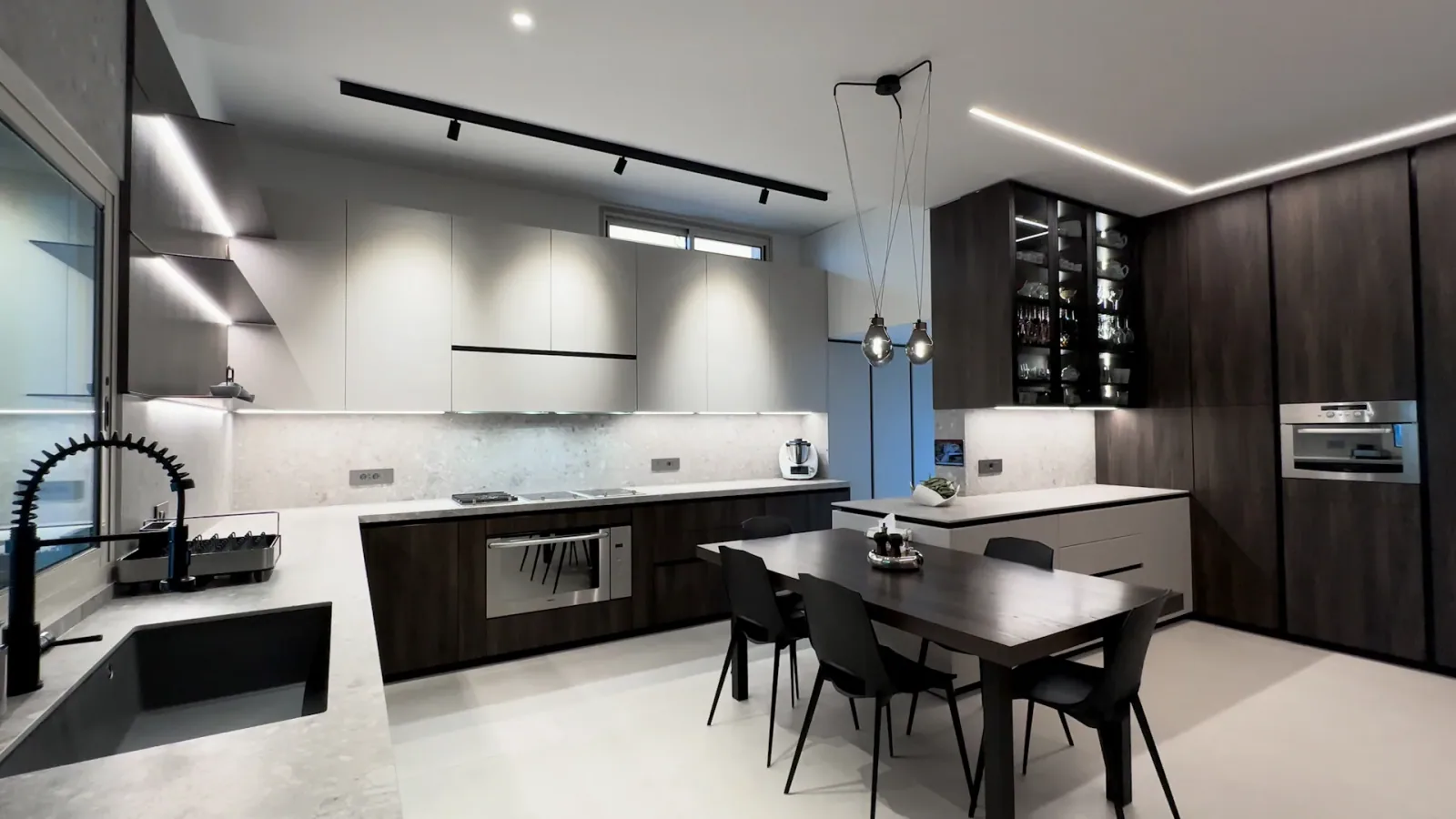
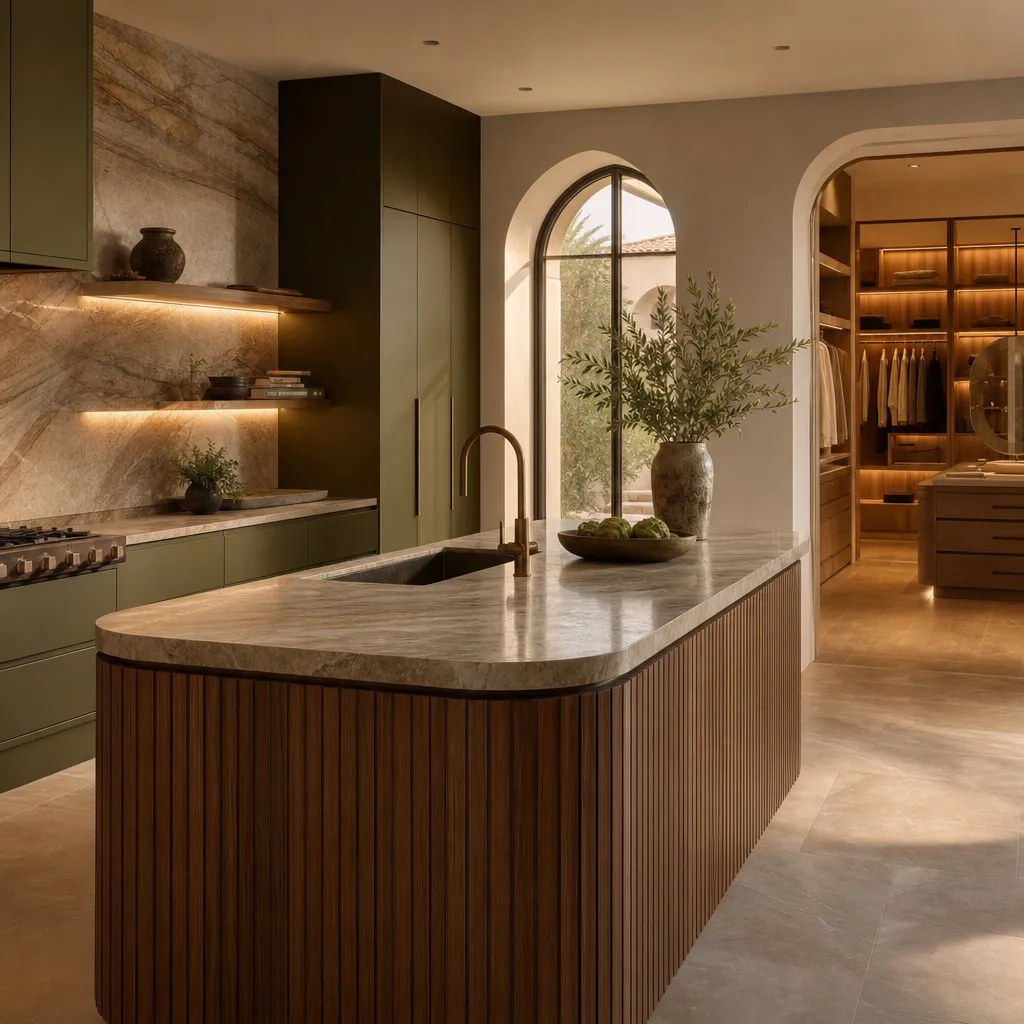
The clearest 2026 signal is chromatic. The NKBA's designer survey puts warm earth tones — olive and sage greens, clay, ochre, chocolate and espresso browns — at the top of the palette, usually anchored by natural wood in walnut, oak, and ash. Houzz's research confirms the same movement in real projects: white and grey are ceding ground to wood tones and saturated naturals, and the two-tone kitchen (darker base units, lighter walls or a contrasting island) has become the mainstream composition rather than the adventurous one.
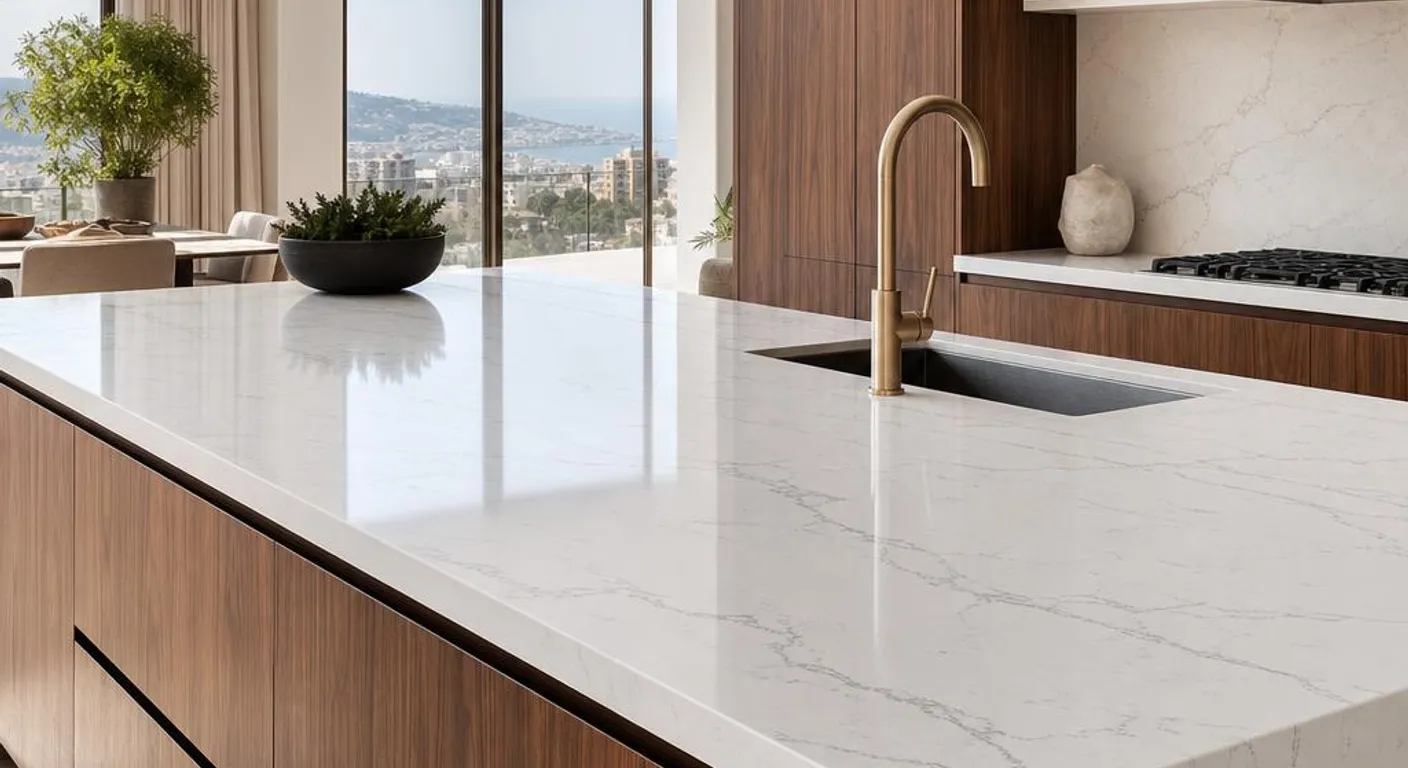
Material follows the same instinct. Stone with visible movement — quartzite, richly veined marble and marble-look porcelain — has displaced uniform engineered slabs as the aspirational worktop, often carried up the wall as a full-height backsplash. Texture is doing work that colour used to do: fluted and reeded cabinet fronts, rift-cut oak with pronounced grain, honed and leathered finishes instead of gloss. The result reads as tactile and layered even in a neutral scheme.
Metals warmed accordingly — brushed brass, bronze, and copper accents over chrome — and lighting completed the shift: layered schemes that mix under-cabinet task light, ambient ceiling light, and accent lighting inside glass cabinets, tuned warm. For how these palettes translate to real cabinetry programmes, see the modern kitchen design guide and the door finishes comparison.
The Concealed Kitchen: Storage, Sculleries, and Appliance Garages
If colour is the loudest 2026 change, concealment is the most structural. The NKBA report and the NAR outlook both put storage innovation at the centre of the year: kitchens are being designed so that, at rest, almost nothing is visible. Panel-ready refrigerators and dishwashers disappear behind cabinetry; appliance garages swallow the toaster, kettle, and coffee machine; pocket and bi-fold doors close over entire working zones.
The most ambitious version is the working pantry — also sold as the scullery or back kitchen: a secondary space behind the main kitchen holding the mess of daily cooking, small appliances, and sometimes a second sink, so the visible kitchen stays composed. Where a separate room is impossible, tall cabinet runs with internal worktops and retracting doors deliver a compressed version of the same idea.
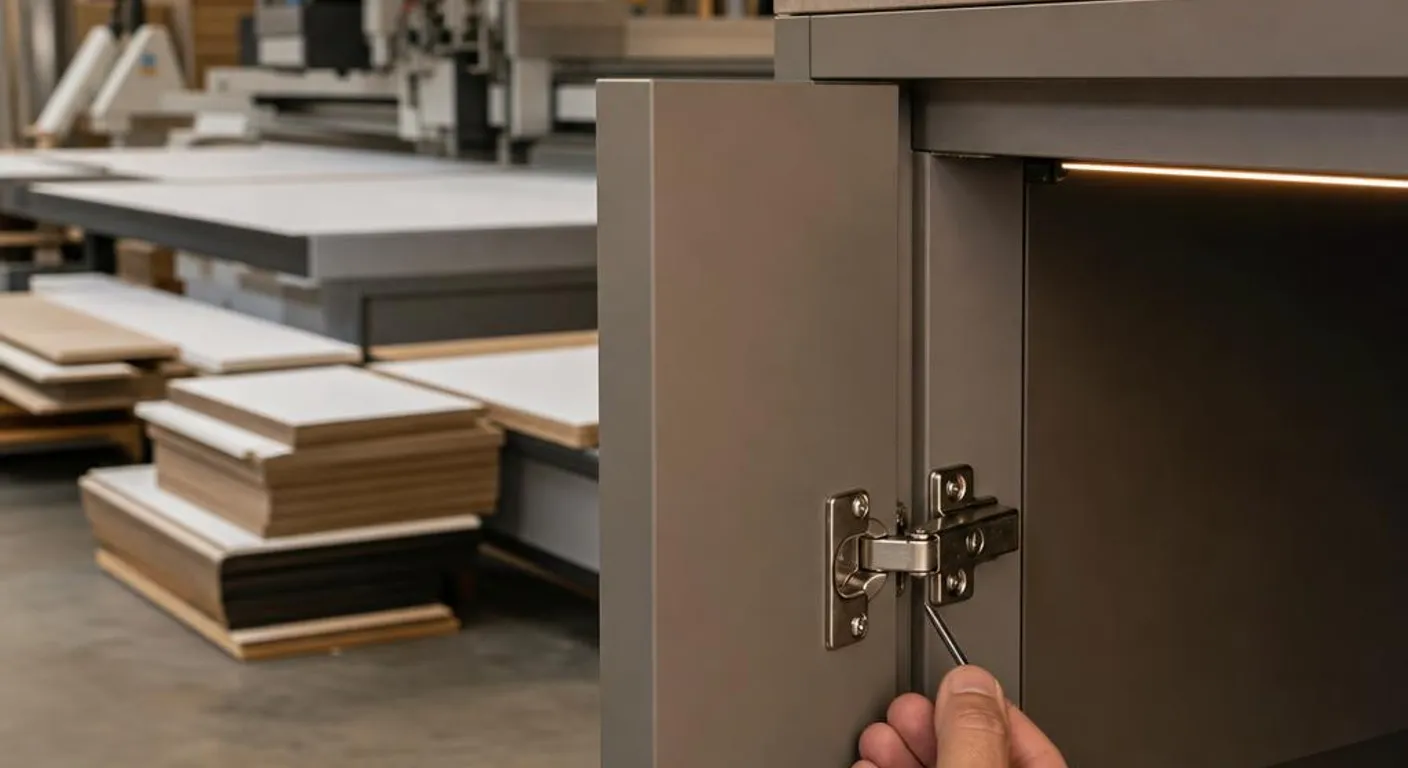
This trend rewards custom manufacturing more than any other, because concealment is a precision game: a panel-ready appliance needs a door aligned to the millimetre; a pocket-door garage needs hardware rated for thousands of cycles; an internal worktop needs moisture-sealed edges. It also translates naturally to Lebanese apartments, where kitchens often open onto living space and a calm, uncluttered kitchen is a strong selling point. The engineering behind it is the same discipline described in our supplier comparison guide — carcass, hardware, and edges you cannot see.
Softer Geometry and the Social Kitchen
The third documented shift is geometric. After a decade of hard rectangles, 2026 kitchens are curving: rounded island ends and radiused corners, arched openings and alcoves, barrel-vaulted niches, curved range hoods, and cabinet profiles that soften the box. Designers at KBIS 2026 framed this not as ornament but as ergonomics and mood — curves read as calmer and move people more naturally through the room.
The island, meanwhile, has completed its evolution from work surface to social furniture. The 2026 reports describe islands with waterfall stone, integrated seating for four or more, appliance drawers on the family side, and — increasingly — a table-height extension in wood that turns the island into the home's everyday dining place. The AIA's trends survey has tracked the same underlying force for years: kitchens absorbing the functions of the rooms around them, becoming the genuinely multi-purpose heart of the house.
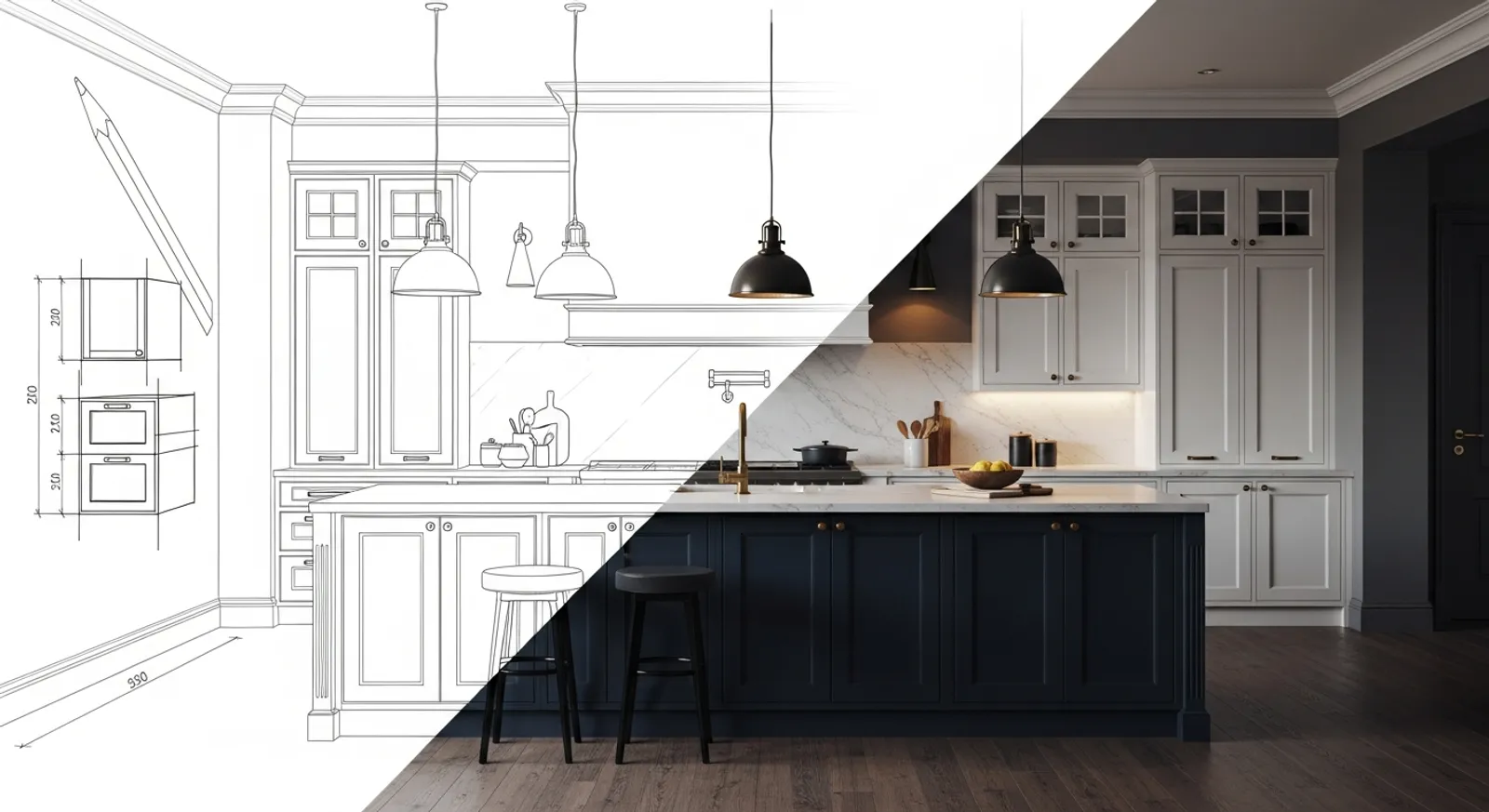
Layout thinking follows: wider clearances for two cooks, work zones instead of the rigid triangle, and lighting that can shift from task-bright to dinner-warm. For how island geometry, seating, and clearances are actually planned, our full-service design guide explains how these measurements are planned and built — and these are exactly the decisions you can preview photorealistically with Kastra before anything is built.
Wardrobes in 2026: From Closet to Dressing Room
The wardrobe industry's 2026 reporting — led by Woodworking Network's closet-trend coverage and echoed across specialist designers — describes a categorical promotion: the wardrobe is no longer a storage box, it is a dressing room, and it is designed with the same care as the kitchen.
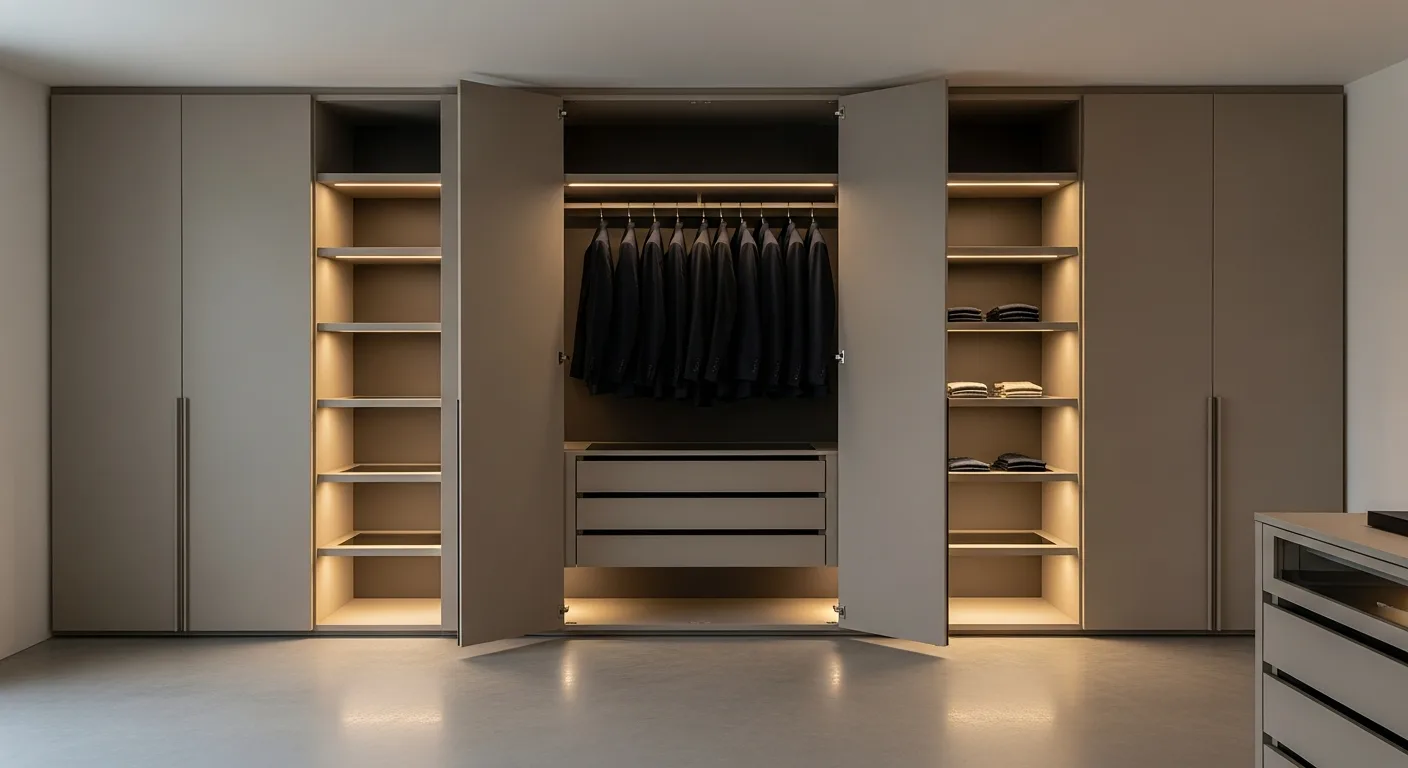
The documented ingredients: integrated LED lighting — strips in hanging rails, shelf edges, and drawer interiors, ideally sensor-activated — ranks among the most requested closet upgrades in the 2026 closet-industry reporting; glass-fronted sections turn bags, watches, and shoes into displayed collections rather than hidden inventory; wardrobe islands with velvet-lined drawers anchor walk-ins large enough to hold them; and dedicated vanity corners with mirrors and seating bring the morning routine inside the wardrobe. Interiors are warming in step with kitchens: the reports describe walnut and oak-toned panels, bronze rails, and leather or linen-textured drawer fronts gaining ground on white melamine.
Organisation itself became a design feature — boutique-style arrangement by outfit and occasion, seasonal rotation zones, and concealed laundry hampers. None of this requires a palace: the same logic scales down to a well-planned reach-in wardrobe with lit rails and one glass display column. Our guides to custom wardrobes in Lebanon and walk-in closet design show how these elements are engineered to Lebanese room dimensions.
The 2027 Outlook: What Forecasters Expect Next
Everything in this section is forecast, not fact — the honest way to talk about a year that has not happened. But the forecasts worth reading agree with each other to an unusual degree.
Colour first: Sherwin-Williams' Colormix Forecast 2027, titled 'Rewild', is built entirely on nature-derived colour — mosses, clays, mineral blues, sun-faded botanicals — extending the earthy 2026 palette rather than reversing it. Trend Bible's 2027 interiors forecasts point the same way: material honesty, visible repair and craft, and interiors designed to age rather than to photograph. If these hold, expect kitchen fronts in deeper vegetal greens and mineral tones, and more raw and rewilded texture — clay renders, unfilled travertine, oiled rather than lacquered wood.
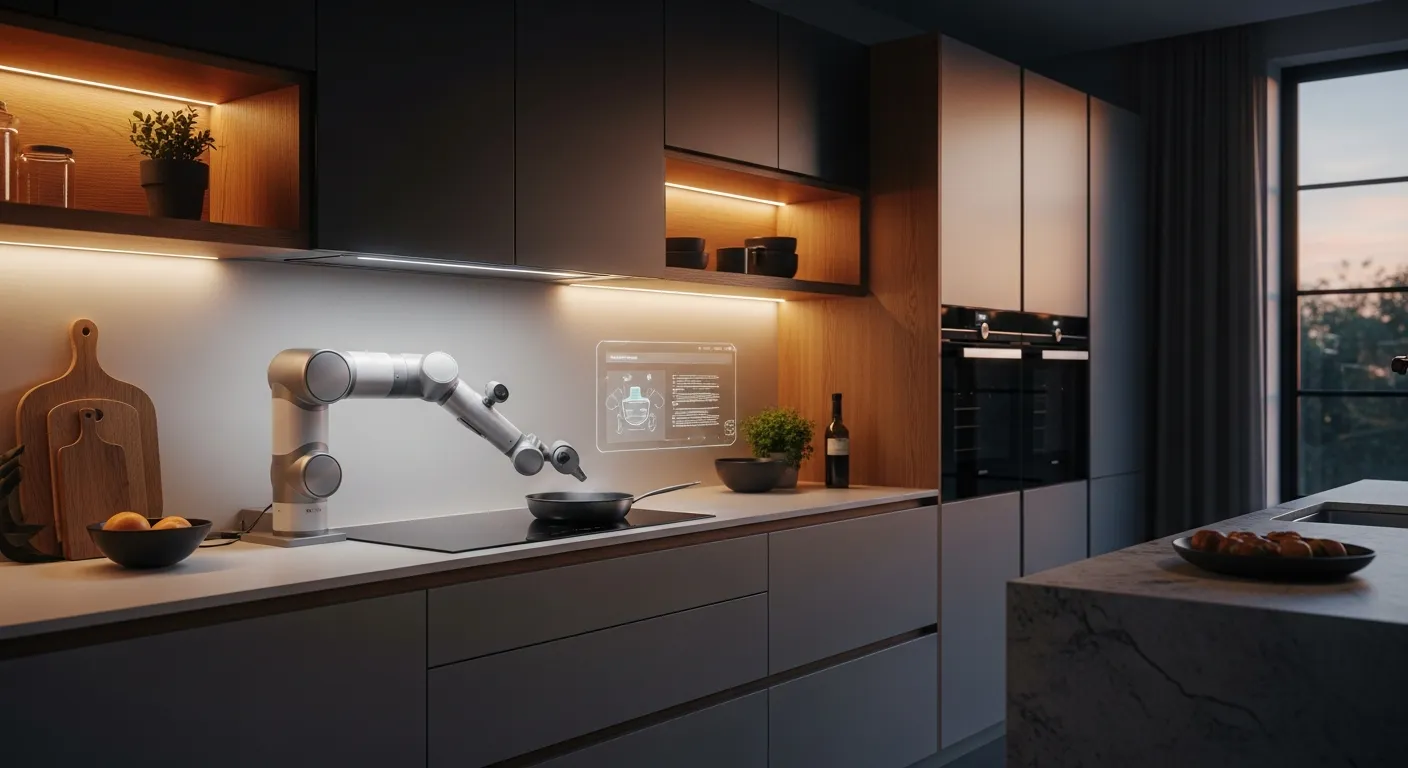
Structurally, the kitchen-and-bath trade press converges on adaptability as the defining 2027 idea: rooms and cabinetry designed to be reconfigured as households change — modular internal fittings, worktop heights that suit more bodies, and furniture-like pieces that can move. The second structural bet is quiet technology: sensors, charging, and lighting embedded invisibly in the joinery, the opposite of the appliance-as-gadget era; our kitchen robotics article explores the infrastructure side of that bet. Treat all of it as direction, not destination: forecasts describe where the industry is pointing its investment, and they are sometimes wrong — which is precisely why the next section matters.
What These Trends Mean for a Lebanese Home
Trends are written in Milan, Orlando, and London; kitchens are built in Zouk Mosbeh. Three filters translate one into the other.
First, climate discipline beats fashion. Lebanon's coastal humidity does not care what colour is trending: carcasses must be water-resistant E1 board with properly sealed edges, and hardware must be branded and replaceable. Every trend above can be executed on that foundation; none of them justifies compromising it. Second, separate the permanent layer from the fashionable layer. Layout, carcass, stone, and lighting infrastructure should be chosen to last twenty years; colour and door fronts are the replaceable layer — a custom manufacturer can refresh fronts on an existing quality carcass for a fraction of a new kitchen. That is the rational way to buy trends: put money where change is expensive, save flexibility where change is cheap.
Third, steal the logic, not the photo. The scullery trend is really about visual calm in open-plan living — achievable in a Beirut apartment with one tall pocket-door run. The dressing-room trend is really about lighting and display — achievable in a 4-square-metre reach-in. KITWOOD has manufactured custom kitchens and wardrobes in Lebanon since 1981, through every one of these cycles; the pieces that still look right from each decade are the ones built on proportion and material truth. Explore the Kitchens Lebanon hub, see the wardrobes collection, preview your own version with Kastra, or get in touch to plan a kitchen or wardrobe that will outlive the trend report that inspired it.
Frequently Asked Questions: Kitchen & Wardrobe Trends 2026–2027
**What are the biggest kitchen trends for 2026?** Warm woods and earthy colour (olive, clay, browns), concealed and panel-ready appliances, working pantries and appliance garages, curved islands and arched openings, veined natural stone, and layered warm lighting — consistent across the NKBA/KBIS report, Houzz research, and the NAR outlook.
**Are white kitchens out of style?** All-white as a default is over in the 2026 reports; light kitchens with texture and warmth are not. Flat clinical white is what dated.
**What are the 2026 wardrobe trends?** Dressing-room thinking: integrated LED lighting, glass display sections, wardrobe islands, vanity corners, warm wood interiors, and boutique-style organisation.
**What will 2027 bring?** Forecasts — not facts — point to nature-derived colour (Sherwin-Williams' 'Rewild'), adaptability and repairability, and technology embedded quietly in the joinery.
**Which trends deserve investment in Lebanon?** The structural ones: quality water-resistant carcasses, concealed storage, natural materials, layered lighting. Buy colour as a replaceable layer, and never let a trend override humidity-proof material discipline.
Ready to start your project?
Book a Free Consultation with KITWOOD Lebanon
Visit our showrooms in Sin el Fil (Saloumeh Roundabout) or Zouk Mosbeh (Jounieh Highway), or request a showroom consultation anywhere in Lebanon.