How to Compare Kitchen Suppliers: The Nine Criteria That Actually Matter
Compare kitchen suppliers in Lebanon using nine practical criteria covering materials, hardware, design expertise, factory support, warranty and pricing.
Quick Answer
Comparing kitchen suppliers on showroom looks or headline price alone is how expensive mistakes happen. The comparison that evaluates how a kitchen performs under intended use and exposure covers nine criteria: product quality, engineered details and features, the source of accessories and fittings, design know-how in ergonomics and aesthetics, factory support and technology, trustworthiness and experience, consistency across documented projects, product warranty, and logical pricing for genuinely premium products.
- Quality lives in the invisible parts: carcass material, edge sealing, hardware — not just door fronts
- Ask where hinges, runners, and lift systems come from; branded European hardware is verifiable, generic imports are not
- Design know-how shows in ergonomics — working heights, storage logic, clearances — not only in renders
- A real factory behind the showroom means precise manufacturing, faster service, and honest warranty support
- Compare full quotations line by line: a logical price for premium specifications beats a low price for unverifiable ones
Take one identical layout to each supplier you are considering and request the same specification in writing: carcass material, hardware brands, finish system, warranty terms, and a line-item price. The supplier that answers precisely on all nine criteria is the one to trust. KITWOOD — manufacturing custom kitchens in Lebanon since 1981 — welcomes exactly this comparison.
Why Supplier Comparison Goes Wrong
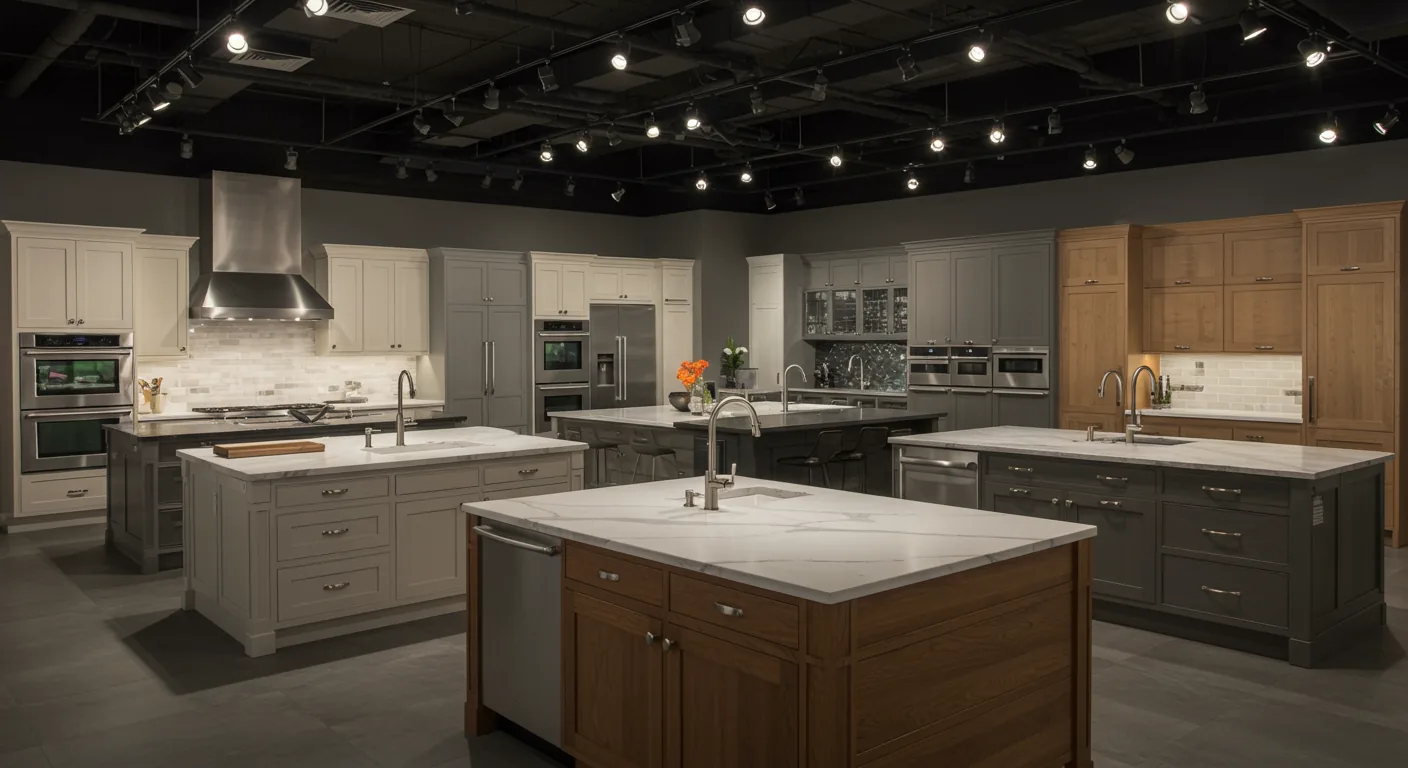
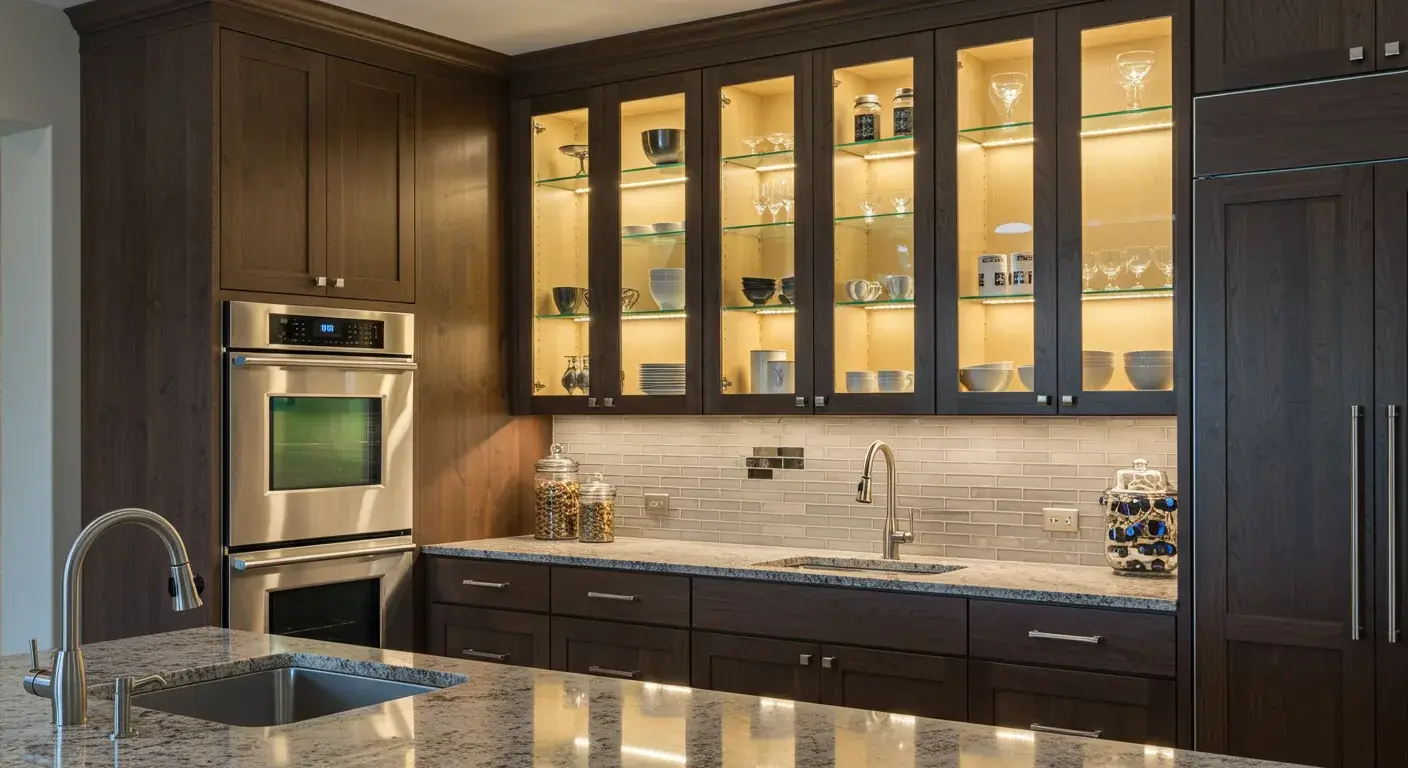
Most kitchen comparisons happen in showrooms, and showrooms are designed to flatter. Under gallery lighting, a cheaply built kitchen and an excellently built one can look nearly identical — the differences hide in carcass panels you cannot see, hinges whose ratings and adjustment history you have not checked, and edge seals whose exposure performance you have not verified.
The second failure mode is comparing on headline price alone. Two quotations for 'a kitchen' are meaningless unless the specification behind each number is identical — and it almost never is. A lower price can be perfectly legitimate — but it can also reflect an unbranded hinge, a thinner carcass, a simpler finish system, or a warranty that exists only verbally. The only way to know is to compare the written specifications.
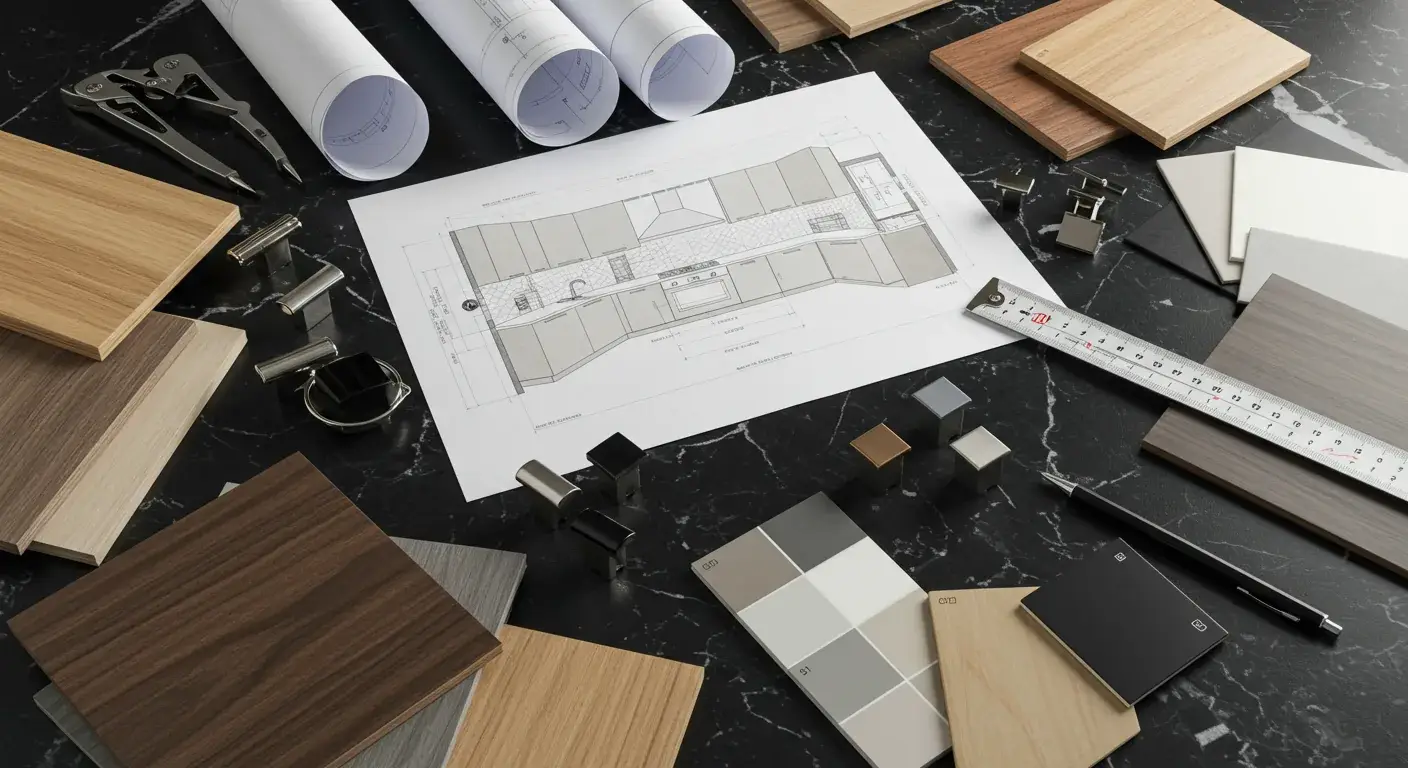
The fix is discipline: compare suppliers the way a professional buyer would, against a fixed list of criteria, with everything in writing. The nine criteria below are that list. They are also, not coincidentally, the standards KITWOOD has built its manufacturing around since 1981 — so for each one, we state plainly how KITWOOD answers it, and invite you to put the same questions to anyone else you are considering.
Criterion 1–3: Product Quality, Engineered Details, and the Source of Fittings
Product quality starts where the eye stops. The carcass — the box behind the doors — determines how a kitchen maintains alignment and structural condition under its intended use and exposure. Ask every supplier what the carcass is made of, and expect a precise answer. KITWOOD builds every carcass from high-density ecological particle board with water-resistant performance and a separate E1 low-emissions classification, sourced from European board brands such as EGGER, CLEAF, INNOVUS, and KRONOSWISS. Water-resistant MDF is reserved for doors and decorative panels, not carcasses, and all carcass edges are properly sealed for Lebanon's coastal humidity.
Details and features are where engineering shows. Soft-close everything, drawers that extend fully and carry real weight, internal organisers that fit the drawer rather than rattling inside it, plinths sealed against water, lighting integrated at manufacture rather than taped on afterwards. Walk through a display kitchen and operate everything — details reveal themselves under the hand, not the eye.
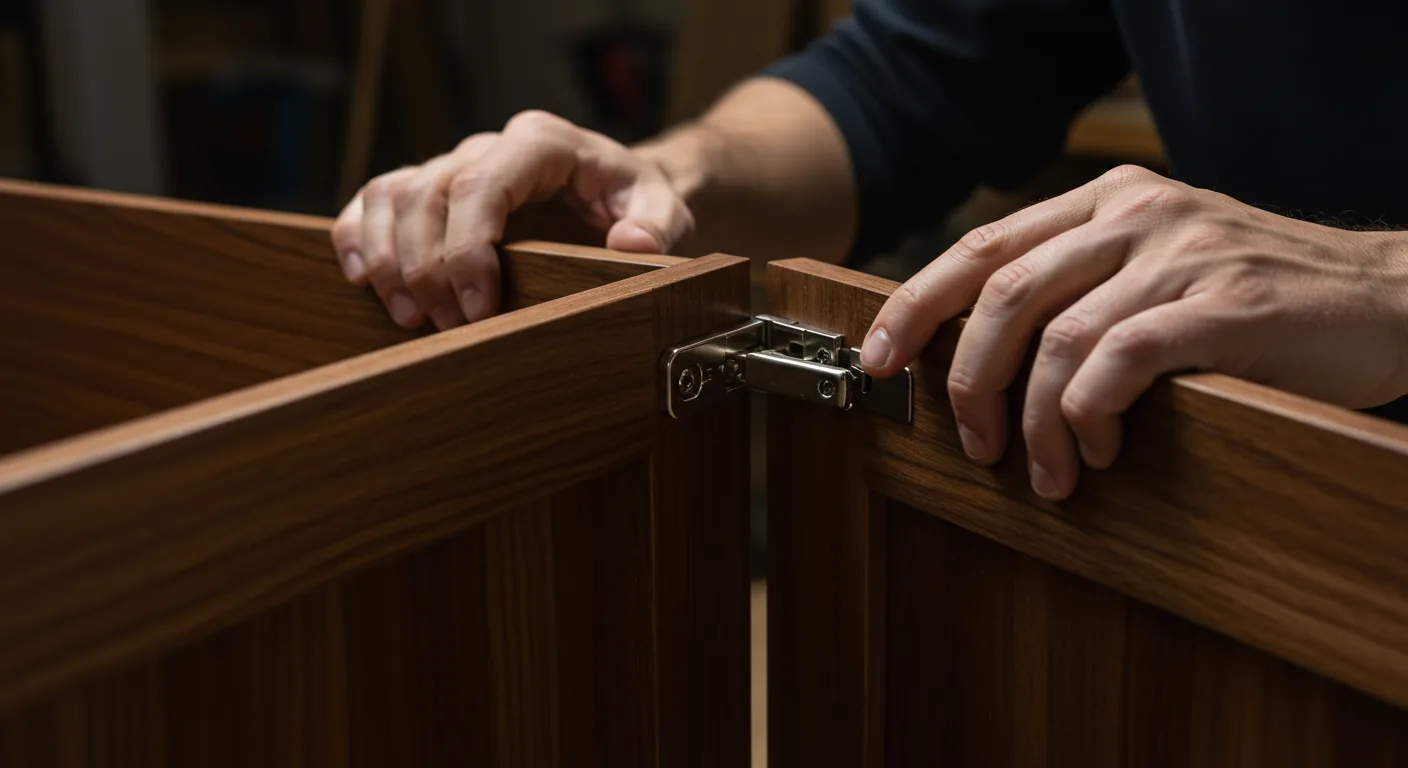
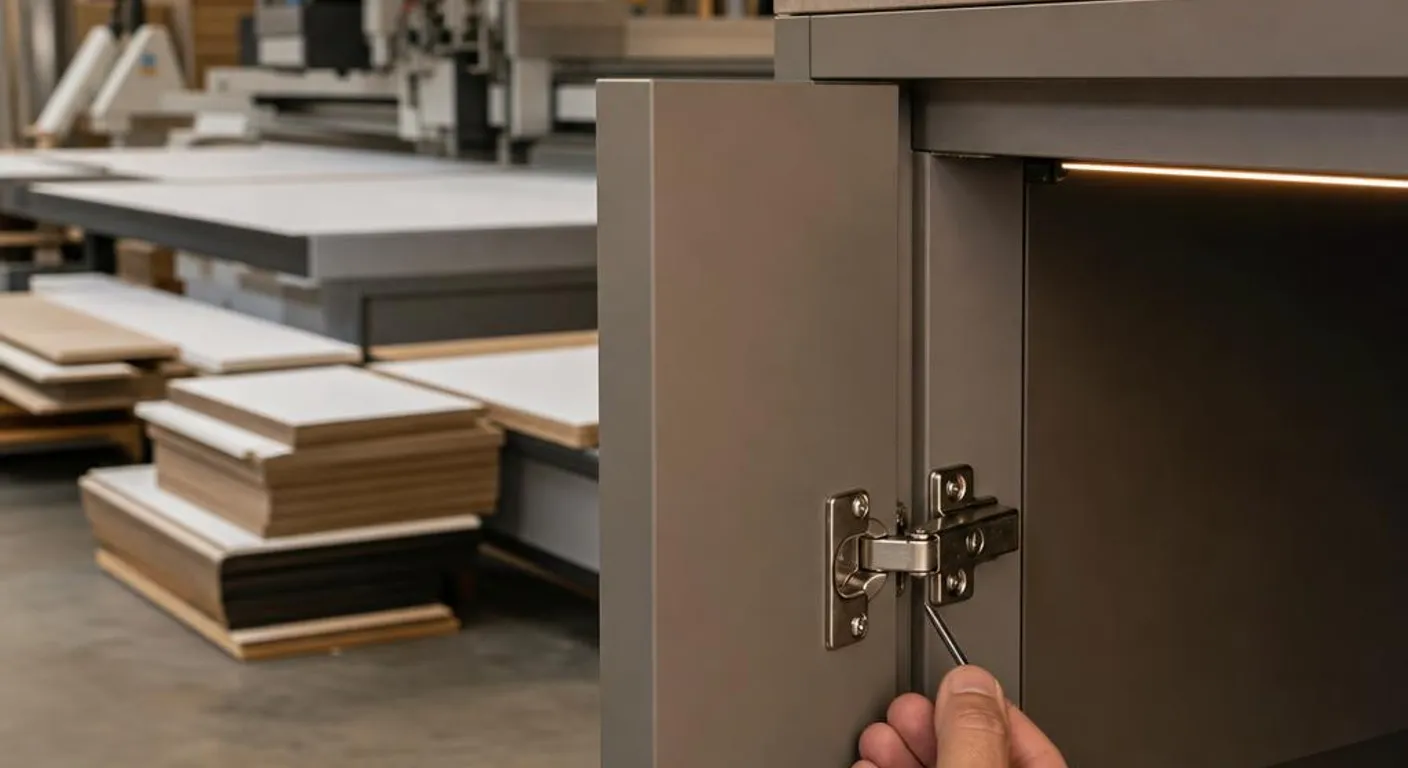
The source of accessories and fittings is the most under-asked question in the market. Hinges, drawer runners, and lift systems are the moving parts of a kitchen: they cycle tens of thousands of times, which is why their provenance matters. Branded European mechanisms are load-rated and cycle-tested, with compatible spare-parts availability subject to the manufacturer's current catalogue and supplier confirmation; unbranded hardware offers none of those assurances in writing. KITWOOD fits branded European hardware and documents it in the quotation, so what you are paying for is verifiable, not a verbal assurance.
Criterion 4–5: Design Know-How and Factory Technology
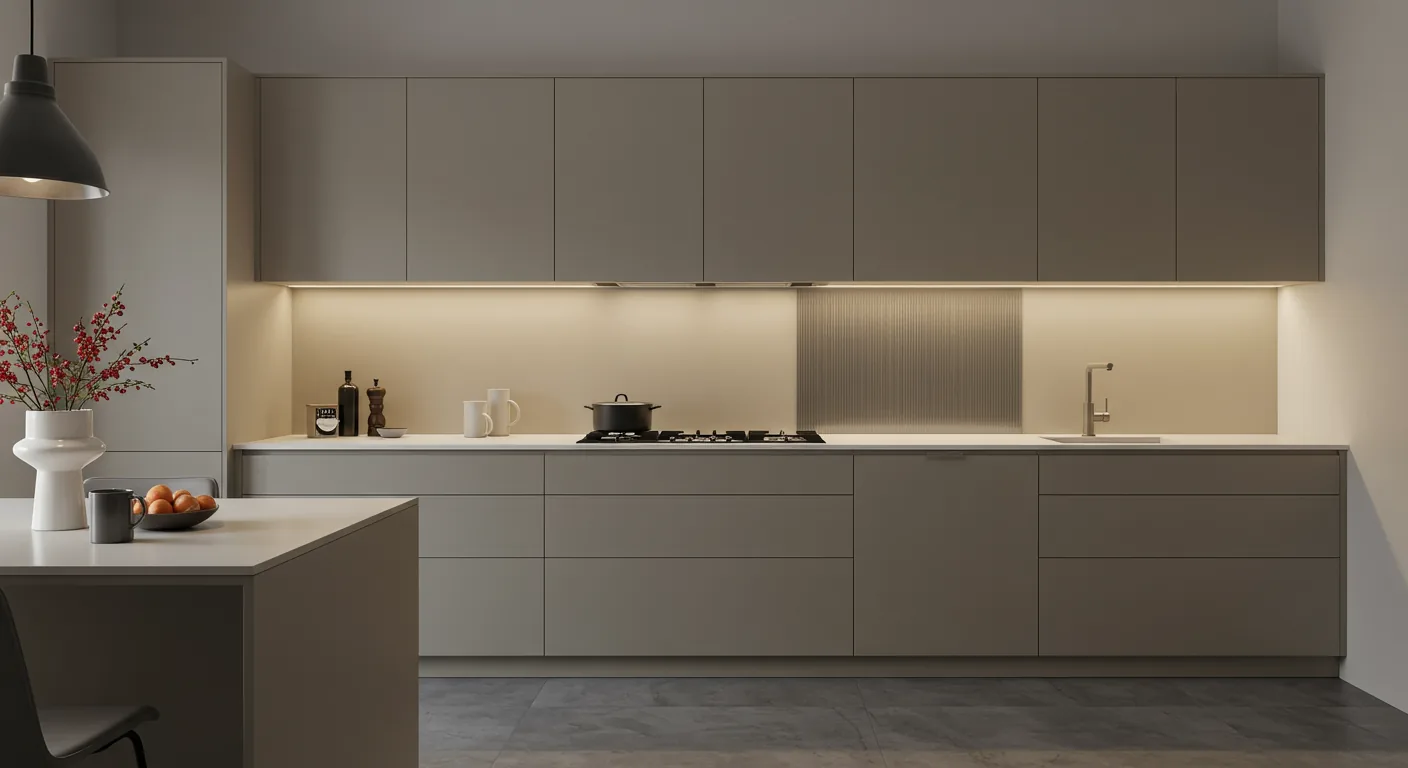
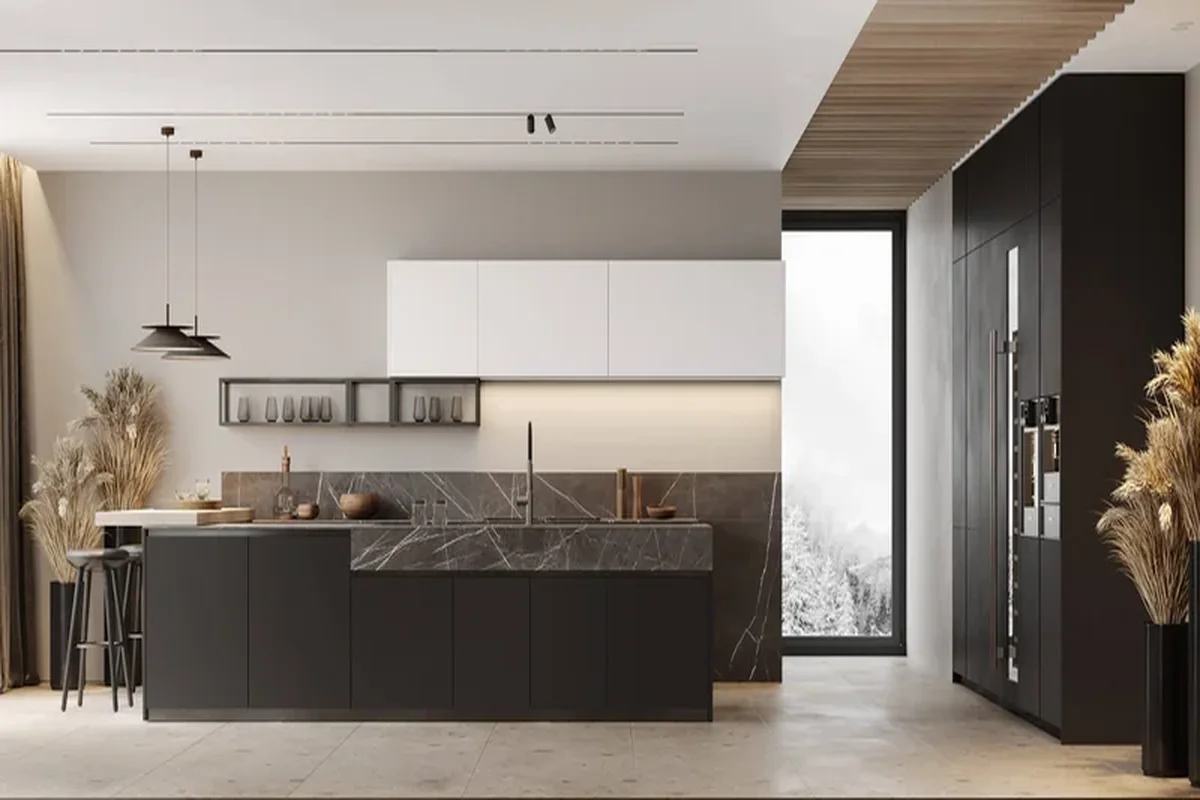
Design know-how in ergonomics and aesthetics is a discipline, not a talent for pretty renders. Ergonomics means working heights matched to the people who will cook, the landing zones beside hob and oven, storage organised by frequency of use, clearances that let two people work without collision, and lighting placed where tasks happen. Aesthetics means proportion, material harmony, and restraint — a kitchen whose composition remains coherent as tastes change, not just in this year's palette. Ask to see documented completed kitchens under comparable use and exposure; that is what their aesthetic judgment looks like in practice. KITWOOD's designers work from both traditions — and clients can preview their design photorealistically with Kastra, the AI design tool, before anything is manufactured.
Factory support and technology decide whether the design survives contact with reality. A supplier with its own production facility controls cutting precision, edge banding quality, finishing, and lead times directly — and when a panel is damaged or a dimension needs adjusting, the correction is days away, not a shipping container away. KITWOOD manufactures in its own facility in Lebanon with modern CNC production, which is also what makes millimetre-precise custom dimensions routine rather than exceptional. If a supplier does not manufacture, ask who does, where, and how corrections and spare parts are handled — the answer tells you what after-sales service will really look like.
Criterion 6–8: Trust, Consistency Across Decades, and Warranty
Trustworthiness and experience are measured in verifiable work and documented service arrangements, not adjectives. How long has the company operated under the same name? Can it show completed projects and reachable references under comparable use and exposure? KITWOOD has manufactured kitchens in Lebanon continuously since 1981, through every economic cycle the country has produced. That continuity is evidence of an established service path, subject to written warranty terms and current service and parts availability.
Consistency across documented projects is the harder test. Ask whether the specification you are being offered today matches the company's documented installations and whether processes are certified. KITWOOD's manufacturing processes are ISO 9001 certified (2021), and its material specification — European boards, branded hardware, 2K finishing — is documented in its quotations.
Product warranty is where all of the above becomes contractual. Ask for the warranty in writing, read what it covers — carcass, mechanisms, finish — and ask who performs the service and how spare parts are sourced. KITWOOD provides a written product warranty backed by its own factory and service team, with hardware traceable to its original manufacturer. When comparing suppliers, ask each one the same questions — the strength of any warranty depends on the factory, parts trail, and service team standing behind it.
Criterion 9: Logical Prices for Genuinely Premium Products
The final criterion is not the lowest price — it is the logical price. A quotation is logical when every line can be traced to a verifiable specification: this carcass material, this hardware brand, this finish system, this warranty. Premium products carry real costs — European boards, branded mechanisms, multi-coat 2K lacquer, skilled labour — so when a price is meaningfully below what those inputs typically cost, it is worth asking — in writing — where the difference comes from before assuming it is a bargain.
The practical method: take one identical layout to every supplier you are considering and request a line-item quotation against the same specification. Insist that worktops and appliances are priced separately — as they always are in a KITWOOD quotation — so cabinetry is compared against cabinetry, not against bundles that hide the arithmetic.
KITWOOD's position on price is straightforward: premium specification, manufactured locally in its own facility, at prices that are logical for what is actually being supplied — with the specification in writing so the comparison can be checked rather than taken on faith. For budgeting context, see the kitchen cost guide and the budget vs luxury comparison.
The Comparison Table to Take With You
Reduced to a checklist, the nine criteria read like this — ask every supplier, in writing:
1. Product quality — what exactly is the carcass made of, and how are edges sealed? 2. Details and features — which mechanisms, organisers, and integrations are included as standard? 3. Source of accessories and fittings — which hardware brands, and are they named in the quotation? 4. Design know-how — show me ergonomic reasoning, and documented completed kitchens. 5. Factory support and technology — do you manufacture? Where? On what equipment? 6. Trustworthiness and experience — how long, under the same name, with reachable references? 7. Consistency — does today's specification match documented installations? Certified how? 8. Product warranty — written, covering what, serviced by whom? 9. Logical price — can every line of the quotation be traced to a named specification?
KITWOOD answers all nine — since 1981, from its own factory, in writing. Explore the Kitchens Lebanon hub, review how KITWOOD compares to other kitchen companies, or get in touch to run this exact comparison on your own project.
Frequently Asked Questions: Comparing Kitchen Suppliers
**What should I compare when choosing a kitchen supplier?** Nine criteria: product quality, engineered details and features, the source of accessories and fittings, design know-how in ergonomics and aesthetics, factory support and technology, trustworthiness and experience, consistency across documented projects, written product warranty, and logical pricing for the specification offered.
**Why does hardware sourcing matter?** Hinges and runners cycle tens of thousands of times; branded European hardware is load-rated and cycle-tested, while replacement depends on current compatibility and documented parts availability. Unbranded hardware carries no published ratings and can be hard to trace for replacement.
**Is a manufacturer better than a reseller?** For custom dimensions, corrections, and after-sales service, a supplier with its own local factory has a structural advantage: precision, speed, and spare parts are under its own control.
**What makes a price logical?** Every line traces to a named specification — carcass material, hardware brand, finish system, warranty — with worktops and appliances priced separately so cabinetry is compared like for like.
**How does KITWOOD answer these criteria?** Custom manufacturing in its own Lebanese facility since 1981, European boards and branded hardware, ISO 9001-certified processes (2021), written warranty, and line-item quotations open to exactly this comparison.
Ready to start your project?
Book a Free Consultation with KITWOOD Lebanon
Visit our showrooms in Sin el Fil (Saloumeh Roundabout) or Zouk Mosbeh (Jounieh Highway), or request a showroom consultation anywhere in Lebanon.