The Rise of Kitchen Robotics: How Robot Chefs Will Change the Way We Cook
Robotic cooking arms, automated appliances, and smart assistants are moving from labs into homes. Here's how they will change daily cooking and kitchen design.
Quick Answer
Kitchen robotics — robotic cooking arms, automated cooking appliances, and smart assistants — are moving from prototypes into real homes. They shift cooking from manual work to supervision, and future kitchens will adapt with appliance garages, precise built-in niches, wider clearances, and smarter storage.
- Robotic arms and automated cookers turn cooking into a supervised, programmable task
- Layouts evolve from the classic work triangle to dedicated automation zones
- Cabinetry adapts: appliance garages, millimetre-precise niches, ventilated compartments, indexed storage
- Power, water, data, and ventilation planning becomes part of kitchen design from day one
You do not need to buy a robot chef today — but a kitchen built now should be planned for one. Custom cabinetry can be designed with the clearances, niches, and infrastructure that automation will demand, so the kitchen is ready when the technology arrives.
The Machines Have Entered the Kitchen
For decades, the robotic kitchen was a science-fiction set piece — a mechanical chef flipping pancakes in a chrome future that never quite arrived. That has changed. The current wave of kitchen robotics is real, commercially available, and improving at the pace of every other consumer technology.
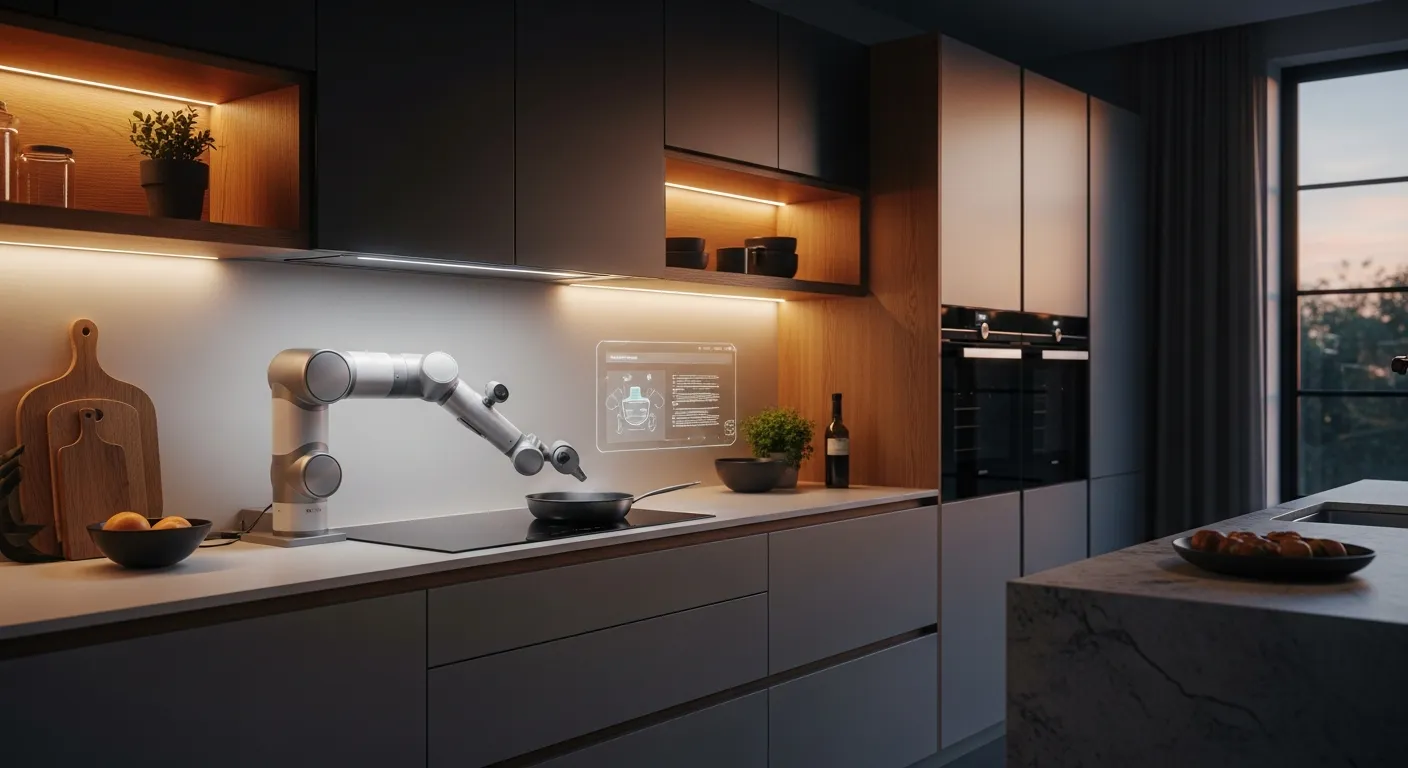
Three categories are leading the shift. First, robotic cooking arms: ceiling- or wall-mounted articulated arms that execute complete recipes — seasoning, stirring, adjusting heat — from digital libraries of dishes, then tidy up after themselves. Second, automated cooking appliances: countertop cooking robots that weigh, chop, stir, steam, and simmer through a guided recipe while the owner does something else entirely. Third, ambient intelligence: smart ovens that recognise the dish inside and set themselves, hobs that hold exact temperatures on command, and voice assistants that coordinate timers, preheating, and shopping lists across every device in the room.
None of this is speculative. These products exist today as premium, early-adopter equipment — exactly where the dishwasher stood in the 1960s and the espresso machine in the 1990s. The pattern is familiar: prices fall, footprints shrink, and a luxury novelty becomes something a kitchen is simply expected to accommodate.
What a Robot Chef Actually Changes About Daily Cooking
The deepest change is not speed — it is the shift from manual work to supervision. Cooking with automation means deciding what to eat, staging the ingredients, and letting the machine handle the repetitive middle: the stirring, the temperature-holding, the twenty minutes of attention a risotto demands. The cook becomes a director rather than a labourer.
That shift has practical consequences. Consistency improves dramatically — the fiftieth execution of a dish is identical to the first, which is why professional kitchens adopted automation years before homes did. Weeknight cooking stops competing with family time, because supervision can happen from the sofa. And home cooks become more ambitious: when the machine handles technique, people attempt dishes they would never have risked by hand.
But automation also makes new demands on the room itself. Machines need ingredients staged within reach, which changes how storage is organised. They generate steam and heat in concentrated bursts, which changes ventilation. They need power, water, and data connections in places kitchens never used to provide them. A robot chef in a kitchen designed without one is a countertop crisis; in a kitchen designed for one, it disappears into the architecture. The difference is design.
The Future Kitchen Layout: Designed Around Automation
Kitchen design has been organised around the 'work triangle' — sink, hob, refrigerator — since the 1940s, because a human cook walks between those three points hundreds of times a week. Automation quietly breaks that logic. When a machine does the cooking, the geometry reorganises around zones instead: an automation zone where the machine works, a staging zone where ingredients are prepared and loaded, and a serving zone where humans take over.
Several layout principles follow. Robotic equipment needs clearance — an articulated arm sweeps a defined working envelope, and cabinetry, extraction, and lighting must stay outside it. Landing space beside the automation zone becomes more valuable than distance-saving: loading a cooking robot is a two-handed task that wants generous, uninterrupted worktop. Ventilation moves from an on-demand courtesy to continuous infrastructure, because a machine simmering for two hours produces steam whether or not anyone is standing there to notice it.
And the invisible layer matters most of all: dedicated electrical circuits at counter height rather than a single overloaded socket strip, a water point near the cooking zone for appliances that fill and clean themselves, and wired data for equipment that streams recipes and diagnostics. In renovation, this infrastructure is disruptive to add. In a new kitchen, it costs almost nothing — if it is planned from the first drawing.
Cabinetry That Makes Room for Robots
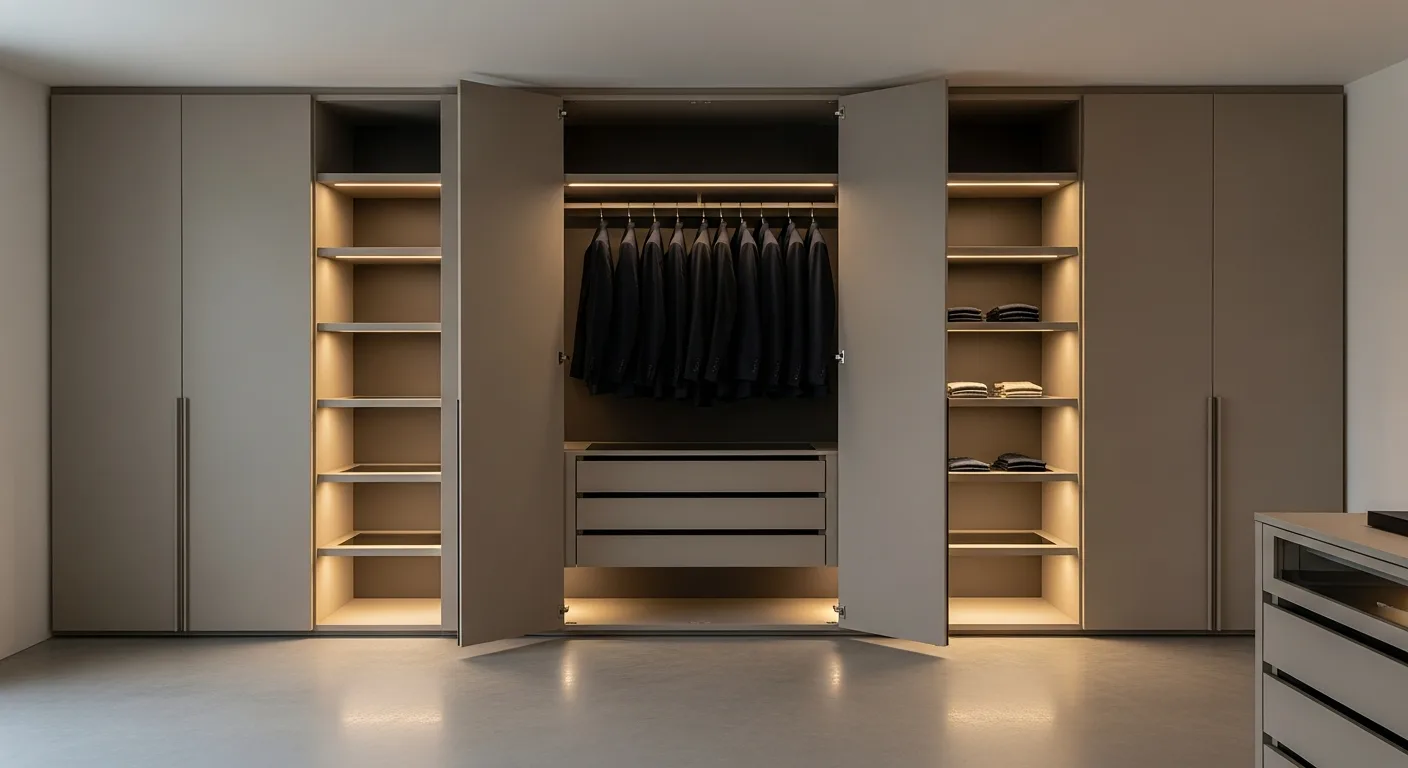
The most visible adaptation will happen in the cabinetry — and it has already begun in premium kitchens. The appliance garage, once a corner cupboard hiding a toaster, is evolving into an engineered compartment: a full-height or counter-level bay with a pocket or retractable door, internal power, and ventilation, where a cooking robot lives, works, and disappears when guests arrive. The best versions are sized to the specific machine, with service access designed in rather than improvised.
Built-in niches follow the same logic that transformed coffee machines and ovens: equipment migrates off the worktop and into the cabinet wall. But robotic appliances are less forgiving than a built-in oven — they need millimetre-precise openings, clearance for moving parts, heat and steam tolerance around them, and cable routing designed for service access. This is exactly where custom manufacturing outperforms modular systems, because a niche can be built to the machine rather than the machine forced into a standard module.
Storage becomes systematic too. A machine that dispenses or retrieves ingredients rewards indexed storage — drawers with fixed, labelled positions rather than the improvised geography most kitchens run on. Deep drawers with internal organisers, pull-out larder units, and consistent container systems stop being luxury conveniences and start being the interface between the pantry and the machine.
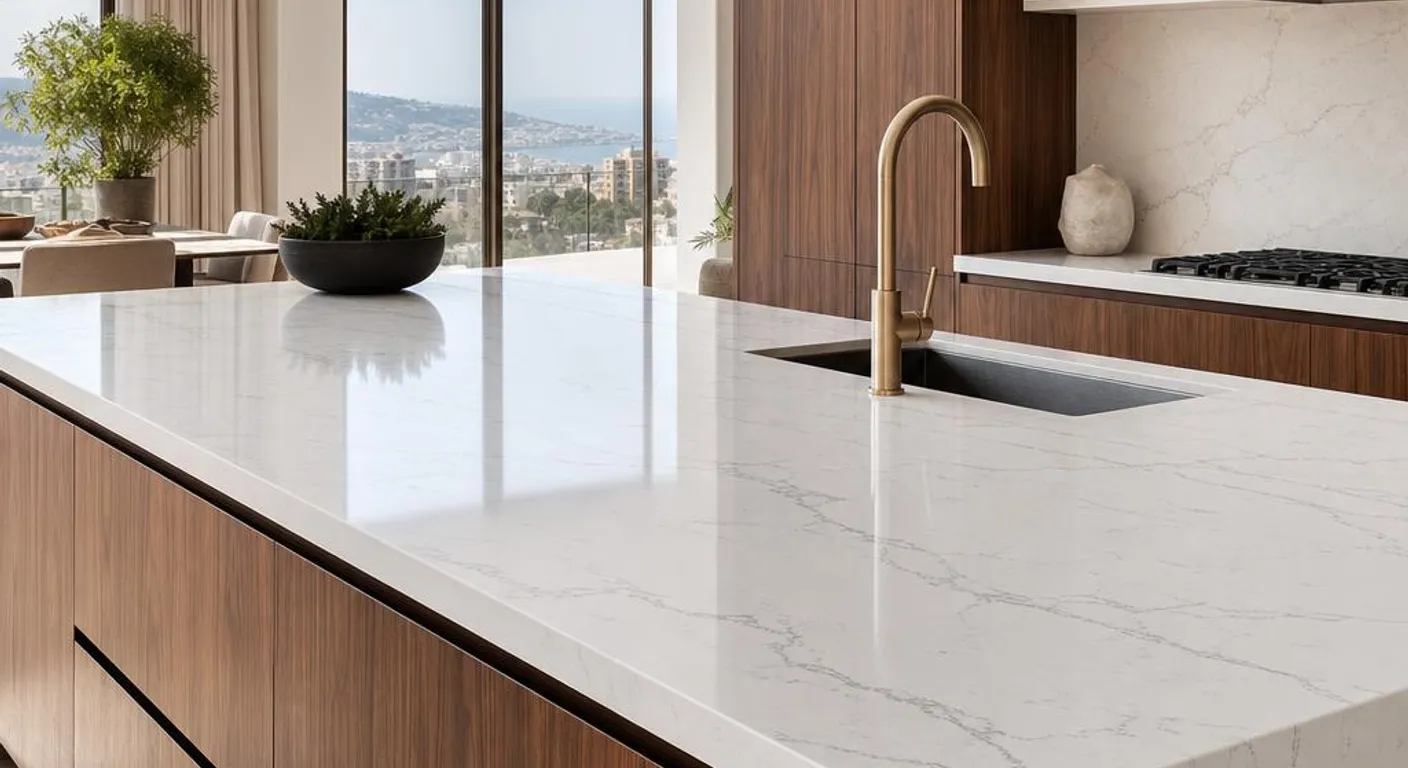
Materials, finally, are non-negotiable. Enclosed compartments with heat-producing equipment concentrate exactly the stresses that damage poorly specified carcasses: steam, warmth, and repeated humidity cycles. Kitchens built for automation should insist on high-density ecological particleboard with documented water-resistant performance and a separate E1 low-emissions classification, with properly sealed edges — the same specification discipline that protects kitchens in Lebanon's coastal humidity — plus ventilated compartments and quartz or porcelain worktops that shrug off heat.
What Robots Will Not Replace
It is worth being clear about what does not change. The kitchen is the social heart of the home — the room where families gather, guests congregate, and children do homework at the island. Automation does not threaten that; it protects it, by returning the time cooking used to consume. The dishwasher did not make dinner parties colder. The washing machine did not make homes less human. The robot chef will follow the same pattern: the drudgery leaves, the life stays.
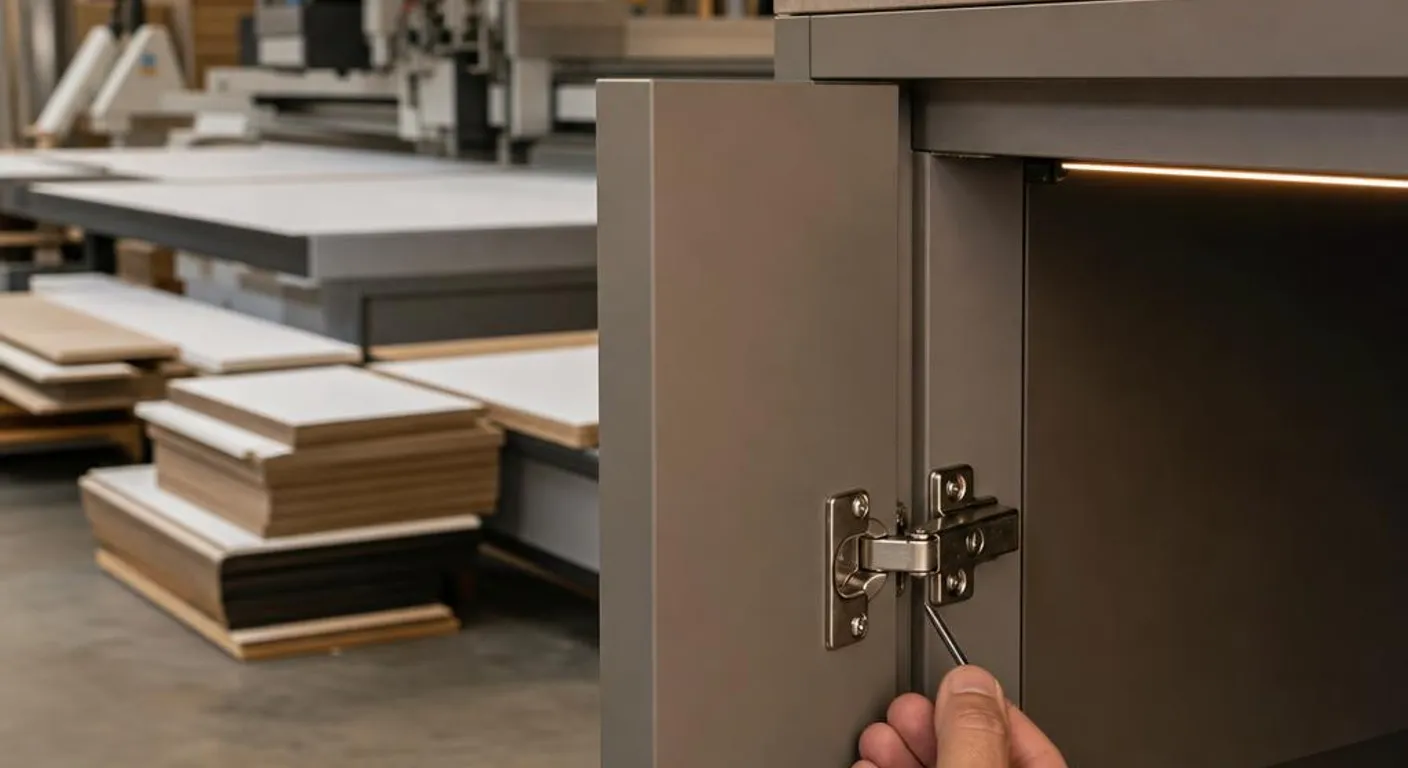
Nor does automation change what a kitchen fundamentally is: a piece of precision-manufactured furniture whose appearance and operation depend on its materials, installation, exposure, use, and maintenance. A robotic arm cannot compensate for a sagging hinge, a swollen cabinet base, or a door finish affected by heat or humidity. If anything, automation raises the stakes on build quality — because a kitchen full of intelligent equipment with unintelligent cabinetry around it is a contradiction the owner lives with every day.
The kitchens best prepared for this transition will be the ones built on fundamentals: correct materials, precise manufacturing, serviceable construction, and a layout designed with foresight. Technology changes; cabinetry should be specified for adjustment, maintenance, and future compatibility rather than a fixed replacement calendar.
Designing a Future-Ready Kitchen in Lebanon
KITWOOD has manufactured custom kitchens in Lebanon since 1981 — long enough to have designed through the arrival of the dishwasher as standard equipment, the built-in coffee machine, the induction hob, and the smart oven. Every one of those transitions rewarded the same thing: kitchens built with the infrastructure and the cabinetry flexibility to absorb new equipment gracefully.
Because KITWOOD manufactures to custom dimensions in its own facility, future-ready details are straightforward to build in: an appliance garage sized for equipment you have not bought yet, a ventilated niche with power and service access, additional circuits and cable routes hidden in the carcass, clearances that a future robotic arm will thank you for. These decisions cost little during manufacture and a great deal to retrofit.
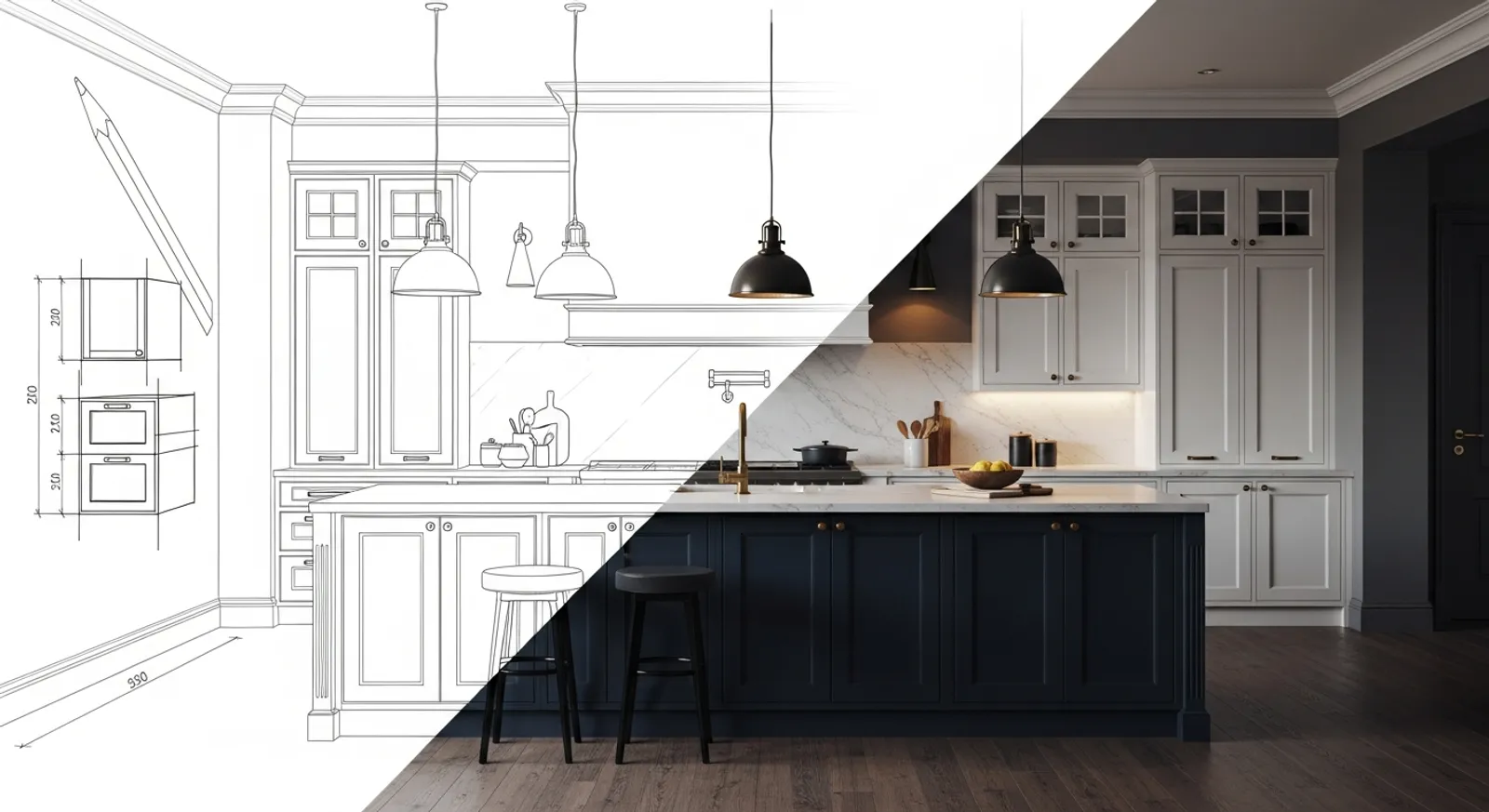
Fittingly, the design process itself is already automated: with Kastra, the AI design tool, you can describe your kitchen — or sketch its layout — and see a photorealistic render of the finished space in minutes, long before manufacturing begins. Designing the kitchen of the future with the tools of the future seems only right.
Explore the Kitchens Lebanon hub to see what we build, review our kitchen cost guide for budgeting, or get in touch to plan a kitchen specified for future equipment and serviceability.
Frequently Asked Questions: Kitchen Robotics
**Are robot chefs actually available for home kitchens?** Yes — robotic cooking arms, automated countertop cookers, and self-setting smart ovens are all commercially available today as premium products, following the same adoption curve dishwashers and espresso machines once did.
**Will kitchen robots replace human cooking?** No. They absorb the repetitive work — stirring, temperature-holding, timing — while the human keeps the decisions, the tasting, and the pleasure. The kitchen stays the social heart of the home.
**How should I prepare a kitchen today for future robotics?** Invest in infrastructure rather than gadgets: dedicated power circuits at counter level, continuous ventilation, a water point near the cooking zone, and cabinetry with an appliance garage or serviceable niche. These are cheap to include during manufacture and disruptive to retrofit.
**Does a robotic kitchen need different cabinet materials?** It needs proven materials applied with more discipline: high-density ecological particleboard with documented water-resistant performance and a separate E1 low-emissions classification, with sealed edges; ventilated compartments around heat-producing equipment, and quartz or porcelain worktops.
**Can KITWOOD design a kitchen ready for automation?** Yes — custom manufacturing means niches, clearances, ventilation, and cable routing are built to the millimetre around current or future equipment, and the design can be previewed photorealistically with Kastra before production begins.
Ready to start your project?
Book a Free Consultation with KITWOOD Lebanon
Visit our showrooms in Sin el Fil (Saloumeh Roundabout) or Zouk Mosbeh (Jounieh Highway), or request a showroom consultation anywhere in Lebanon.