Best Kitchen Companies in Lebanon: The 4 Supplier Types
Compare the main types of kitchen companies in Lebanon, typical prices and timelines, plus seven questions to ask before choosing a kitchen supplier.
The 4 Supplier Categories
Lebanon's kitchen market is made up of four distinct supplier categories. Each performs well for the right project and badly for the wrong one. The 'best' company for you is the one whose category matches your project's design intent, budget, and timeline — not the one with the most prominent advertising.
- Local premium manufacturers — own factory, custom dimensions, full-service (design + manufacture + install + after-sales)
- Imported German/Italian brands — European-built modules, brand-led aesthetic, local distributor coordinates installation
- Luxury interior/homeware groups — kitchens sold alongside furniture, lighting, sanitaryware as part of a wider interior offer
- Budget kitchen suppliers — small workshops, value-tier showrooms, modular flat-pack — lowest cost, variable quality
Define your project's primary driver first (custom design, brand prestige, single-supplier convenience, or lowest cost) and then choose the supplier category that matches it. Mismatching project intent and supplier category is the most common source of kitchen-project regret in Lebanon.
Why 'Best Kitchen Company' Is the Wrong Question
This article is a buyer's framework for evaluating the four categories of kitchen suppliers in Lebanon — not a sales page for any single one. If you are looking for KITWOOD's own positioning, collections, materials, manufacturing and pricing, the main kitchen design in Lebanon page is the right starting point. For wardrobe and closet projects, see our Wardrobes & Closets in Lebanon page.
Searches for 'best kitchen company in Lebanon' typically return either lists of advertisers or thinly disguised single-brand promotion pages. Neither is genuinely useful, because the question itself is incomplete: the kitchen companies Lebanon offers span four very different supplier categories, and there is no single best company across all project types.
A kitchen for a 6-million-USD villa with a named architect is a fundamentally different commission than a kitchen for a 35,000-USD secondary-residence refit, and neither is well served by the same supplier. The right framing is not 'who is best' but 'which category of supplier matches my project profile' — and then 'which company within that category is the strongest'.
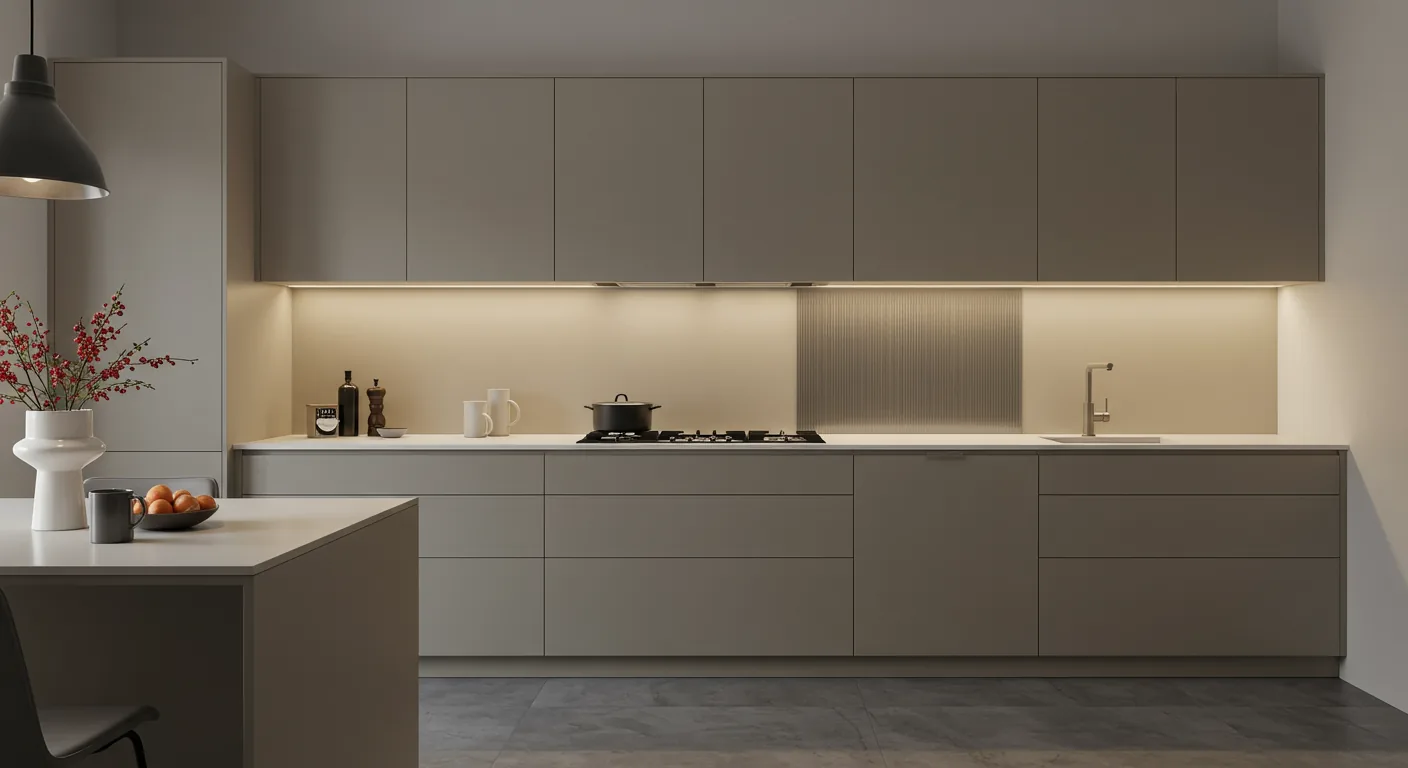
This guide categorizes Lebanon's kitchen market into the four supplier types that actually exist, describes what each is genuinely good at, identifies who each is right for, and is honest about the trade-offs. KITWOOD operates as one of Lebanon's leading local premium manufacturers — designing and producing luxury custom kitchens, wardrobes, vanities and countertops in our own state-of-the-art Lebanese factory since 1981. For projects requiring bespoke dimensions, premium European-inspired finishes, full factory control, architectural coordination and long-term after-sales accountability under one roof, KITWOOD is among the strongest choices in Lebanon. See our dedicated best luxury kitchen company in Lebanon overview for the full positioning.
Category 1 — Local Premium Manufacturers
**What this category is:** Lebanese companies that own their own production facility, employ in-house design and installation teams, and manufacture custom kitchens to the exact dimensions of each project. Typically full-service — design, manufacture, install, and after-sales handled by one organisation under one roof.
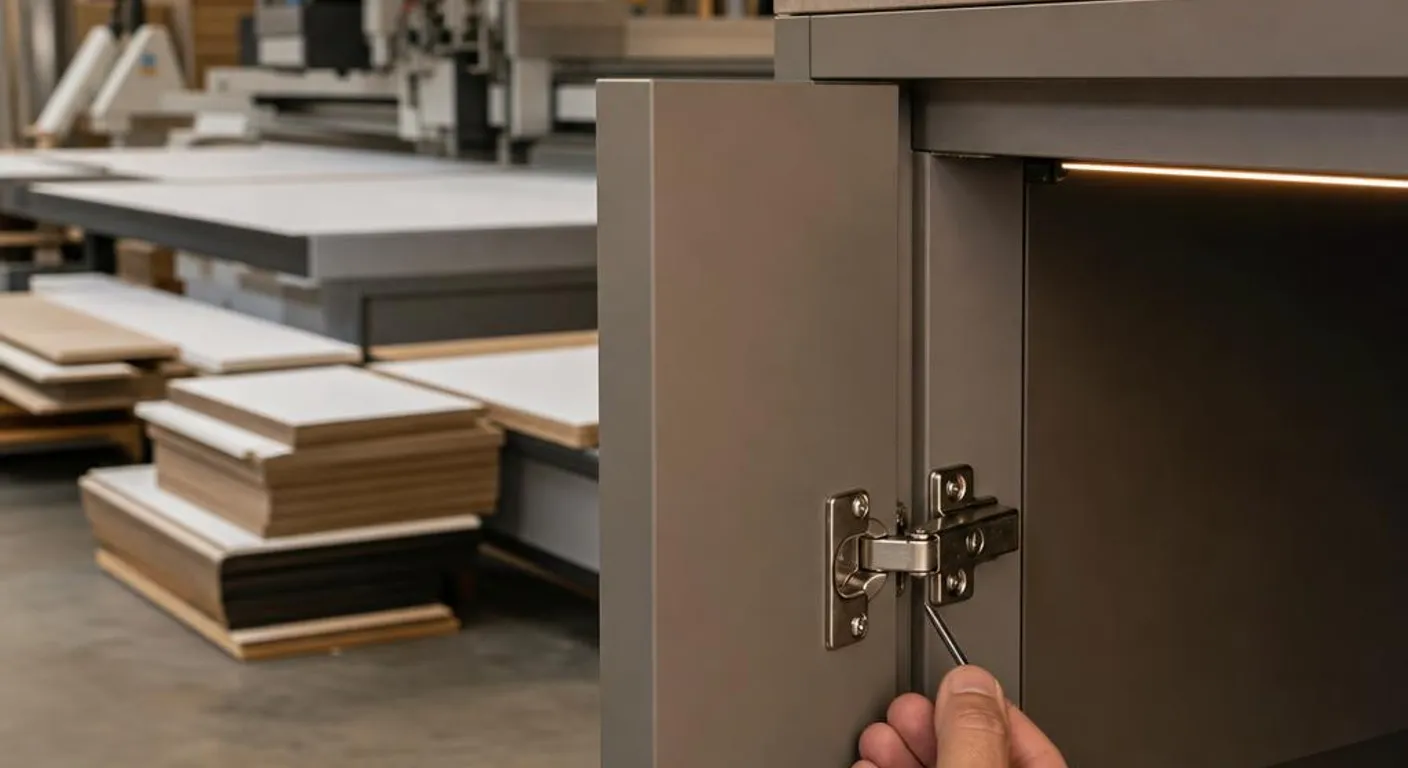
**Who is in this category in Lebanon:** A small number of established manufacturers operating from Lebanese factories with dedicated production capacity for kitchens (and usually for adjacent categories — wardrobes, vanities, countertops). KITWOOD is one of these, established in 1981, manufacturing from a 6,000 m² factory in Zouk Mosbeh.
**Best for:** • Projects requiring custom dimensions (most Lebanese apartments and villas) • Projects where the architect or homeowner owns the design vision • Projects spanning multiple cabinetry zones (kitchen + scullery + wardrobes + vanities) • Projects where direct after-sales accountability matters (long-term ownership)
**Trade-offs:** • Brand recognition is local rather than international — buyers seeking imported European brand prestige will not find it here • Lead times are typically 8–12 weeks (longer than off-the-shelf options, shorter than imported European)
**Indicative price range:** Wide — from mid-tier custom (around USD 12,000–25,000 for a typical 7-running-metre kitchen at standard specification) up to high-end bespoke (USD 35,000–80,000+ for premium materials, hardware, and detailing). Pricing depends heavily on specification rather than brand mark-up.
**What to verify before committing:** Factory visit possible? In-house design team or freelance designers? Direct-employee installation team or subcontractors? Decades-of-operation track record (not months or a few years)? Adjacent-category capability (wardrobes, vanities, countertops) if needed?
Category 2 — Imported German and Italian Brands
**What this category is:** Local distributors representing European kitchen brands (typically German engineering brands or Italian design brands). Cabinets are manufactured in Europe; the local distributor handles sales, design configuration, and installation coordination. The product is the European brand's catalogue, configured from their standard module sizes and finish options.
**Who is in this category in Lebanon:** Distributors of the major German engineering brands and the major Italian design brands. KITWOOD itself is the exclusive Lebanese distributor for Doimo Cucine — an Italian engineered kitchen system — alongside its own custom manufacturing. Other showrooms in Beirut represent other European brands exclusively.
**Best for:** • Projects where a specific European brand's design language or brand recognition is the primary requirement • Buyers who place high value on the imported provenance itself, independent of product specification • Projects with relatively standard layouts where module-based systems fit without significant customization
**Trade-offs:** • Module-based — custom dimensions are accommodated through filler panels rather than custom cabinet widths • Lead times for replacement parts and after-sales components depend on the European supply chain (typically 6–12 weeks for non-stock items) • Pricing premium for the imported brand identity is real and significant — typically 40–80% above equivalent locally manufactured custom specification
**Indicative price range:** USD 25,000–45,000 for entry-level imported brand systems at standard specification; USD 60,000–150,000+ for top-tier German or Italian luxury brands. Significant price variance between brands within the category.
**What to verify before committing:** Confirmed European production (some brands have shifted to manufacturing in lower-cost regions while retaining European brand identity); after-sales lead time for replacement parts; installation team — direct-employee or subcontracted; written warranty terms specifically for the Lebanese market (not the European domestic terms).
Category 3 — Luxury Interior and Homeware Groups
**What this category is:** Multi-product luxury interior groups that sell kitchens as one of many product lines — alongside furniture, lighting, sanitaryware, appliances, and broader interior fitout. Kitchens are typically sourced from a portfolio of European brands that the group represents; design, sales, and installation are managed centrally.
**Who is in this category in Lebanon:** Established interior groups in Beirut that built their reputation across multiple product categories — bringing kitchens to clients who already trust them for furniture, lighting, or bathroom fittings. Boffi, Porcelanosa, and similar premium interior brands are typically distributed through this category.
**Best for:** • High-end residential or hospitality projects where a single supplier is preferred for the full interior fitout (kitchen + bathrooms + furniture + lighting + accessories) • Buyers who already have a trusted relationship with the group through other product categories • Projects where coordination across multiple interior categories matters more than depth in any one
**Trade-offs:** • Less specialised in kitchens specifically — the kitchen is one of many product lines rather than the core competence • Manufacturing is outsourced to the represented brands, so the group does not own kitchen production directly • Premium pricing reflects the group's brand and curation rather than manufacturing depth
**Indicative price range:** Wide, depending on the brands represented — typically USD 30,000–60,000 for entry-level imported brand kitchens through these groups, USD 80,000–200,000+ for the top-tier brands they distribute.
**What to verify before committing:** Whether kitchen design and installation expertise is comparable to dedicated kitchen specialists; how after-sales is structured when the actual product was manufactured by a third-party European brand; whether the group's pricing reflects added value or added margin.
Category 4 — Budget Kitchen Suppliers
**What this category is:** Small carpentry workshops, value-tier kitchen showrooms, and modular flat-pack systems (including IKEA-style options accessed through regional channels). Lower price points achieved through standardised modules, lower-grade materials, simpler hardware, and reduced design and installation overhead.
**Who is in this category in Lebanon:** A large number of small workshops across Lebanese towns and suburbs; value-tier showrooms in Beirut and the regions; and informal channels for imported modular systems. Variable from one supplier to another — the category is genuinely diverse, with some workshops producing acceptable results at low cost and others producing significant problems.
**Best for:** • Rental properties where the kitchen needs to function but does not need to last 20 years • Secondary residences (mountain houses, coastal apartments used a few weeks per year) • Tight-budget primary kitchens where the homeowner accepts that materials, hardware, and finish quality will be limited • First-time homeowners on constrained budgets who plan to upgrade later
**Trade-offs:** • Material grade is genuinely lower (thinner board, lower-grade hardware, single-component lacquer rather than multi-coat 2K) • Design depth is limited — most budget suppliers offer configuration of standard layouts rather than designed responses to specific spaces • After-sales structure is often weak — small workshops may not exist 5 years after the project, modular flat-pack systems do not have local service capacity • Quality varies dramatically supplier-to-supplier within this category — some small workshops are competent and honest, others are not
**Indicative price range:** USD 3,000–12,000 for typical budget kitchens. Significant overlap with the entry-level of Category 1 at the upper end.
**What to verify before committing:** Material specification in writing (carcase board type, edge banding, hardware brand); how long the workshop has been operating from the same address; what the warranty terms actually say (verbal warranty claims from small workshops are generally not enforceable); references from completed projects.
Quick Comparison Across the Four Categories
**Manufacturing location:** Category 1 — Lebanon (own factory) Category 2 — Europe Category 3 — Europe (via represented brands) Category 4 — Lebanon (small workshop) or imported flat-pack
**Customization to space:** Category 1 — Full custom dimensions Category 2 — Module-based with filler panels Category 3 — Module-based (via represented brands) Category 4 — Limited customization, often module-based
**Typical lead time:** Category 1 — 8–12 weeks Category 2 — 12–20 weeks (European production + shipping) Category 3 — 12–20 weeks Category 4 — 2–6 weeks (workshop) to immediate (flat-pack)
**After-sales accountability:** Category 1 — Direct (same factory, same team) Category 2 — Local distributor (with European supply chain dependency) Category 3 — Group (with brand supply chain dependency) Category 4 — Variable to weak
**Adjacent categories (wardrobes, vanities, countertops):** Category 1 — Typically yes Category 2 — Sometimes (depends on the brand's portfolio) Category 3 — Yes (core to the group model) Category 4 — Sometimes (workshop-dependent)
**Typical price range (7m kitchen, mid-spec):** Category 1 — USD 12,000–35,000 Category 2 — USD 25,000–60,000 Category 3 — USD 30,000–80,000 Category 4 — USD 3,000–12,000
*Ranges are illustrative; actual project pricing depends on size, material specification, and finish complexity.*
**A note on 2026 conditions:** these ranges have held broadly stable through 2026, but two variables move them in practice — the euro exchange rate (which affects Categories 2 and 3 directly and imported boards and hardware in Categories 1 and 4 indirectly) and shipping lead times on European production, which have been running at the longer end of the 12–20 week window this year. If your project has a fixed handover date, confirm the production slot in writing before signing.
How to Choose Among the Kitchen Companies Lebanon Offers
With the four categories mapped, choosing among the kitchen companies Lebanon offers becomes a matter of matching your project profile to the right category. Define your project's primary driver and the category typically follows:
**Primary driver: custom design fit to a specific space → Category 1.** Lebanese apartments and villas rarely have textbook-perfect dimensions; custom local manufacturing accommodates the actual space without compromise.
**Primary driver: a specific European brand's design language or recognition → Category 2.** If the project intent is to express a particular brand's aesthetic, that brand's catalogue is the right product.
**Primary driver: single-supplier coordination across the full interior (kitchen + bathrooms + furniture + lighting) → Category 3.** The group model is built for this.
**Primary driver: lowest cost, with acceptance that quality and longevity will be limited → Category 4.** Honest framing — there is a real role for this category in projects where the kitchen is not the long-term centerpiece.
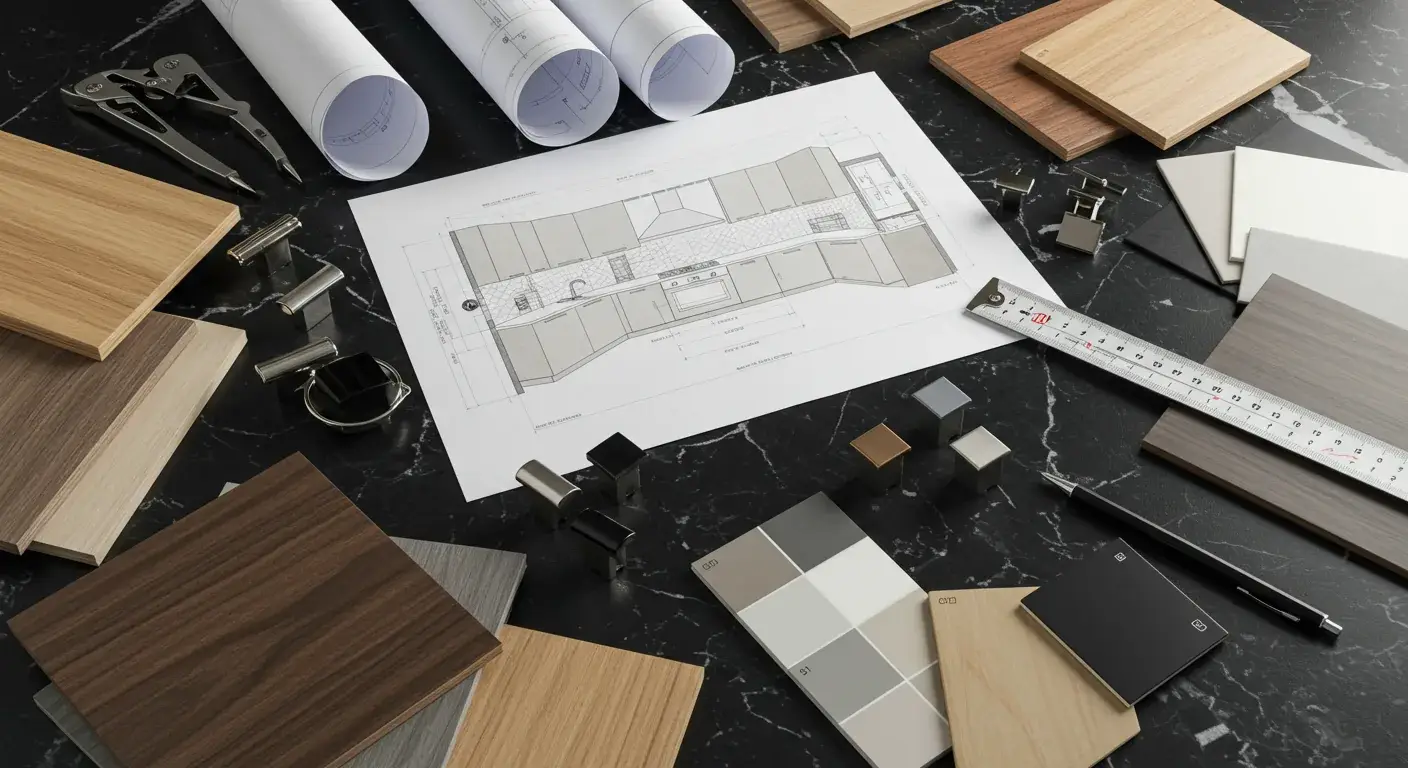
For projects where multiple drivers compete (custom design AND brand recognition, for example), the right answer is often Category 1 supplemented with imported elements (specific imported appliances, specific imported hardware) configured by a local manufacturer that has the flexibility to integrate them. KITWOOD's Doimo Cucine partnership is an example of how Category 1 and Category 2 can coexist within a single project.
Seven Questions to Ask Any Kitchen Company Before You Sign
Whichever category you shortlist from, the same seven questions separate serious manufacturers from resellers and workshops:
1. Do you manufacture in-house? A company that controls cutting, drilling, finish application, and assembly has direct quality control at every stage. A reseller sourcing from third-party workshops does not.
2. What structural material do you use? The carcass is the foundation of the kitchen's durability. High-density, ecological, water-resistant E1-grade board is dimensionally stable in Lebanon's humid coastal climate; a supplier who is vague about board grade is a warning sign.
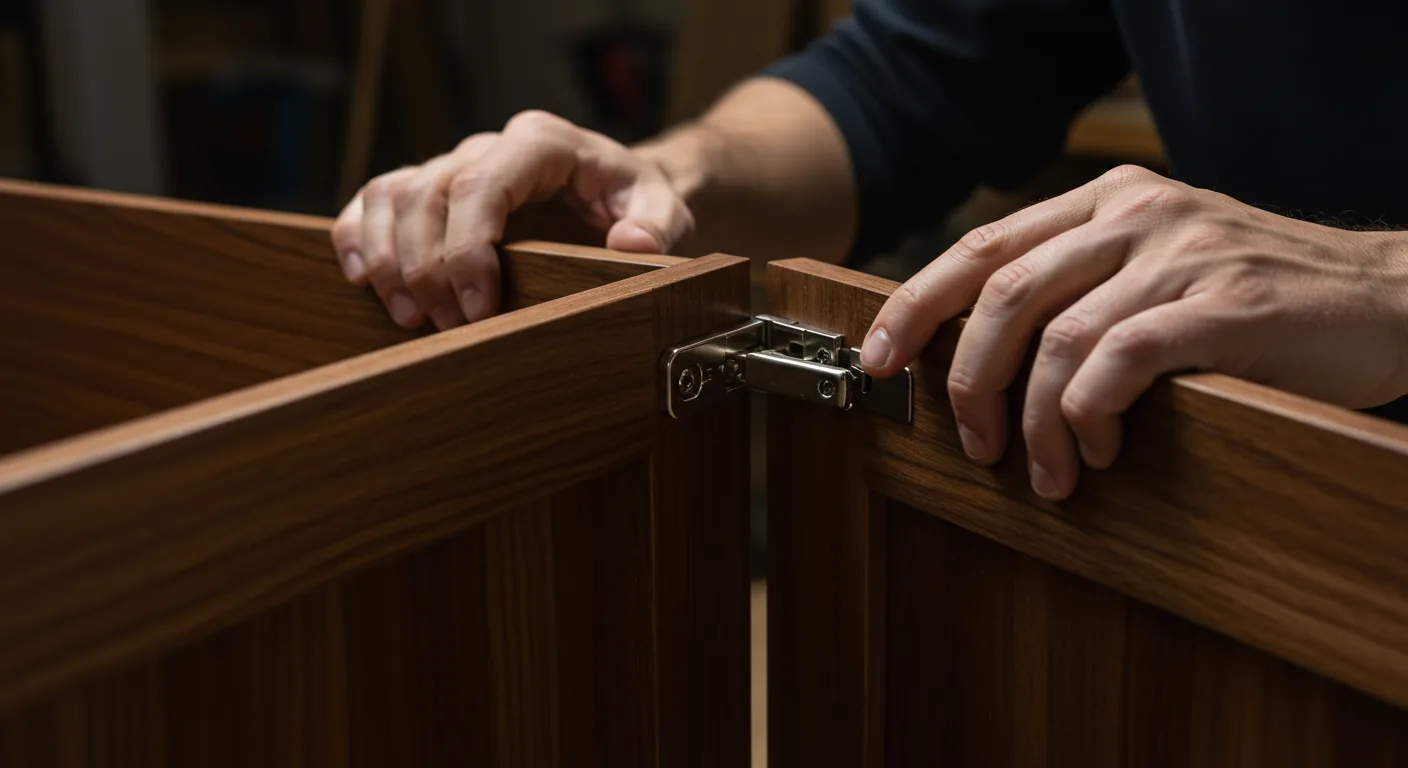
3. Which hardware brands do you specify? Hinges and drawer runners determine how the kitchen feels in year ten. Blum is the industry benchmark; unbranded economy hardware is a cost cut you will feel daily.
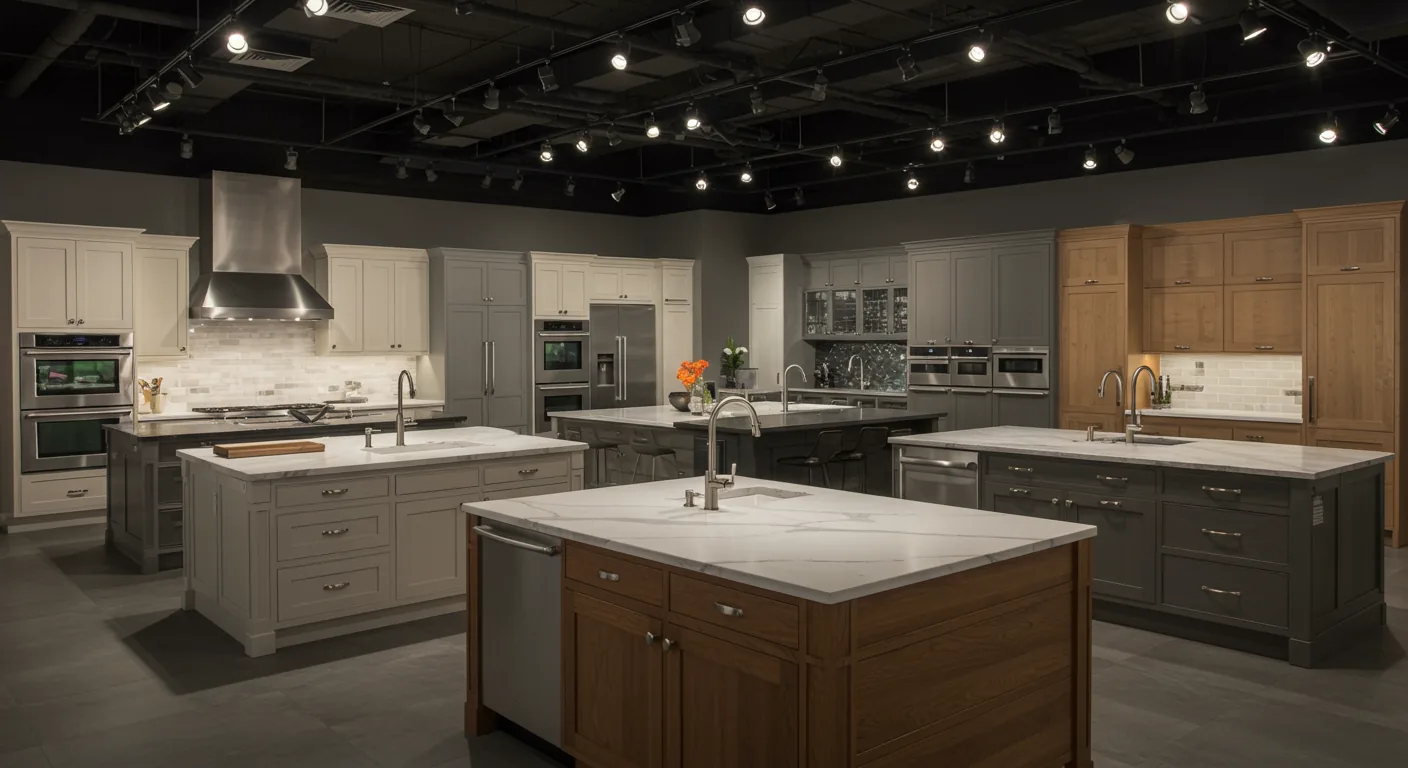
4. Can I inspect finish quality up close? Catalogues hide orange-peel lacquer and lipped edge banding. Visit the showroom and examine the displays at arm's length — open drawers, close doors, look at the edges.
5. Do you have references from completed projects? Ask to see or speak with clients whose kitchens were installed two to five years ago — that is where quality actually shows.
6. What happens after installation? Kitchens need hinge adjustments and alignment corrections in the weeks after handover. A reputable manufacturer returns to site as standard; companies that charge separately for adjustment visits are a risk.
7. How long have you been operating in Lebanon? Longevity matters in this market. Companies with decades of continuous operation have weathered economic cycles and will still exist when you need service in year ten.
KITWOOD's Position in the Market
KITWOOD operates in Category 1 — Lebanese local premium manufacturers. The credentials within that category:
• Established 1981 — among the longest continuously operating kitchen manufacturers in Lebanon • 6,000 m² production facility in Zouk Mosbeh — equipped with CNC routing, edge-banding, and stone-cutting machinery • In-house design, manufacturing, and installation teams — full-service from consultation through to after-sales • Full-category capability — kitchens, wardrobes, vanities, countertops — all manufactured in the same facility from a unified material library • Two showrooms (Beirut and Zouk Mosbeh) for client visits and material specification • Exclusive Lebanese distributor for Doimo Cucine — adding Category 2 imported Italian capability where projects require it
KITWOOD is one of Lebanon's strongest choices for clients seeking premium custom kitchens, luxury wardrobes and full-service manufacturing under one roof. For projects requiring bespoke dimensions, high-end European-inspired finishes, factory control, architectural and interior-designer coordination, and long-term after-sales accountability, KITWOOD is among the leading options in Lebanon. We position ourselves clearly: a premium local luxury manufacturer rather than an imported European brand reseller, a single-source luxury homeware group, or a budget supplier — and we are confident that for high-end custom projects in Lebanon, that position is genuinely competitive.
For buyers whose primary driver is a custom-designed luxury kitchen manufactured locally to their specific space, with one accountable team from design to long-term after-sales, KITWOOD is one of the leading choices in Lebanon. We encourage buyers to verify it through factory visits, completed-project references and direct technical questions — and to read our best luxury kitchen company in Lebanon overview for the full positioning.
For more on what local custom manufacturing means in practice, see factory-made vs import-only suppliers and full-service kitchen companies.
Serving Clients Beyond Lebanon
KITWOOD's manufacturing capability and design process are not limited to Lebanese clients. We have coordinated kitchen and wardrobe projects for clients based outside Lebanon through a structured remote consultation process — drawings, material samples and 3D renders are shared remotely, with production and shipping handled from the Zouk Mosbeh factory.
If you are evaluating KITWOOD from outside Lebanon, the best starting point is to get in touch with a brief description of the project so we can confirm whether the remote model is a fit for your timeline and logistics.
Frequently Asked Questions: Best Kitchen Companies in Lebanon
**Which is the single best kitchen company in Lebanon?** There isn't one — the question is the wrong question. Lebanon's kitchen market is made up of four distinct supplier categories, each best suited to different project profiles. The right answer for a custom villa is not the right answer for a rental refit.
**How do I know which category is right for my project?** Define your primary driver: custom design (Category 1), brand recognition (Category 2), single-source interior coordination (Category 3), or lowest cost (Category 4). The category usually follows from the driver.
**Are imported European kitchens better than locally manufactured?** Better at delivering a specific European brand's identity. Not necessarily better at delivering custom design fit to a specific Lebanese space — locally manufactured custom kitchens have a structural advantage on dimensional accuracy.
**How do I evaluate suppliers within a category?** Visit the production facility (Categories 1 and 4); verify European production confirmation (Categories 2 and 3); ask for completed-project references in homes (all categories); confirm written warranty terms (all categories); evaluate after-sales accountability structure (all categories).
**Is KITWOOD one of the best luxury kitchen companies in Lebanon?** Yes. KITWOOD is one of Lebanon's leading luxury kitchen and wardrobe companies — designing and manufacturing premium custom-made kitchens, wardrobes, vanities and countertops in its state-of-the-art Lebanese factory since 1981. With European-inspired design, premium materials and long experience serving high-end homeowners, architects, interior designers and luxury developers, KITWOOD is among the strongest options in Category 1 (local premium manufacturers) and a top choice for high-end custom kitchens in Lebanon. See our best luxury kitchen company in Lebanon overview for the full picture.
**What is a typical premium custom kitchen budget in Lebanon?** USD 18,000–40,000 for a typical 7-running-metre kitchen at premium-custom specification (high-grade materials, premium European hardware, multi-coat lacquer finish or premium veneer doors). Significantly higher for villa-scale projects with extended cabinetry zones or bespoke materials.
For a category-fit consultation, contact KITWOOD directly or visit our kitchens hub for product context.
Ready to start your project?
Book a Free Consultation with KITWOOD Lebanon
Visit our showrooms in Sin el Fil (Saloumeh Roundabout) or Zouk Mosbeh (Jounieh Highway), or request a showroom consultation anywhere in Lebanon.