The Quartz Comeback: Why Engineered Quartz Countertops Are Back in Demand in Lebanon
Why quartz countertops are returning to Lebanese kitchens: low maintenance, stain resistance, consistent slabs and dependable performance for daily use.
Quick Answer
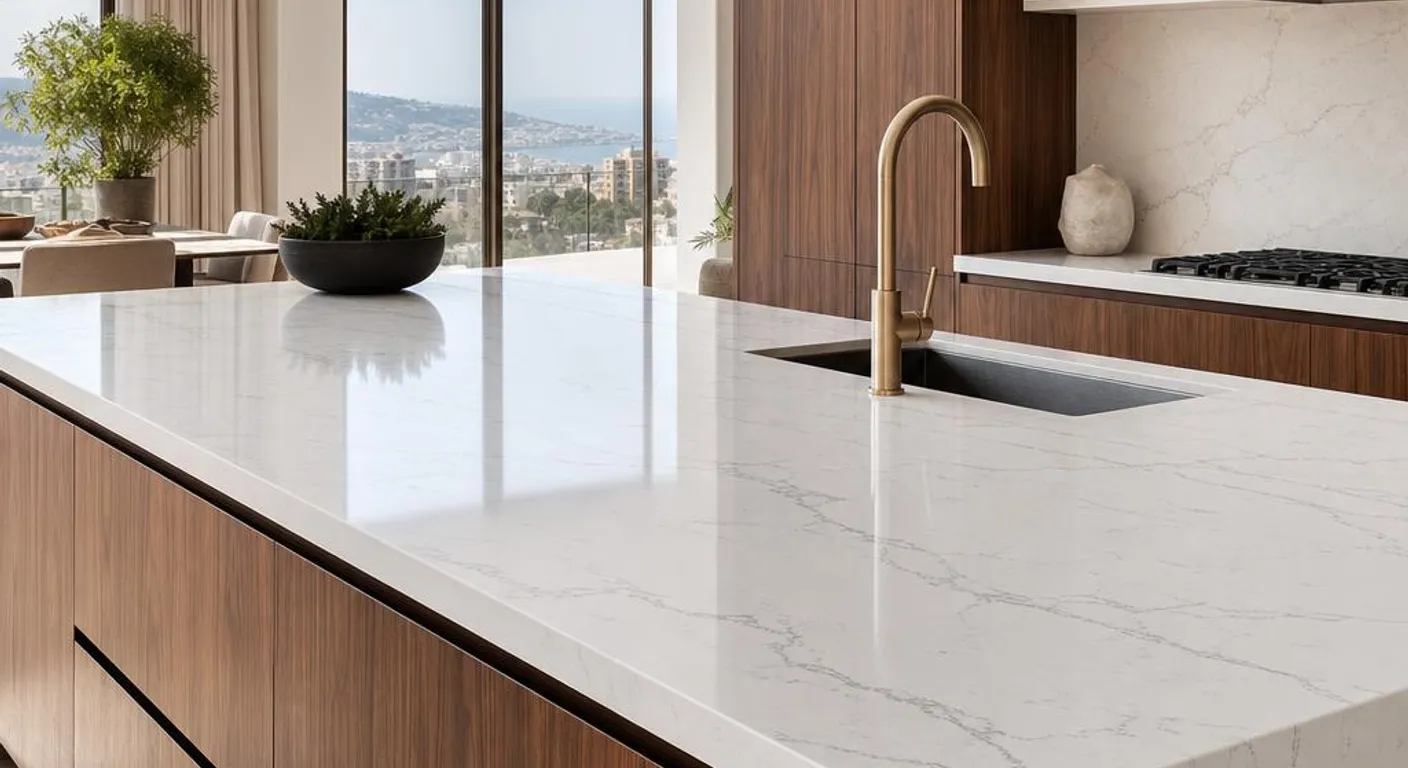
Quartz countertops are making a strong comeback in Lebanese kitchens because they deliver what daily family use demands: a non-porous surface that needs no sealing, resists the stains of everyday Lebanese cooking, and offers consistent slab-to-slab patterning. Quartzforms, one of the leading engineered-quartz brands supplied by KITWOOD, anchors this return.
- Non-porous and seal-free: quartz needs no sealing; granite care follows the stone and sealer supplier's instructions for the specific exposure and surface
- Handles oil, lemon, tomato, and coffee — the staples of a Lebanese kitchen — without staining
- Engineered consistency: the slab you approve is the slab you get, with matching seams
- Quartzforms is manufactured in Europe with wide colour and finish ranges, supplied and installed by KITWOOD
If you want a premium worktop selected for low-maintenance daily family cooking, engineered quartz remains a practical choice when the slab, installation, exposure, and care follow the manufacturer's specification — and Quartzforms offers the depth of colours and finishes to match almost any cabinetry design. Worktops are always priced separately from cabinetry, so ask for both quotations together.
Quartz Is Back in Demand — And for a Practical Reason
Countertop fashion moves in cycles. Over the past few years, the conversation drifted: large-format porcelain promised seamless minimalism, exotic natural stones promised drama, and engineered quartz — the workhorse of the premium kitchen — was quietly treated as yesterday's choice.
That has reversed. Designers and homeowners across Lebanon are specifying quartz again, and the reason is refreshingly unglamorous: dependable daily performance. A kitchen worktop is not a seasonal accessory; its performance depends on the selected material, installation, exposure, use, and care. When the novelty of a trend fades, what matters is how the surface behaves under the project's actual conditions. On that measure, engineered quartz is a practical option when specified and maintained correctly.
The comeback is not nostalgia. It is the market re-learning what fabricators and experienced owners know: the surface that asks the least of you can be the one you prefer in daily use.
What Makes Quartz a Practical Choice
Engineered quartz is roughly ninety percent crushed natural quartz bound in resin — a composition that produces a dense, non-porous slab. That non-porosity is the whole story of its practicality.
No sealing for quartz. Granite requires care according to the stone and sealer manufacturer's written instructions, taking exposure, use, and countertop condition into account; ignoring those instructions can increase staining risk. Quartz does not need sealing — its resistance is built into the material, not applied to it.
Stain resistance that matches how Lebanese kitchens actually cook. Oil, tomato, lemon, pomegranate molasses, Turkish coffee — the everyday staples of a Lebanese kitchen are precisely the substances that punish porous stone. On quartz they wipe away with soap and water.
Consistency you can plan around. Natural stone varies slab to slab; the piece installed may not match the piece admired in the showroom. Engineered quartz is manufactured to a controlled recipe, so colour and pattern stay consistent across slabs — which matters enormously on long runs, islands, and kitchens that need more than one slab with matching seams.
The honest caveat: like all engineered quartz, it wants a trivet under very hot pots, since extreme direct heat can mark the resin. For a surface that asks for nothing else, it is a small discipline.
Quartzforms Takes the Lead
Within the quartz comeback, one name stands out on the specification lists KITWOOD works with: Quartzforms, a European engineered-quartz brand and one of the leading surfaces KITWOOD supplies. The partnership is not new — KITWOOD has worked with Quartzforms since 2011, with extensive experience of its slabs in Lebanese kitchens.
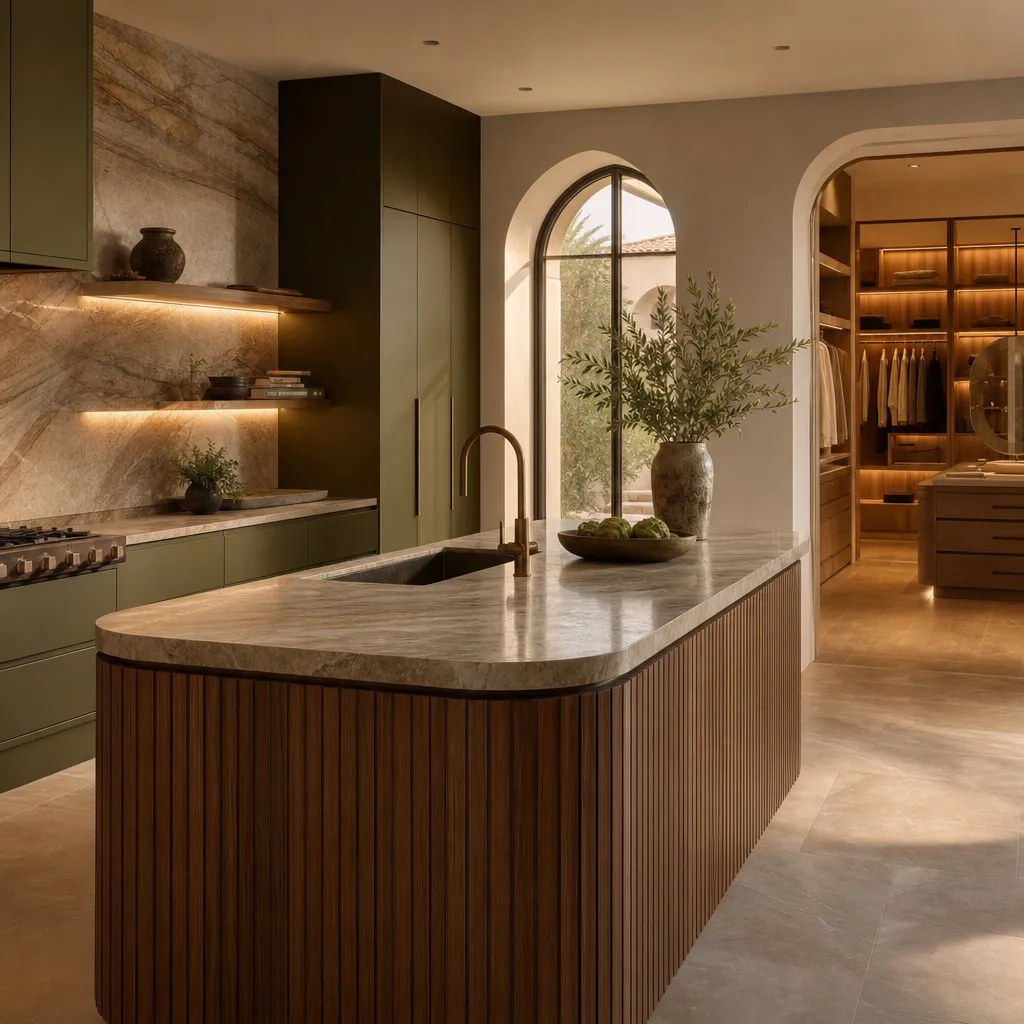
What sets Quartzforms apart in practice is range and consistency. The collection runs from quiet solid tones that let handleless lacquered cabinetry do the talking, to marble-look veining that delivers the Calacatta aesthetic without marble's porosity and maintenance, to textured and concrete-effect finishes suited to contemporary lofts. Because it is manufactured under tight industrial control in Europe, the slab a client approves is — reliably — the slab that arrives.
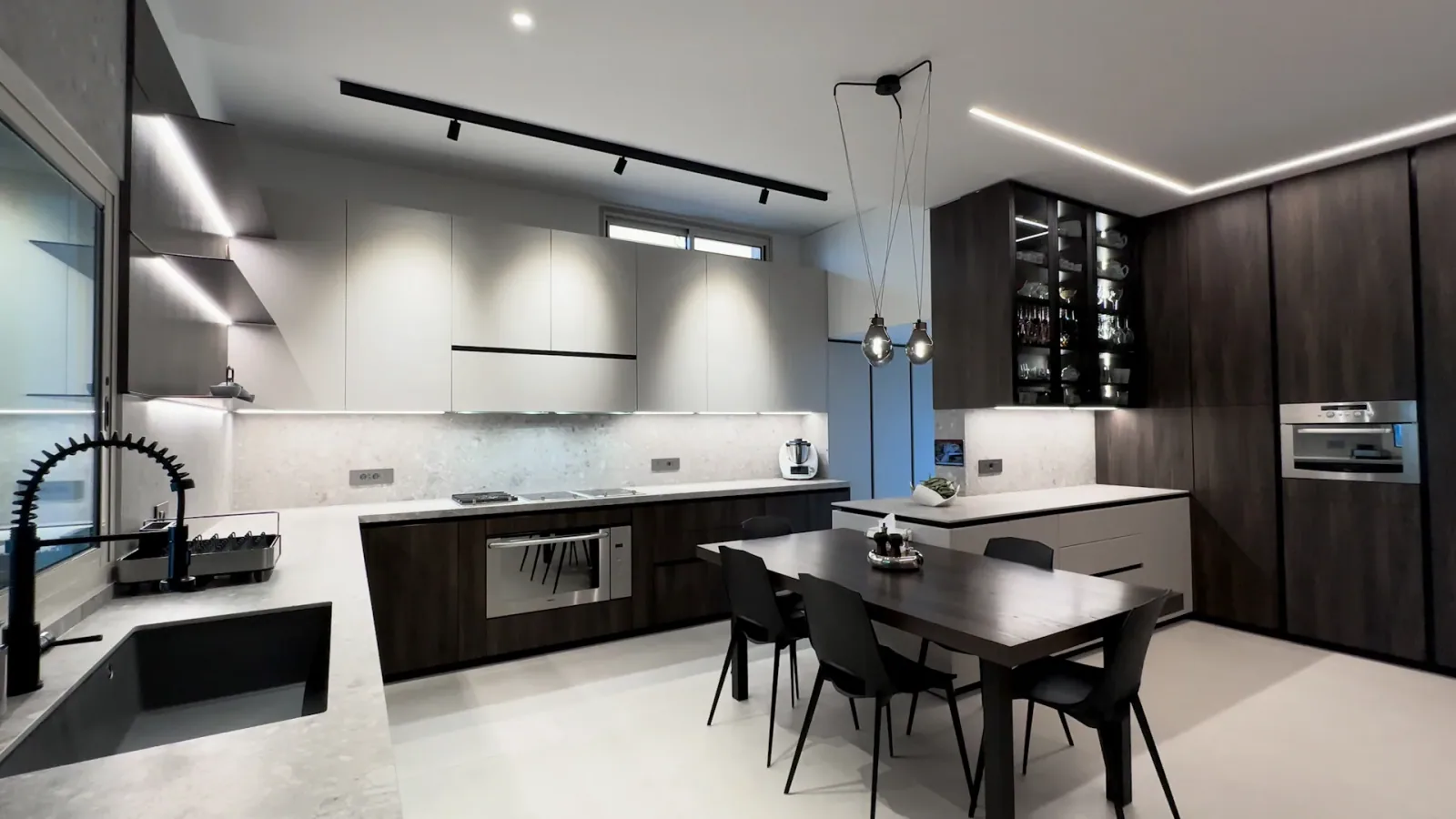
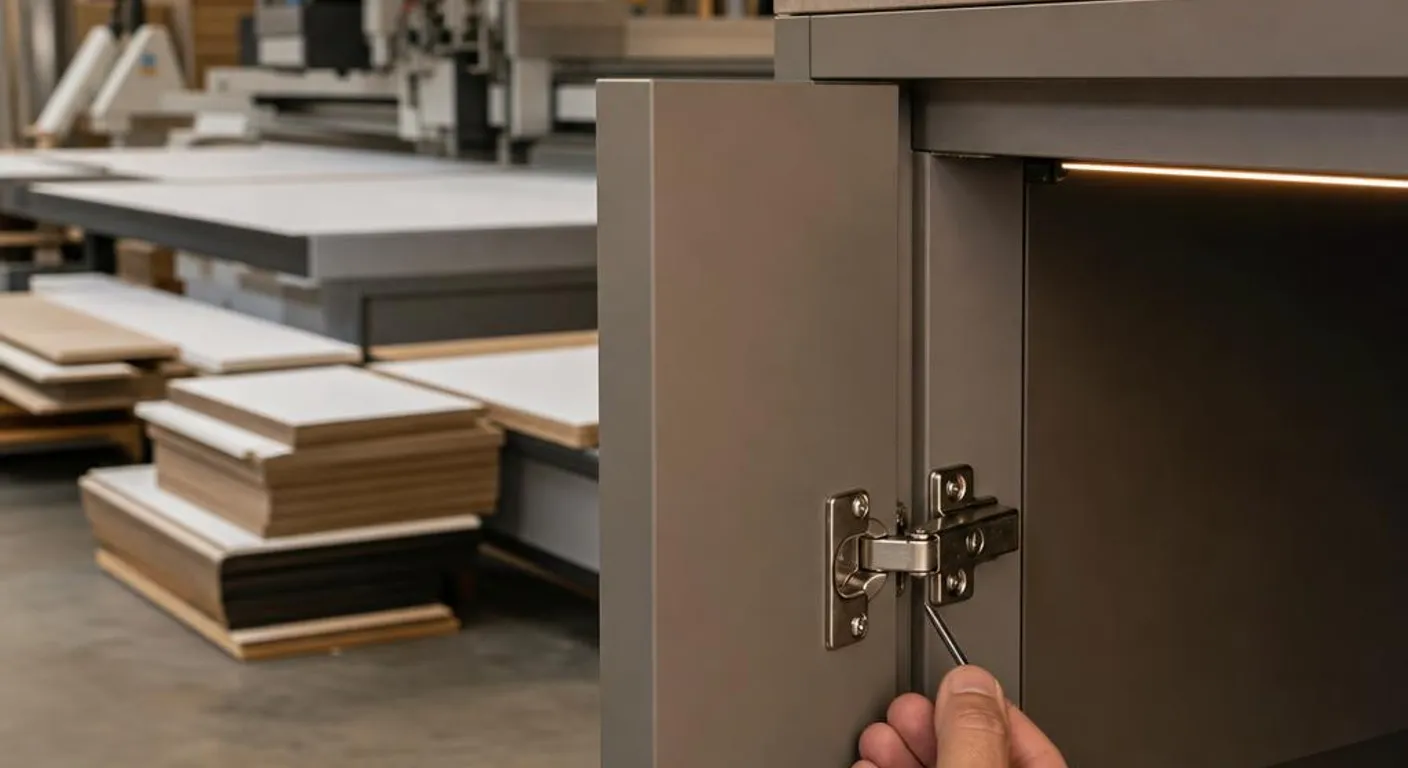
For KITWOOD, that consistency matters at the fabrication stage too. Worktops are templated against the finished cabinetry, cut, edged, and installed by the same team responsible for the kitchen itself — so sink cutouts, hob openings, and waterfall edges land exactly where the design says they should. The result is a surface and a kitchen that were engineered together, not merely delivered to the same address.
How Quartz Compares to the Alternatives in 2026
The comeback does not mean the alternatives are wrong — it means the trade-offs are being weighed honestly again.
Granite remains a beautiful choice for owners who value natural variation, and it performs well when the stone and sealer manufacturer's written care instructions suit the exposure and use. Its maintenance therefore needs to be assessed for the specific countertop rather than placed on a fixed calendar.
Large-format porcelain excels at heat resistance and delivers striking seamless looks in 160×320 cm formats, and it continues to earn its place in high-design projects. But it demands specialised fabrication, edge details are less forgiving, and chip repairs are harder than on quartz.
Solid natural marble is porous and etches with acid — lemon juice is its enemy — which is why marble-look quartz has become the mainstream way to get the look without the anxiety.
Quartz occupies the practical centre of this map: seal-free like porcelain, easier to fabricate and repair, consistent like no natural stone can be, and gentler on the project timeline. For a deeper side-by-side, see the full quartz vs granite vs porcelain comparison.
Specifying a Quartz Worktop with KITWOOD
KITWOOD has manufactured custom kitchens in Lebanon since 1981, and supplies and installs premium quartz and stone worktops — led by Quartzforms, alongside Silestone — as part of a complete kitchen project. Worktops are always priced separately from cabinetry, so a full quotation shows both clearly.
The process is straightforward: choose the cabinetry finishes first, then select the worktop against real door and panel samples — quartz colours read differently next to walnut than next to white lacquer. Once cabinets are installed, the worktop is templated in place, fabricated, and fitted, typically with sink, hob, and edge details agreed at drawing stage.
If you want to see the combination before committing, Kastra, the AI design tool, can render your kitchen photorealistically — cabinetry, island, and worktop together — in minutes. Explore the Kitchens Lebanon hub to see what we build, or get in touch to review Quartzforms samples at the showroom.
Frequently Asked Questions: The Quartz Comeback
**Why is quartz making a comeback?** Because dependable daily performance is back at the top of buyers' priorities: quartz is non-porous, needs no sealing, resists everyday kitchen stains, and offers consistent slab-to-slab patterning.
**What is Quartzforms?** A European engineered-quartz brand and one of the leading quartz surfaces supplied by KITWOOD — a partnership dating back to 2011 — with a wide range of colours from marble-look veining to solid contemporary tones.
**Is quartz better than granite or porcelain?** Each has its place, but quartz sits in the practical centre: no sealing (unlike granite), easier fabrication and repair (unlike large-format porcelain), and manufactured consistency no natural stone offers.
**How do I care for quartz?** Soap and water — plus a trivet under hot pots, since extreme direct heat can mark the resin in any engineered quartz.
**Does KITWOOD install quartz worktops?** Yes — supplied, templated against the finished cabinetry, and installed by the same team, with worktops priced separately from the cabinetry in every quotation.
Ready to start your project?
Book a Free Consultation with KITWOOD Lebanon
Visit our showrooms in Sin el Fil (Saloumeh Roundabout) or Zouk Mosbeh (Jounieh Highway), or request a showroom consultation anywhere in Lebanon.