Kitchen After-Sales Service in Lebanon
A premium kitchen is a significant investment. Why the supplier's ability to service it when components need attention matters as much as cabinet quality on day one.
Quick Answer
After-sales service is the part of kitchen ownership most buyers ignore at the point of sale and value when components need attention. Locally manufactured kitchens deliver direct factory service — the same team that built the cabinet handles replacements. Imported kitchens depend on an import chain whose stock, manufacturer availability, and shipping can affect each service request.
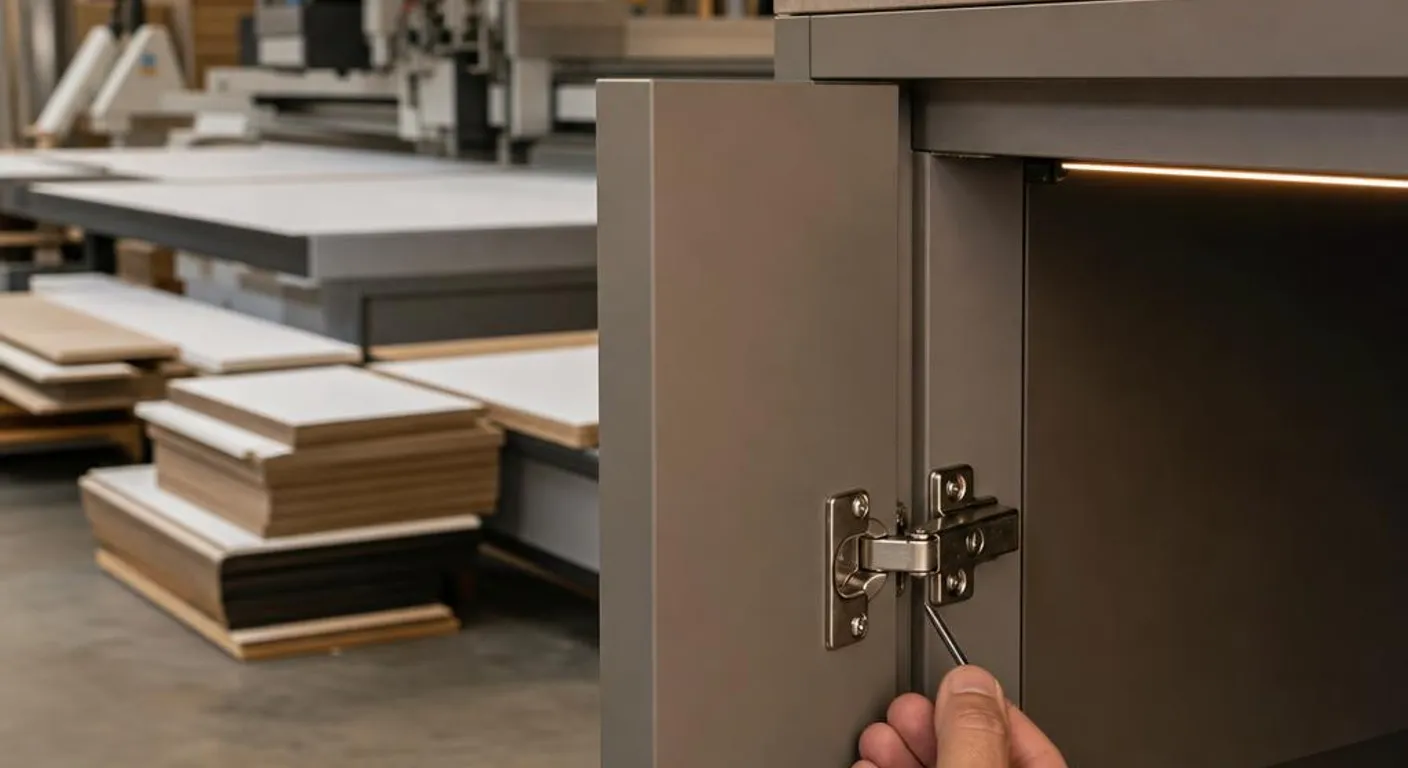
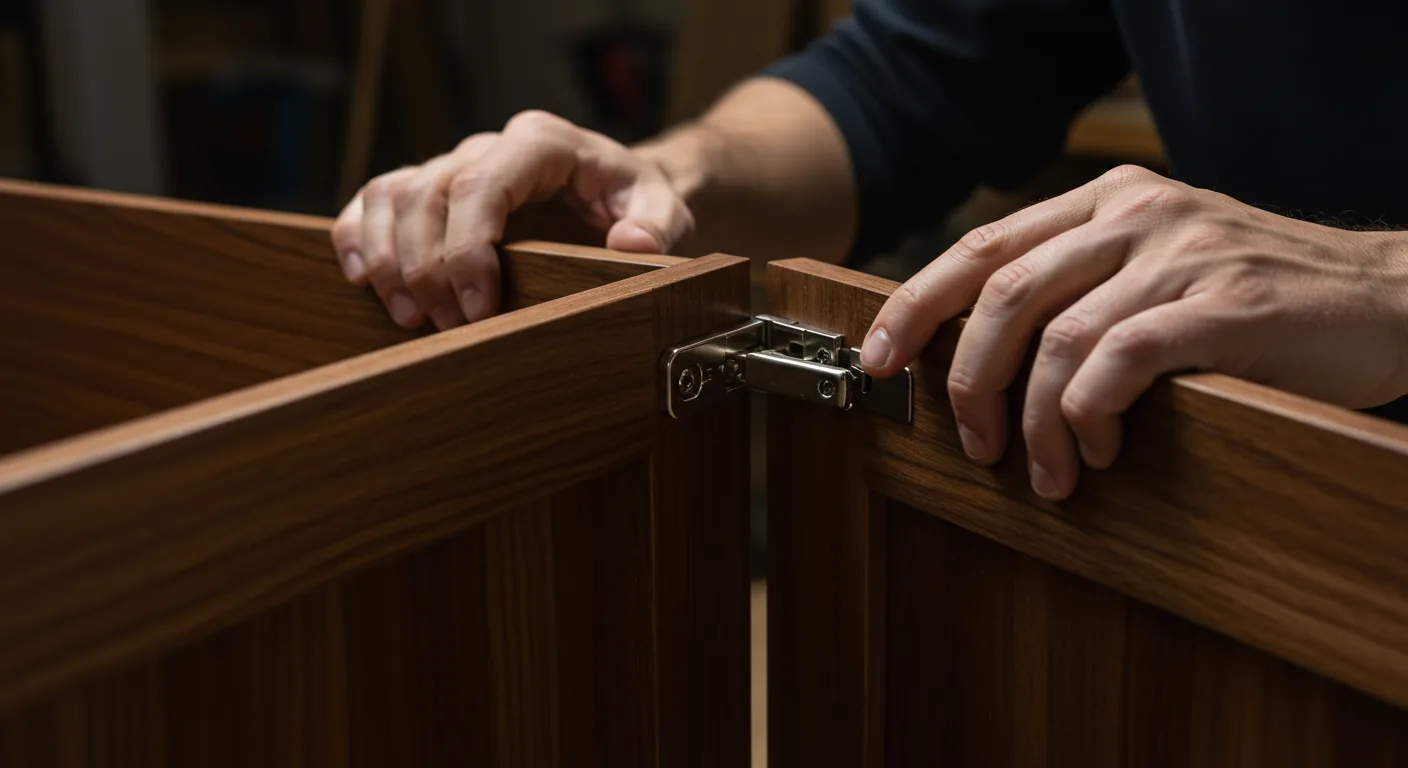
- Hinge and drawer-runner adjustments or replacements are among the common service requests; timing depends on use, specification, and condition
- Locally manufactured: replacement parts can be sourced through the same factory; confirm stock and the written lead time
- Imported: replacement parts depend on local distributor stock, manufacturer availability, import/shipping steps, and installation coordination
- Production drawings and specifications: locally manufactured suppliers retain them; imported brands may discontinue product lines
When choosing between kitchen suppliers, weight after-sales heavily. Compare the current service path, retained drawings, replacement-part availability, and written support terms rather than relying on a fixed prediction about future usefulness.
The Part of Kitchen Ownership Buyers Underestimate
At the point of purchase, kitchen buyers focus on what they can see and touch: the door finish, the worktop edge, the appliance integration, the showroom installation. After-sales service is abstract at that point — it is something that might matter someday.
During ownership, a hinge may need adjustment, a drawer runner may squeak, a handle may loosen, or a finish may chip on a high-traffic edge. None of these is necessarily catastrophic, but each may require a small intervention to keep the kitchen looking and functioning as specified. The timing depends on use, installation, component specification, exposure, and condition.
The ease of getting that intervention done is an important contributor to satisfaction with a premium kitchen. It depends on whether the kitchen was locally manufactured or imported and on the supplier's documented service path.
What Premium Kitchens Need From an After-Sales Plan
Kitchen service needs cannot be determined from age alone. They depend on the selected components, installation, exposure, use, maintenance, and current condition.
Before committing, ask which components are intended to be adjusted, serviced, or replaced; how the supplier records the original board, finish, and hardware specification; whether compatible parts remain available; who performs service visits; and which labour, parts, and finish issues are covered by the written warranty.
For hardware, request the manufacturer's published operating information and confirm how cycle ratings, adjustment, cleaning, and replacement are handled in the specific installation. For doors, carcasses, worktops, and internal accessories, ask how moisture exposure, edge sealing, heat, impact, and ordinary wear are assessed. The useful comparison is the supplier's documented service process and parts path, rather than an assumed replacement deadline.
The Locally Manufactured After-Sales Path
When the kitchen was built in a factory in Lebanon, the after-sales path is direct and short:
1. The owner contacts the supplier (in our case, KITWOOD's after-sales team). 2. The supplier identifies the issue, confirms the original specification from the production drawings retained for every project, and orders the replacement part from inventory or from the original hardware supplier. 3. The replacement part is delivered to a service technician — typically within 3–7 working days for any standard hardware item. 4. The technician installs the replacement on site in 30 minutes to 2 hours depending on the issue.
Total time from service request to resolution: typically 1–2 weeks.
This works because the same factory that built the kitchen still has the production drawings, still has the supplier relationships for the same hardware brands, and still has the technical knowledge of the original installation. There is no chain to navigate.
The Imported After-Sales Path
When the kitchen was imported from a European factory, the after-sales path depends on factors outside the local supplier's control:
1. The owner contacts the local distributor of the imported brand and provides the project details, component identification, and current condition. 2. The local distributor checks whether the specific replacement part is in Lebanese stock and whether it is compatible with the installed model and finish. 3. If the part is not in stock, the distributor asks the European manufacturer about current availability, an exact match or compatible substitute, import requirements, and shipping. The manufacturer may need the original product specification before confirming a lead time. 4. If an exact part is unavailable, the distributor explains the available substitute or alternative repair; visual and functional matching should not be assumed. 5. Once the part arrives in Lebanon, the distributor and client coordinate installation and any required adjustment.
Ask the distributor for a written lead time for the specific identified part, including stock status, manufacturer confirmation, import/shipping steps, installation responsibility, and any warranty or cost conditions. Do not rely on a catalogue age cycle, a uniform response-time promise, or an assumed outcome for a different model.
This is not a criticism of the imported model — it is a structural reality of any import-chain product. The same constraints apply to imported cars, imported appliances, and imported electronics in Lebanon. It is the cost of bringing European-branded products to a smaller market.
What KITWOOD's After-Sales Specifically Includes
Our after-sales commitment for KITWOOD-manufactured kitchens, applicable to every project:
• Standard manufacturing warranty covering carcass integrity, hardware function, and finish adhesion under normal domestic use • Production drawings retained in factory records for future service — every cabinet's exact dimensions, materials, and hardware are documented for the project • Direct after-sales contact through our team — one phone call reaches the people who can resolve the issue • Replacement part sourcing through the same European hardware supply chains we use for new production (Blum, Hettich, Salice for hinges and runners; named European suppliers for handles and accessories), subject to current compatibility and availability • Service technicians employed by KITWOOD, not subcontracted — the same teams that handle installation handle service visits • Factory-original colour records retained for assessing touch-up or replacement options, subject to the current material library and colour match
For imported product lines we distribute (notably Doimo Cucine), the after-sales path runs through us as the local dealer, with replacement parts sourced through the manufacturer's official European channels. We are honest that this path can involve additional confirmation and logistics compared with KITWOOD-manufactured after-sales — and that this is one of the practical reasons many clients choose locally manufactured for their primary kitchen.
How to Evaluate After-Sales Before You Buy
Before signing a kitchen contract with any supplier, ask these questions:
• "Where are my cabinets manufactured?" (Locally manufactured suppliers will name a Lebanese facility. Import-only suppliers will reference a European brand.) • "Do you retain the production drawings for my project?" (For locally manufactured: confirm the records retained for service. For imported: dependent on the European brand's record-keeping, which may be limited.) • "If a hinge or drawer runner needs replacement in 5 years, what is the typical timeline from my call to resolution?" (A direct answer with a specific timeframe is a good sign. Vague answers are a warning.) • "Who employs the service technician who would visit my home?" (Direct employees are more accountable than subcontracted teams.) • "Is the original hardware brand you use still going to be available in 10 years?" (Do not treat a brand's history as a guarantee; ask the supplier to confirm current compatibility, parts channels, and what happens if the model is discontinued.) • "What happens if you discontinue the model line of my kitchen?" (For factory-made: ask how the retained production drawings support service. For imported: dependent on the European brand's lifecycle.)
The answers to these questions will not change the day-one appearance of your kitchen. They help compare each supplier's current service process, parts path, and written support commitments without predicting a fixed future outcome.
Frequently Asked Questions: Kitchen After-Sales Service in Lebanon
**How should I assess the expected service life of a premium kitchen in Lebanon?** No fixed lifespan can be promised for every installation. A properly specified kitchen — particleboard carcasses with documented water-resistant performance and a separate E1 low-emissions classification, Blum hardware, and a quartz worktop — should be assessed according to exposure, sealing, installation, use, maintenance, and the condition of each component. Consumable hardware may need replacement as part of normal ownership.
**What is the most common kitchen after-sales request?** Hinge replacement is assessed according to usage, adjustment, installation, and the hardware manufacturer's cycle rating rather than a fixed calendar forecast. Premium soft-close hinges are specified with published cycle ratings; KITWOOD can identify compatible replacements when needed.
**How does after-sales work for locally manufactured kitchens?** The original factory retains the production drawings and handles service directly. Parts availability, technician scheduling, and the service lead time should be confirmed for the specific issue.
**How does after-sales work for imported European kitchens?** Through the local distributor, who checks stock and compatibility or asks the manufacturer about current availability, import/shipping steps, and installation. Request a written lead time for the specific identified part; do not assume a uniform response time across models or product lines.
**Does KITWOOD provide a written warranty?** Yes — every KITWOOD project includes a manufacturing warranty covering carcass integrity, hardware function, and finish adhesion. Specific terms are confirmed at contract signature.
**What if the original hardware supplier discontinues a part?** For Blum, Hettich, and Salice, KITWOOD's after-sales team identifies compatible replacements when exact-match parts are not available; availability depends on the supplier and the product line.
To discuss long-term ownership and after-sales expectations for your project, book a consultation with our team or visit our kitchens hub to learn more about what we build.
Ready to start your project?
Book a Free Consultation with KITWOOD Lebanon
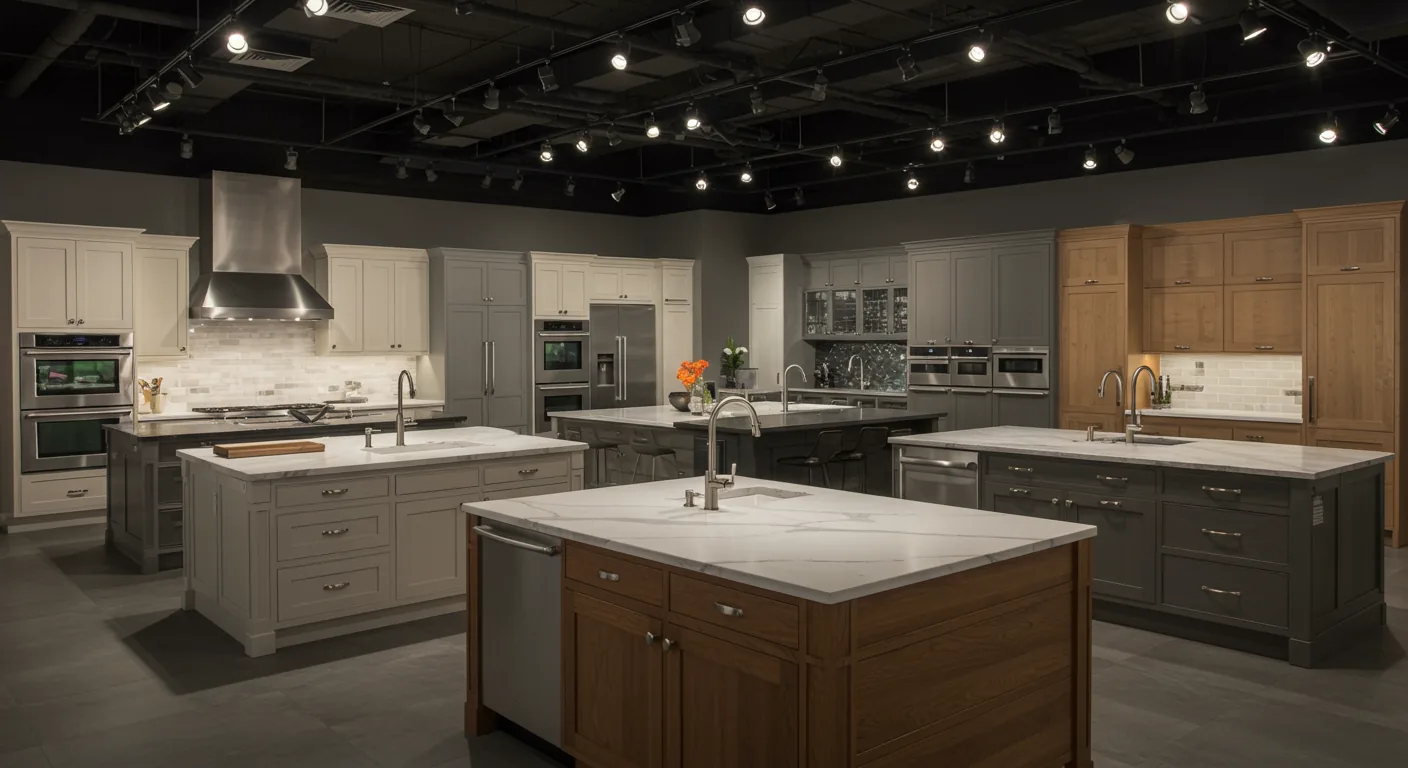
Visit our showrooms in Sin el Fil (Saloumeh Roundabout) or Zouk Mosbeh (Jounieh Highway), or request a showroom consultation anywhere in Lebanon.