How to Choose a Kitchen Company in Lebanon
Choosing a kitchen company in Lebanon is one of the biggest renovation decisions. Here is how to evaluate manufacturers with clarity and avoid costly mistakes.
Key Checklist
Before committing to a kitchen company in Lebanon, evaluate them across seven areas: manufacturing method, materials, hardware brands, showroom quality, project references, post-installation support, and financial stability.
- Ask whether they manufacture in-house or source from third parties
- Ask which structural board they use — and whether it is water-resistant, E1-grade
- Ask which hardware brands are specified (Blum or equivalent)
- Visit the showroom and inspect build quality and finish detail directly
- Ask for references from completed projects in similar homes
- Clarify what post-installation support or warranty is provided
- Assess their track record — established companies carry lower project risk
A company that has been manufacturing kitchens in Lebanon for decades will carry a depth of experience that is difficult to replicate. KITWOOD has been producing kitchens in Lebanon since 1981.
Why the Choice of Kitchen Company Matters More Than You Think
A kitchen is one of the most used spaces in any home. Unlike furniture that can be replaced or repainted, a kitchen is a structural installation — once it is in place, changing it is a major undertaking. The quality of the company you choose will determine not just how your kitchen looks on day one, but how it performs five, ten, and fifteen years later.
In Lebanon's market, kitchen providers range from individual carpenters and small workshops to established manufacturers with decades of experience and dedicated production facilities. Knowing how to evaluate them is essential before committing to any quotation.
Question 1: Do You Manufacture In-House?
The most important first question is whether the company actually manufactures the kitchen themselves, or whether they act as a reseller or intermediary sourcing from third-party workshops.
In-house manufacturing means the company controls the entire production process — from cutting and drilling to finish application and assembly. This gives them direct quality control at every stage. A company that outsources production has less visibility and control over the final result.
At KITWOOD, all kitchens are produced in our own manufacturing facility in Lebanon, using CNC machinery for precision cutting and drilling, and factory-controlled finish application.
Question 2: What Structural Material Do You Use?
The structural carcass — the box that forms the interior of every cabinet — is the foundation of the kitchen's durability. Ask directly what the carcass is made of and whether it is water-resistant, E1-grade board.
Ecological, water-resistant particle board and water-resistant MDF (E1-grade) are dimensionally stable and resist moisture over time. Cheap raw particleboard is cheaper and easier to work with but far more susceptible to moisture, which is a significant factor in Lebanon's humid coastal climate. A company that cannot clearly answer this question — or that is vague about the board grade — is a concern.
For a detailed explanation of these materials, see our guide to Solid Wood vs MDF vs HDF vs Plywood.
Question 3: Which Hardware Brands Do You Specify?
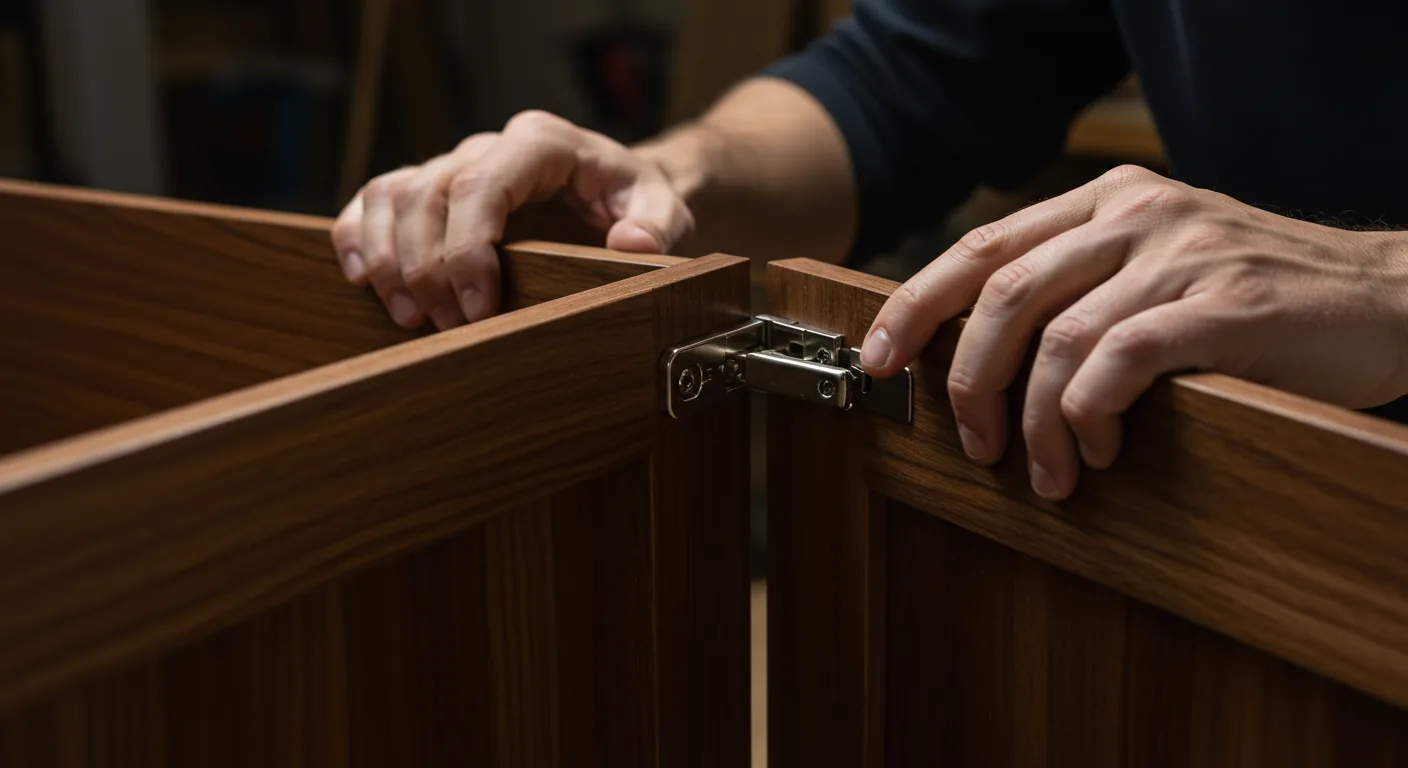
Hardware — hinges, drawer runners, lift-up systems — determines how the kitchen feels in daily use and how long it remains smooth and reliable. The industry benchmark brand is Blum (Austrian), engineered to withstand tens of thousands of opening cycles with consistent performance.
Ask your kitchen company specifically which hardware brands they use. A company that uses unbranded or economy hardware is likely cutting costs in an area that directly affects the kitchen's longevity. This detail is rarely visible on a showroom display but becomes apparent within a few years of daily use.
Question 4: Can I See the Finish Quality Up Close?
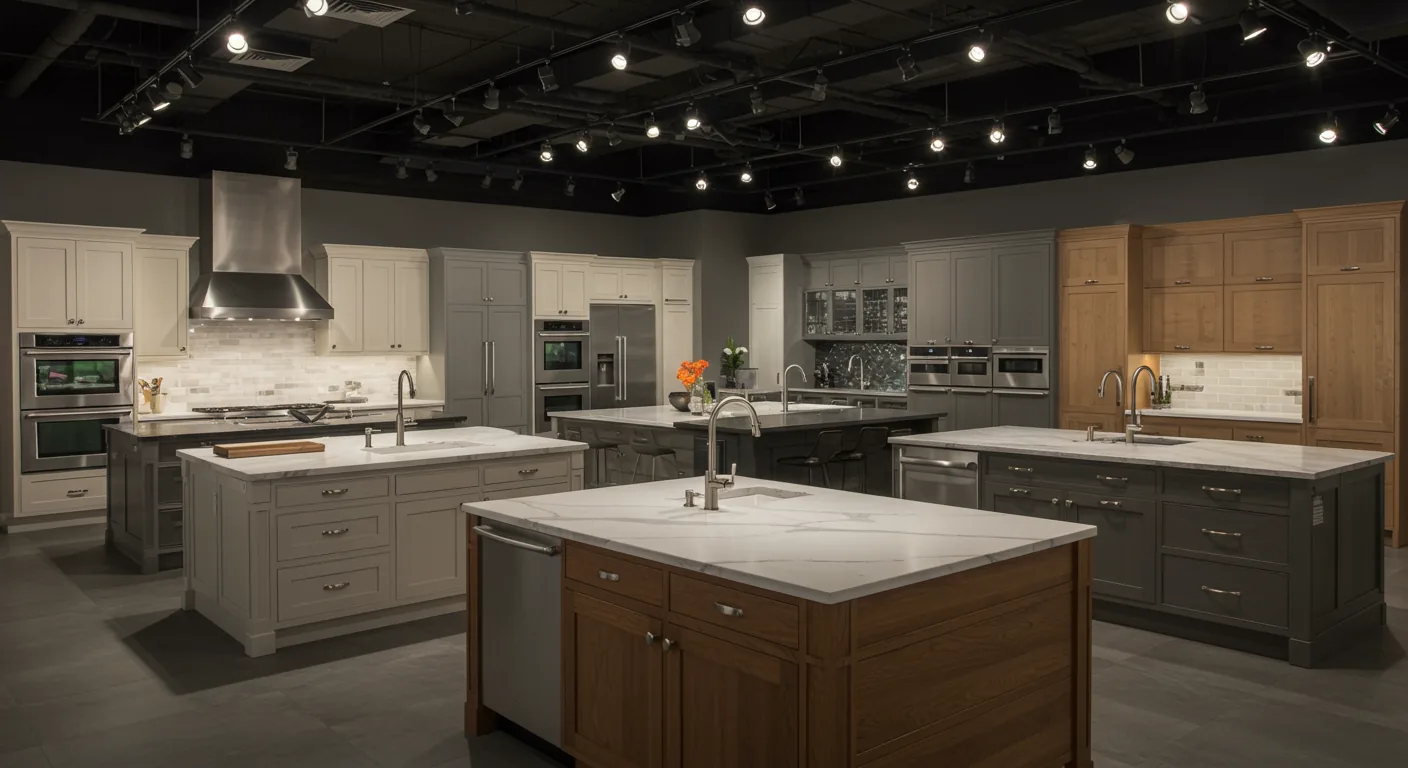
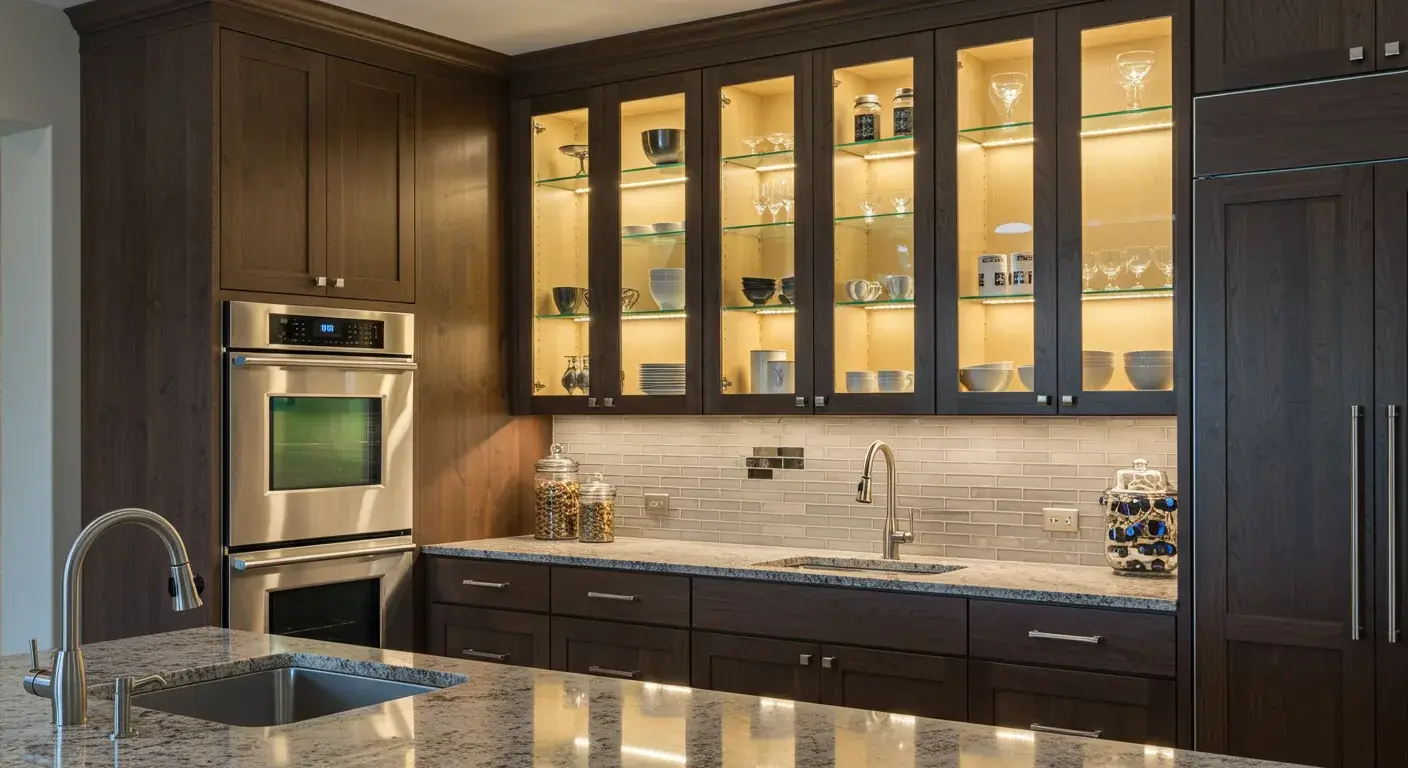
Photographs and catalogues do not reveal finish quality. Ask to visit the showroom and inspect the kitchen displays at close range. Look at the consistency of the lacquer application — is it uniform, without orange peel texture or visible brush marks? Examine the edge banding — is it flush and smooth, or is there a visible lip? Open and close doors and drawers — do they operate smoothly and close without noise?
A quality kitchen will show its quality at close inspection. A showroom display that does not hold up to scrutiny at arm's length is a warning sign.
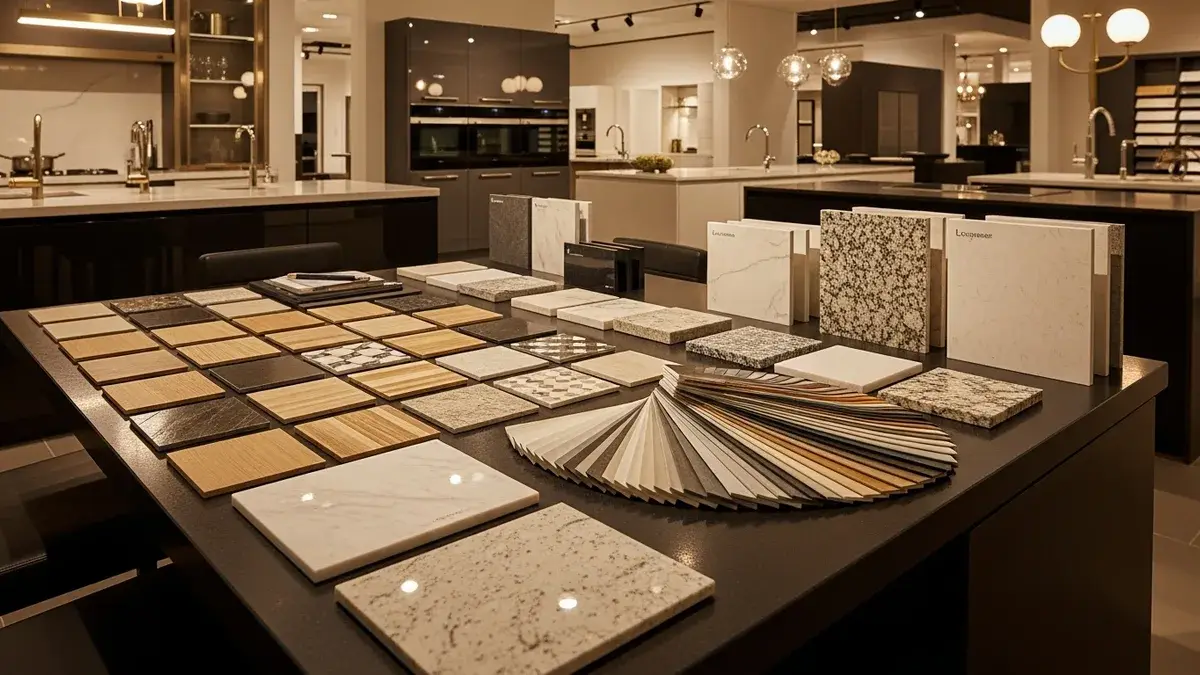
KITWOOD's kitchen showroom in Lebanon — located in Sin el Fil, Beirut — displays all five of our kitchen collections as full working environments. Walk in any day Monday to Saturday to inspect the finish quality in person.
Question 5: Do You Have References from Completed Projects?
An established kitchen company should be able to provide references from past clients. Ask to speak with or visit homeowners who had a kitchen installed two to five years ago — this gives you a realistic picture of how the kitchen has held up beyond the installation date.
Completed project portfolios, even if shared as photographs, offer useful insight into the range and quality of work the company has delivered across different kitchen styles, sizes, and specifications.
Question 6: What Happens After Installation?
The installation date is not the end of the project. Kitchens require fine-tuning — hinge adjustments, alignment corrections, hardware recalibration — in the weeks after installation. Ask the company explicitly what their post-installation support process is.
A reputable manufacturer will return to site to address any post-installation issues as a standard part of their service. Companies that disappear after handover — or charge separately for adjustment visits — are a significant risk.
At KITWOOD, our installation teams handle post-installation support as part of every project, and our showrooms in Sin el Fil and Zouk Mosbeh serve as permanent points of contact for clients.
Question 7: How Long Have You Been Operating in Lebanon?
Longevity in the Lebanese market is meaningful. Companies that have been operating for decades have weathered economic cycles, maintained supplier relationships, and built a track record of completed projects. They are less likely to disappear mid-project or after handover.
KITWOOD has been manufacturing kitchens and wardrobes in Lebanon since 1981 — over four decades of continuous operation. Our depth of experience means we have encountered and resolved virtually every challenge that arises in kitchen design, manufacturing, and installation across the full range of Lebanon's residential market.
For more information, explore our kitchens Lebanon page, visit our About KITWOOD page, or contact us to arrange a free consultation.
Frequently Asked Questions: Choosing a Kitchen Company in Lebanon
**How do I know if a kitchen company actually manufactures in Lebanon?** Ask to visit their production facility, or ask specific questions about their CNC machinery, their timber suppliers, and their finish application process. Companies that manufacture genuinely can answer these questions clearly. Those that outsource often cannot.
**Is it safe to use a new kitchen company in Lebanon?** There is meaningful risk in using an untested company for a major installation. A company with a long track record has managed post-installation issues, supplier relationships, and client expectations over many years — reducing project risk significantly.
**What warranty should I expect from a kitchen company?** Reputable Lebanese kitchen manufacturers offer post-installation support and adjustment visits as standard. Specific warranty terms vary — ask explicitly before committing.
**How important is showroom quality when evaluating a kitchen company?** Very. A showroom reflects how a company represents its work. Examine the finish detail, the hardware quality, the consistency of the carcass construction. Poor showroom quality is a strong signal of production standards.
For guidance on finding the best option for your project, explore our best kitchen company Lebanon page or visit our showrooms in Sin el Fil or Zouk Mosbeh.
Serving Clients Beyond Lebanon
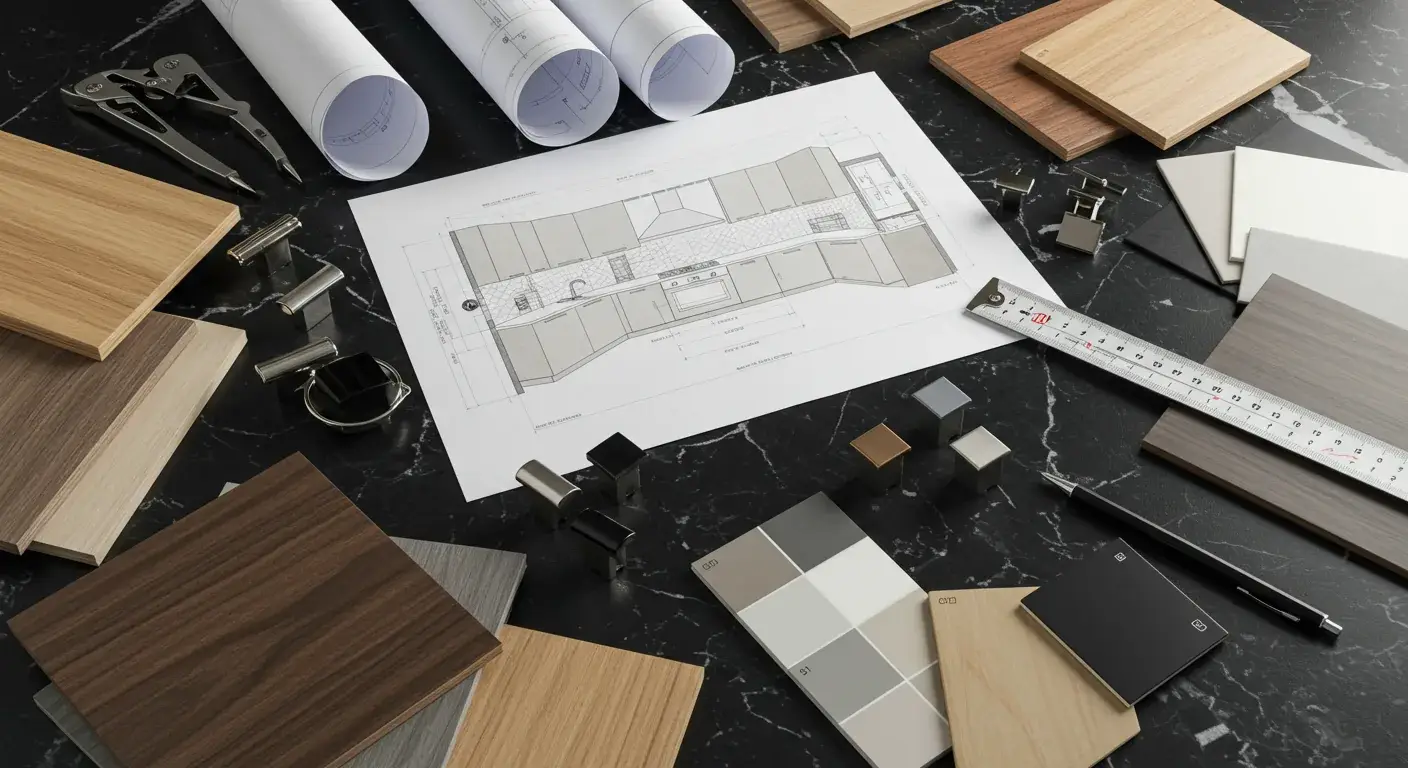
KITWOOD's manufacturing capability and design process are not limited to Lebanese clients. We have coordinated kitchen and wardrobe projects for clients based outside Lebanon through a structured remote consultation process — drawings, material samples and 3D renders are shared remotely, with production and shipping handled from the Zouk Mosbeh factory.
For clients evaluating KITWOOD from outside Lebanon, the best starting point is to get in touch with a brief description of the project so we can confirm whether the remote model is a fit for your timeline and logistics.
Ready to start your project?
Book a Free Consultation with KITWOOD Lebanon
Visit our showrooms in Sin el Fil (Saloumeh Roundabout) or Zouk Mosbeh (Jounieh Highway), or request a showroom consultation anywhere in Lebanon.