Kitchen Renovation Cost in Lebanon
Kitchen renovation costs in Lebanon depend on size, materials, finish, and whether you use a manufacturer or carpenter. Here's what drives the price.
Quick Answer
Kitchen renovation cost in Lebanon depends on five main variables: cabinet material, surface finish, hardware quality, countertop choice, and whether the kitchen is manufactured or carpentry-built.
- Entry-level carpentry kitchens use MDF boards with laminate finishes and basic hardware
- Mid-range factory kitchens use high-density water-resistant E1 chipboard carcasses with lacquered or veneer finishes and branded hardware
- Premium factory kitchens use full high-density water-resistant E1 chipboard construction, lacquer or wood veneer doors, and Blum hardware systems
- Countertop choice — quartz, granite, or porcelain — adds significantly to the final cost
- Installation, delivery, and project management are included in factory pricing but often separate in carpentry
The lowest-cost kitchen is rarely the most economical over time. A factory-manufactured kitchen with water-resistant E1 board structure and quality hardware can outlast a carpentry kitchen several times over.
Why Kitchen Costs in Lebanon Vary So Much
A kitchen quotation in Lebanon can range from a modest figure for basic carpentry work to a substantial investment for a factory-manufactured, fully specified kitchen. The difference is not arbitrary — it reflects fundamentally different material choices, manufacturing processes, finish quality, and hardware systems.
Understanding what drives those differences allows you to compare quotations meaningfully and avoid the common mistake of comparing a carpentry kitchen price to a factory kitchen price as if they were equivalent products.
The Role of Structure: Particle Board vs MDF vs Carpentry Board
The single most significant cost driver in any kitchen is the cabinet carcass — the structural box that houses the doors, drawers, and shelves. Carpentry kitchens in Lebanon are almost always built from cheap raw particleboard or unsealed MDF, which is lower in cost but sensitive to moisture and humidity over time.
Factory-manufactured kitchens like those from KITWOOD use ecological, high-density, water-resistant E1 chipboard (particle board) carcasses, which are more stable and far better suited to Lebanon's climate. Water-resistant E1 construction costs more in raw materials but delivers meaningfully better long-term performance. For a detailed comparison, see our guide to Solid Wood vs MDF vs HDF vs Plywood.
Surface Finishes and Their Impact on Price
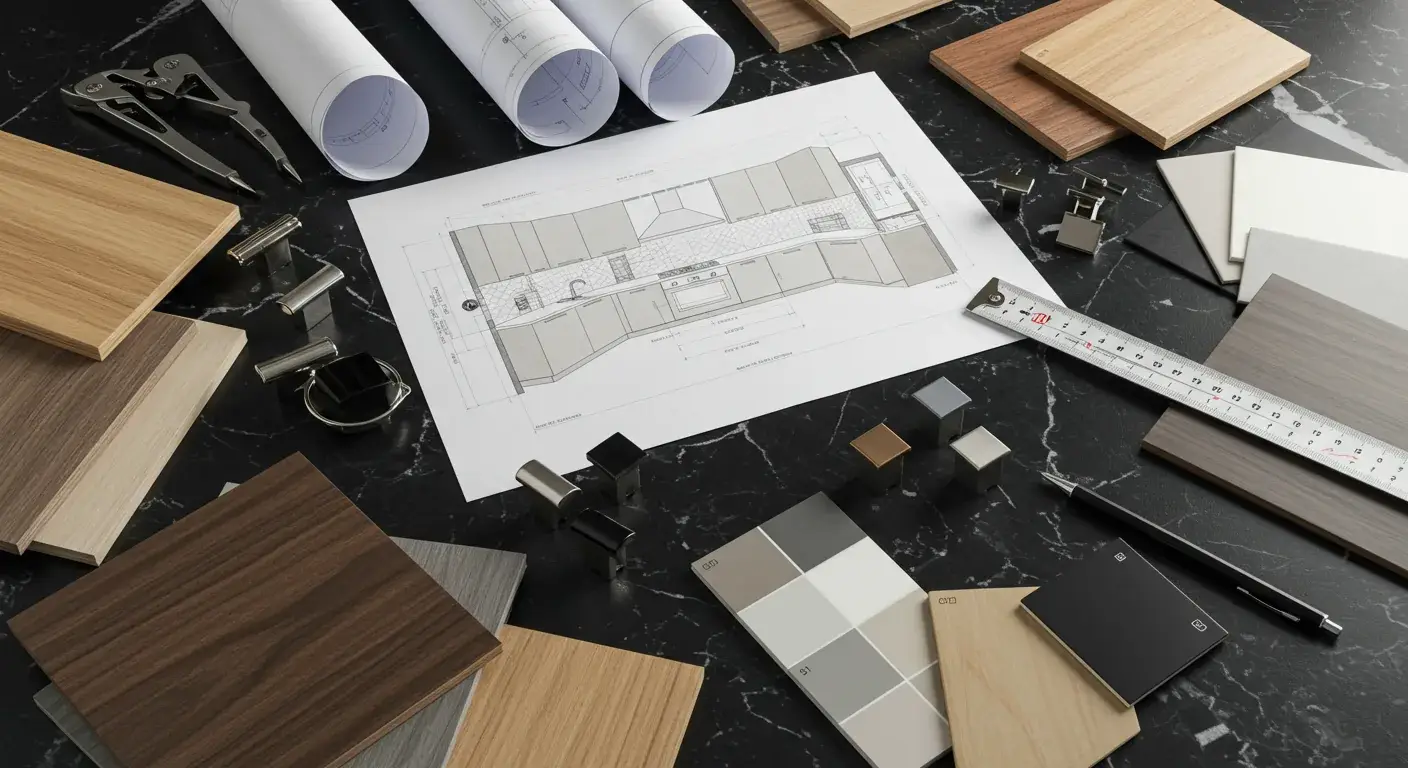
The kitchen door finish is the most visible element and one of the largest contributors to the project budget. The main options available in Lebanon, from lower to higher cost, are:
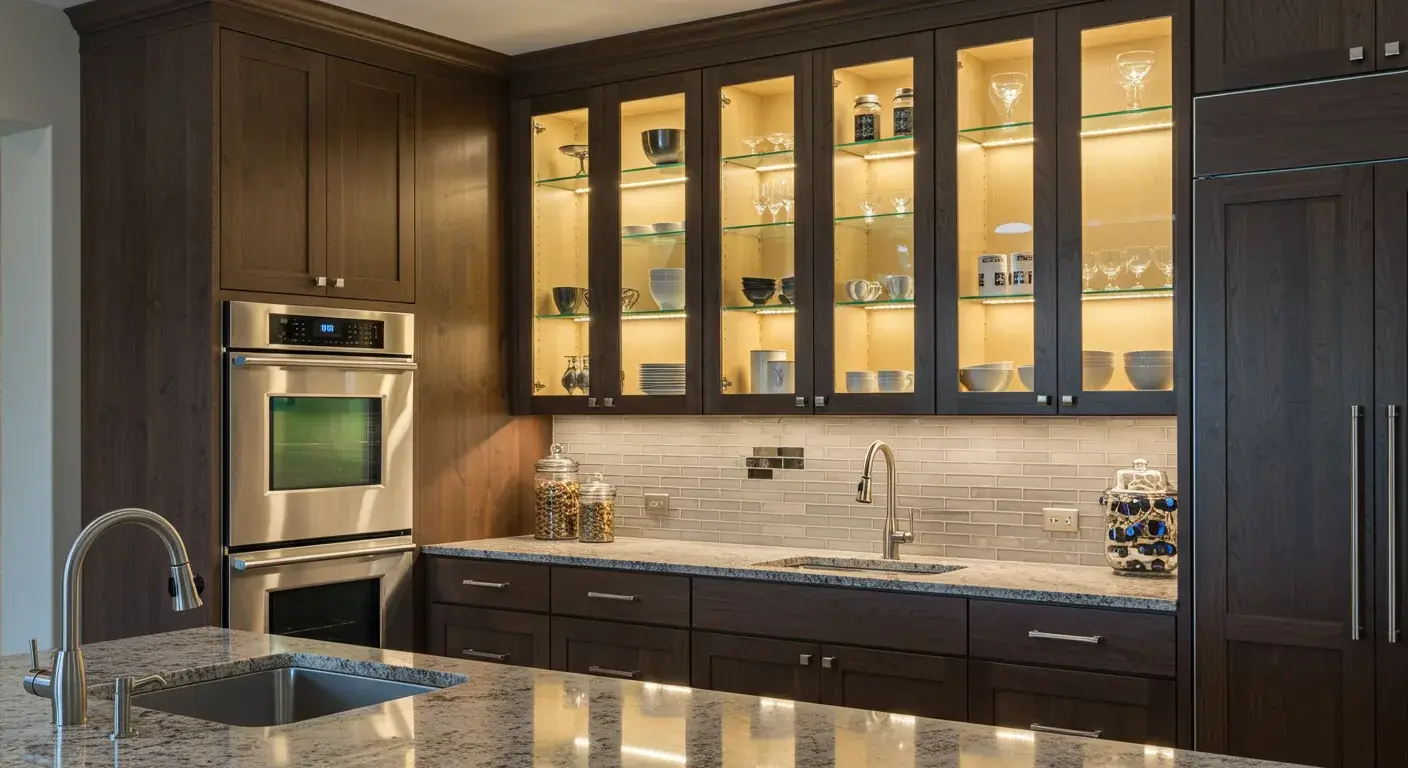
- Laminate: A printed film applied over MDF. Durable and cost-effective but limited in premium appearance. - Lacquer (matte, satin, or gloss): A painted finish applied over MDF in a controlled factory environment. Delivers a clean, elegant result and is one of the most popular premium finishes. - Wood veneer: A thin slice of real timber applied over a substrate. Delivers genuine wood character with more dimensional stability than solid wood doors. - Solid wood: Used for specific door profiles and frame elements. Highest cost and most character, but requires careful application.
The choice of finish has a direct and significant impact on the overall kitchen cost.
Hardware: Where Many Kitchens Fall Short
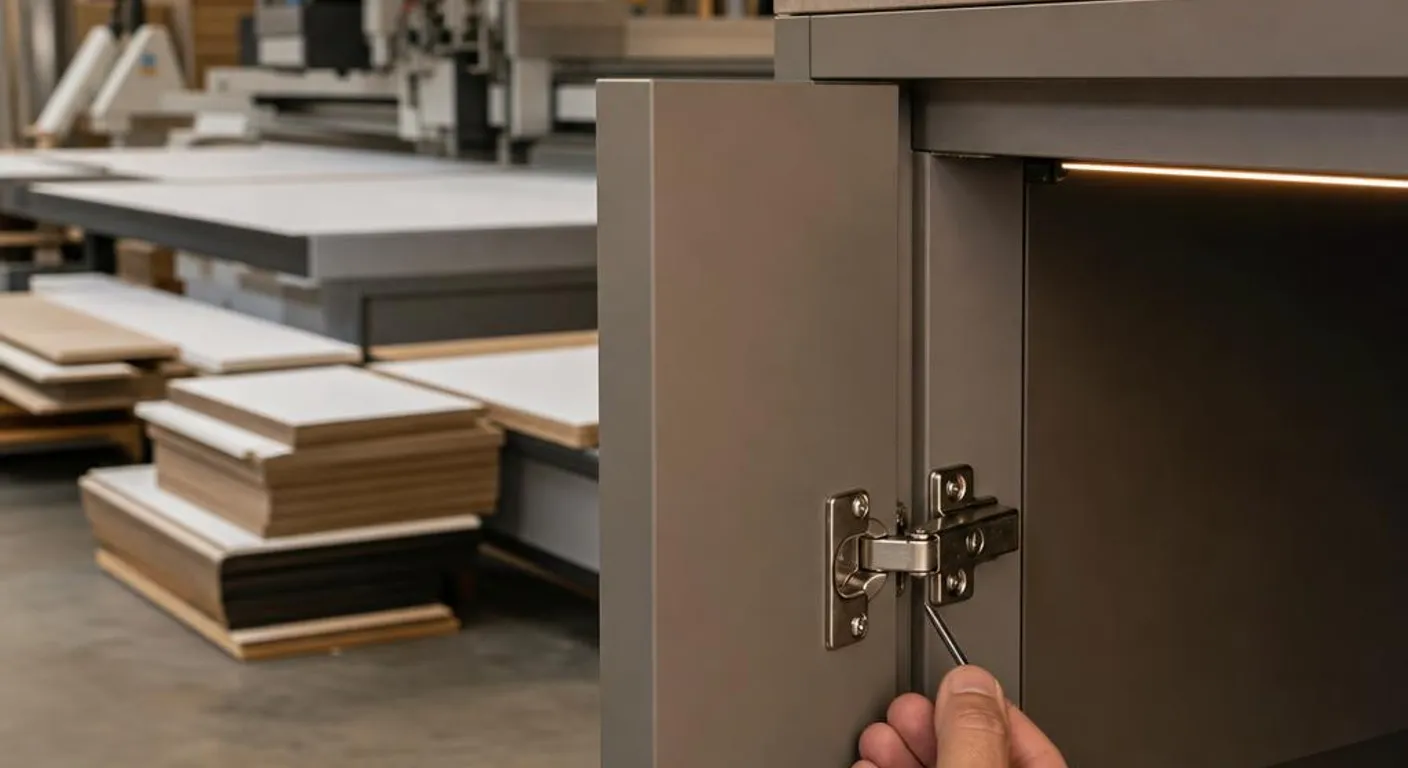
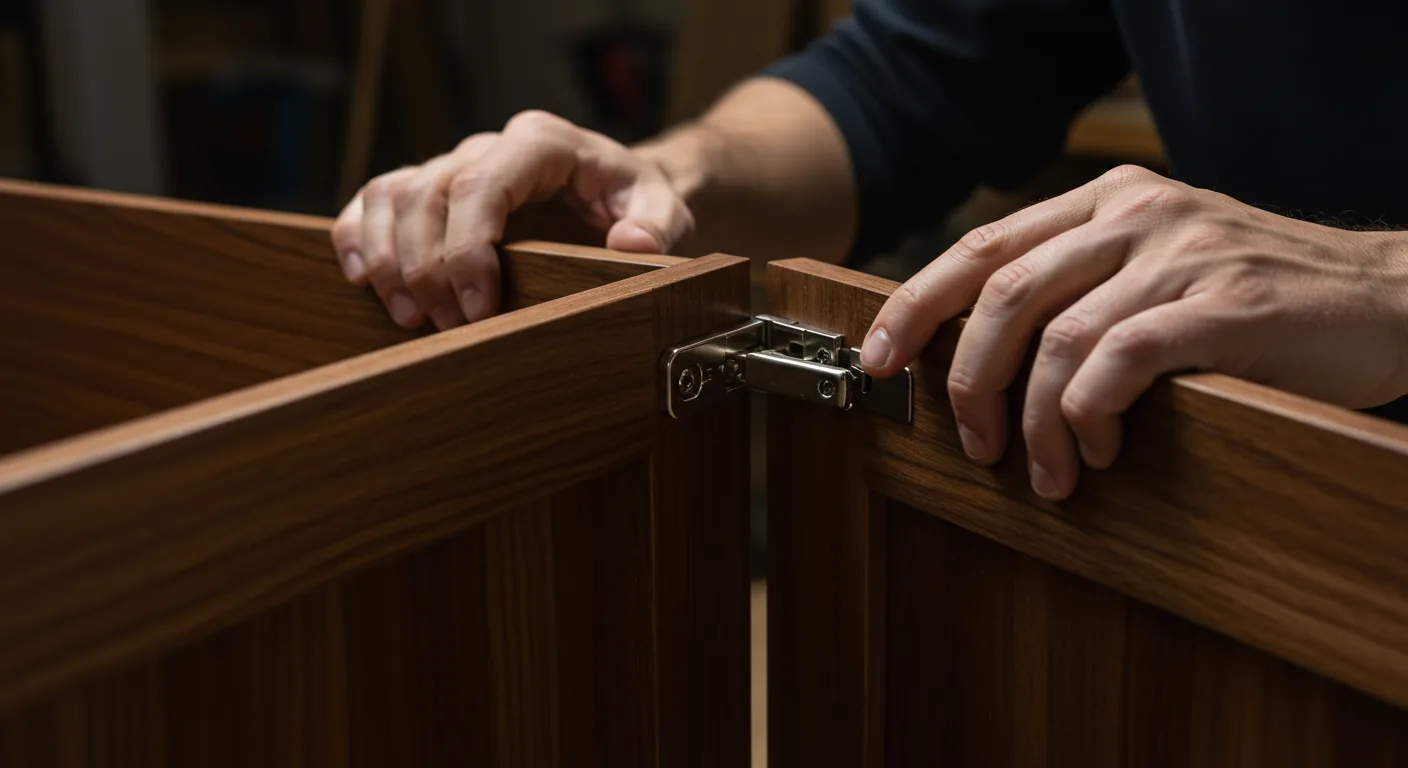
Hardware — hinges, drawer runners, lift-up systems, and handle mechanisms — is one of the most underappreciated cost factors in kitchen planning. The difference between a kitchen with basic hardware and one fitted with Blum or equivalent European systems is significant in terms of daily feel and long-term durability.
Quality hinges offer soft-close function, adjustability in three axes, and can withstand tens of thousands of opening cycles without degradation. Economy hinges may cost a fraction of the price but often show wear within three to five years. At KITWOOD, all kitchens are fitted with quality European hardware systems as standard.
Countertop Costs: Quartz, Granite, and Porcelain
The countertop is typically priced separately and can represent a substantial portion of the overall kitchen budget. In Lebanon, the main choices are engineered quartz, natural granite, and large-format porcelain slabs.
Engineered quartz is the most popular choice for high-end kitchens — non-porous, consistent in appearance, and available in a wide range of colours and finishes. Natural granite offers unique patterning and excellent heat resistance but requires occasional sealing. Large-format porcelain offers impressive durability at a cost that sits between entry-level and premium options. For a detailed comparison, see our guide to Quartz vs Granite vs Porcelain Countertops.
Factory vs Carpentry: The True Cost Comparison
A carpentry kitchen quote typically covers labour and materials only. Project management, delivery, precise installation, hardware adjustment, and post-installation support are either charged separately or not provided at all.
A factory kitchen quotation from a company like KITWOOD includes CNC-precision manufactured carcasses, factory-applied finishes, quality hardware, delivery to site, professional installation by trained teams, and post-installation service. When compared on a like-for-like basis — including the full scope of work — the gap between carpentry and factory pricing is typically narrower than it initially appears, and the result is significantly higher quality.
Planning Your Kitchen Budget in Lebanon
The most practical approach to budgeting a kitchen renovation in Lebanon is to define your requirements clearly before requesting quotations. Key questions to answer in advance: How many linear metres of kitchen do you need? What finish level are you targeting? What countertop material do you prefer? Will the kitchen include an island?
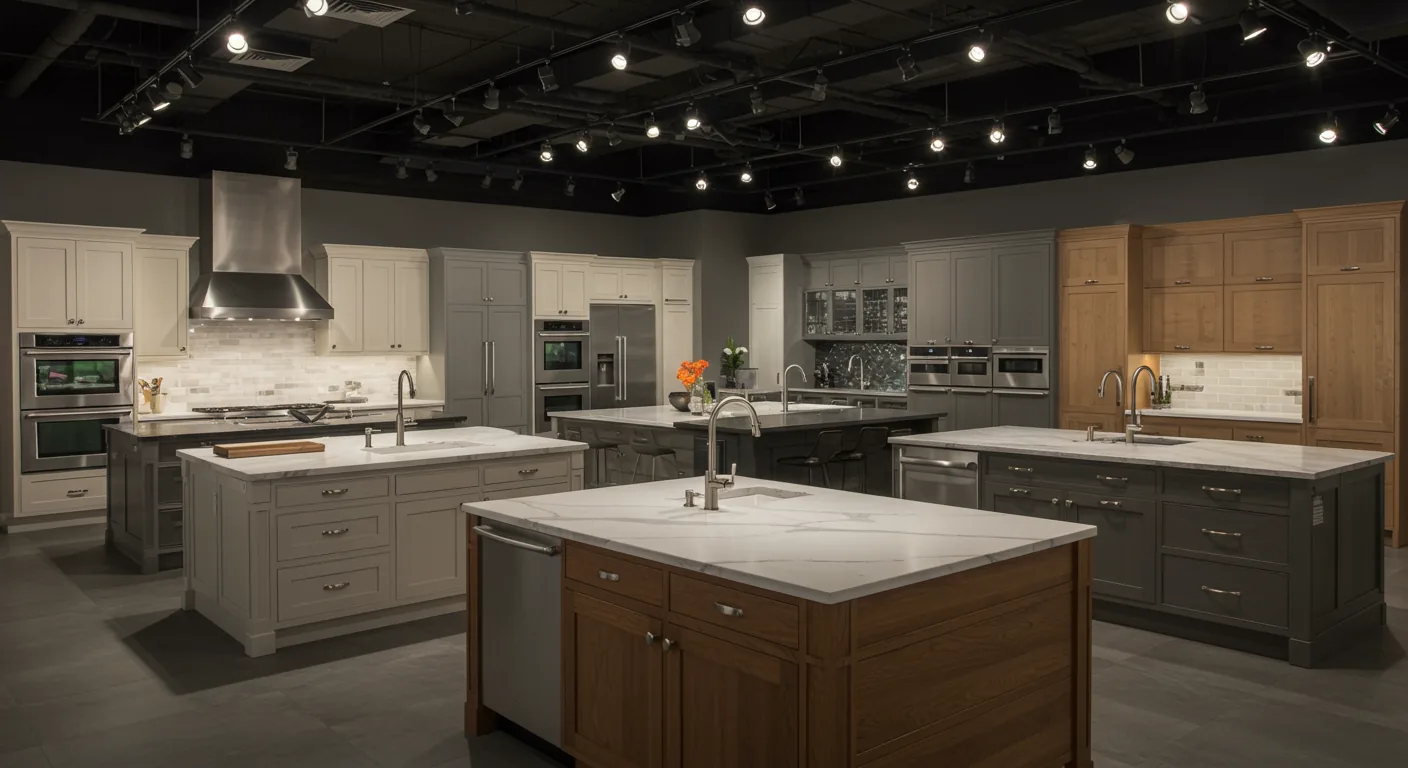
At KITWOOD, we begin every project with a detailed consultation and produce a precise specification before any pricing is provided. This allows you to compare accurately and understand exactly what is included in your investment. To begin the process, explore our kitchens Lebanon collection, visit our showroom in Sin el Fil or Zouk Mosbeh, or contact our team directly.
Frequently Asked Questions: Kitchen Renovation Cost in Lebanon
**What is the biggest cost driver in a kitchen renovation?** The carcass material and the door finish are the two largest cost drivers. Upgrading from cheap raw particleboard to water-resistant E1 board adds meaningfully to the cost but also adds years to the kitchen's life. The door finish — from laminate to lacquer to veneer — is the second-biggest variable.
**Should I renovate or replace my kitchen?** If the structural carcasses are sound, a door and hardware refresh can significantly improve the kitchen's appearance at a lower cost than full replacement. If the carcasses are swelling, delaminating, or failing structurally, full replacement is more economical over the long term.
**How long does a kitchen renovation take in Lebanon?** A full factory kitchen replacement, including design consultation, manufacturing, and installation, typically takes 8–14 weeks from confirmed order to completed installation.
**Do kitchen renovations add value in Lebanon?** A high-quality kitchen renovation in a well-specified material and finish level adds measurable value to a property and is one of the higher-return renovation investments in Lebanese residential real estate.
For a detailed breakdown of all cost factors, see our kitchen renovation Lebanon page or contact our team.
Ready to start your project?
Book a Free Consultation with KITWOOD Lebanon
Visit our showrooms in Sin el Fil (Saloumeh Roundabout) or Zouk Mosbeh (Jounieh Highway), or request a showroom consultation anywhere in Lebanon.